Faculty of Medicine, University of Ottawa, Ottawa, Canada.
J Gen Intern Med. 2013 Jan;28(1):127-35. doi: 10.1007/s11606-012-2145-y. Epub 2012 Jul 13.
The Chronic Care Model is an effective framework for improving chronic disease management. There is scarce literature describing this model for people living with HIV. Decision Support (DS) and Clinical Information Systems (CIS) are two components of this model that aim to improve care by changing health care provider behavior.
Our aim was to assess the effectiveness of DS and CIS interventions for individuals with HIV, through a systematic literature review.
We performed systematic electronic searches from 1996 to February 2011 of the medical (E.g. Medline, EMBASE, CINAHL) and grey literature. Effectiveness was measured by the frequency of statistically significant outcome improvement. Data and key equity indicator extraction and synthesis was completed.
We included comparative studies of people living with HIV that examined the impact of DS or CIS interventions on outcomes.
The following measures were assessed: outcome (immunological/virological, medical, psychosocial, economic measures) and health care process/performance measures.
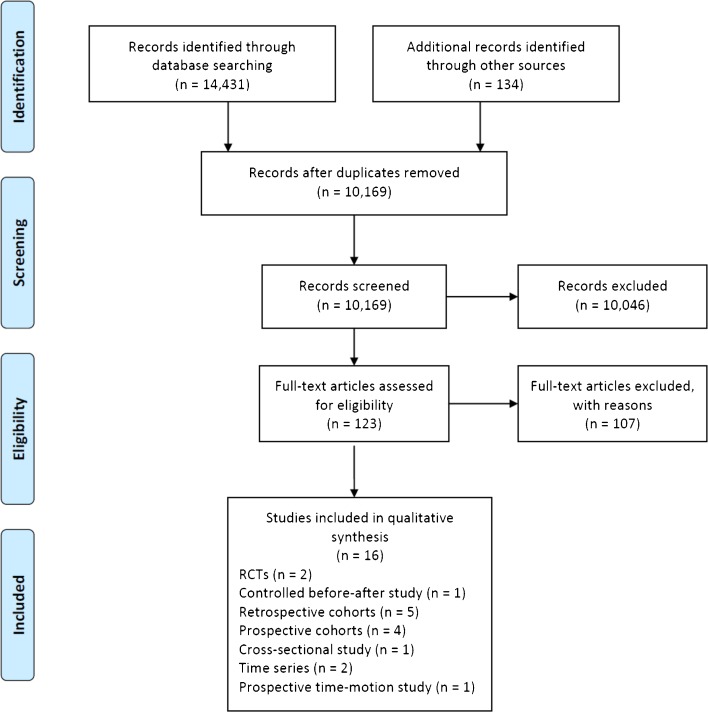
Records were screened for relevance (n = 10,169), full-text copies of relevant studies were obtained (n = 123), and 16 studies were included in the review. Overall, 5/9 (55.6%) and 17/41 (41.5%) process measures and 5/12 (41.7%) and 3/9 (33.3%) outcome measures for DS and CIS interventions, respectively, were statistically significantly improved. DS-explicit mention of implementation of guidelines and CIS-reminders showed the most frequent improvement in outcomes. DS-only interventions were more effective than CIS-only interventions in improving both process and outcome measures. Clinical, statistical and methodological heterogeneity among studies precluded meta-analysis. Primary studies were methodologically weak and often included multifaceted interventions that made assessment of effectiveness challenging.
Overall, DS and CIS interventions may modestly improve care for people living with HIV, having a greater impact on process measures compared to outcome measures. These interventions should be considered as part of strategies to improve HIV care through changing provider performance.
慢性护理模式是改善慢性病管理的有效框架。针对艾滋病毒感染者,这一模式的相关文献却十分匮乏。决策支持(Decision Support,DS)和临床信息系统(Clinical Information Systems,CIS)是这一模式的两个组成部分,旨在通过改变医疗服务提供者的行为来改善护理。
我们旨在通过系统文献回顾,评估 DS 和 CIS 干预措施对艾滋病毒感染者的效果。
我们对 1996 年至 2011 年 2 月期间的医学(例如 Medline、EMBASE、CINAHL)和灰色文献进行了系统的电子检索。通过统计上显著的结果改善的频率来衡量效果。完成了数据和关键公平指标的提取和综合。
我们纳入了评估 DS 或 CIS 干预措施对结果影响的艾滋病毒感染者的比较研究。
评估以下指标:结果(免疫/病毒学、医疗、心理社会、经济指标)和医疗过程/绩效指标。
对相关性进行记录筛选(n=10169),获取相关研究的全文副本(n=123),并对 16 项研究进行了综述。总体而言,DS 干预措施的 5/9(55.6%)和 17/41(41.5%)过程指标以及 CIS 干预措施的 5/12(41.7%)和 3/9(33.3%)结果指标在统计学上均有显著改善。DS 明确提到实施指南和 CIS 提醒的情况,结果改善最为频繁。DS 干预措施比 CIS 干预措施更有效,可改善过程和结果指标。研究间存在临床、统计和方法学的异质性,因此无法进行荟萃分析。原始研究方法薄弱,且经常包含多方面的干预措施,这使得评估效果具有挑战性。
总体而言,DS 和 CIS 干预措施可能会适度改善艾滋病毒感染者的护理,对过程指标的影响大于对结果指标的影响。这些干预措施应被视为通过改变提供者绩效来改善艾滋病毒护理的策略的一部分。