Department of Medicine, Human Genetics, McGill University, Montreal, Canada.
PLoS Genet. 2012 Jul;8(7):e1002745. doi: 10.1371/journal.pgen.1002745. Epub 2012 Jul 5.
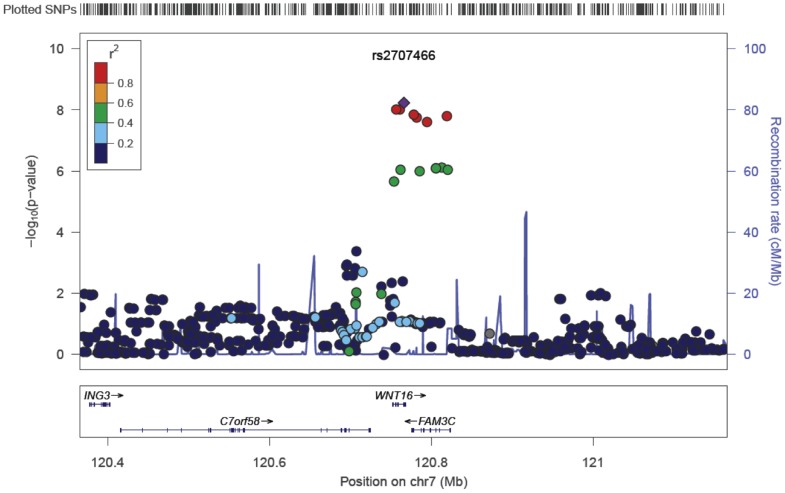
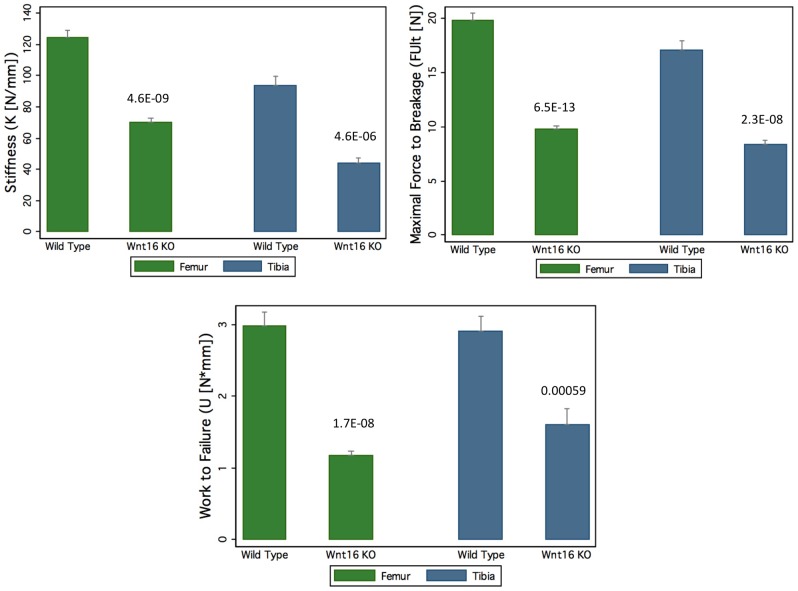
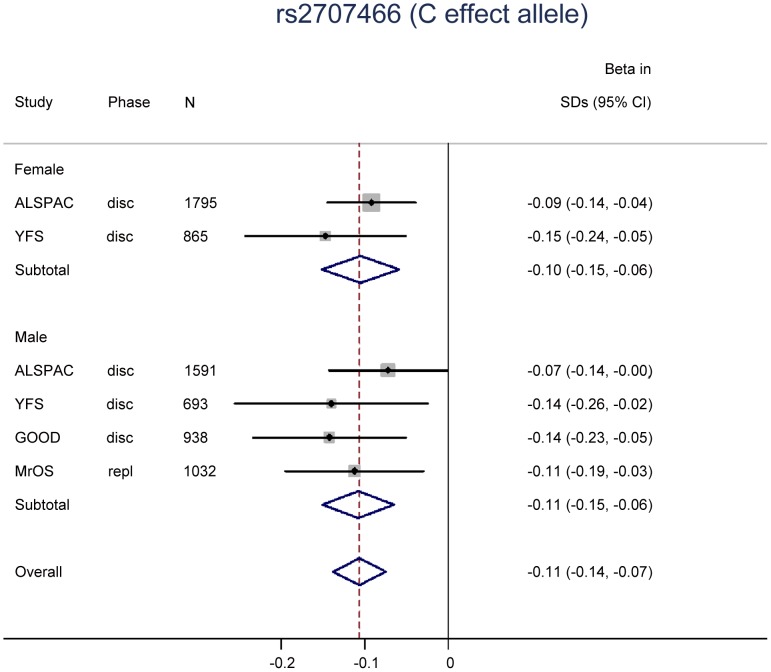
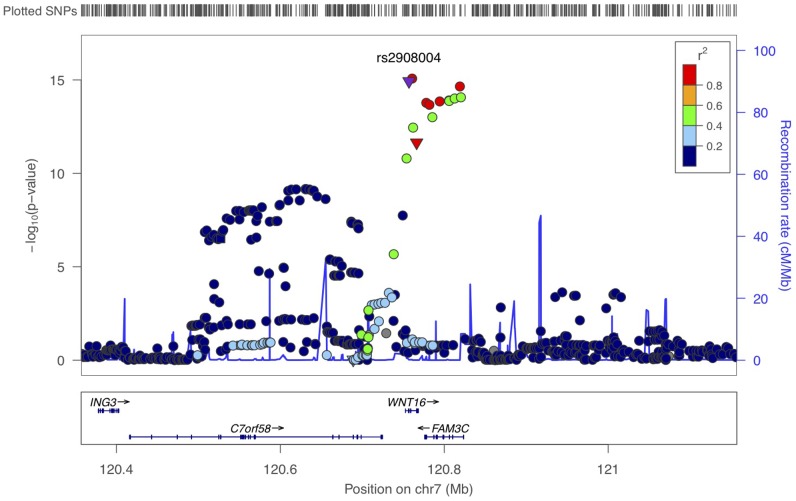
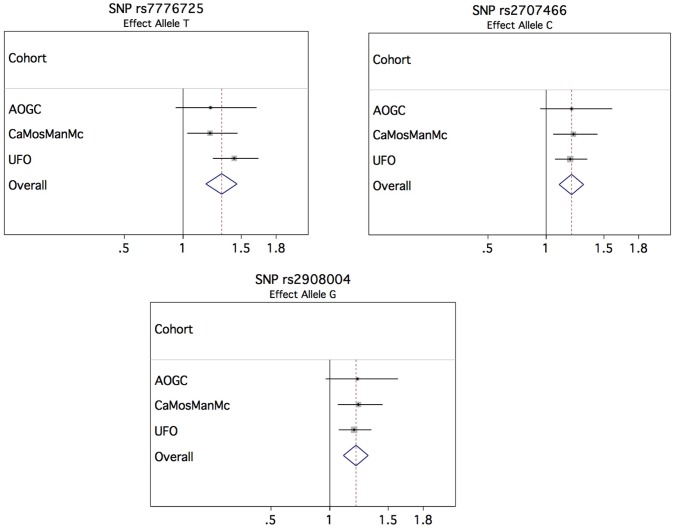
We aimed to identify genetic variants associated with cortical bone thickness (CBT) and bone mineral density (BMD) by performing two separate genome-wide association study (GWAS) meta-analyses for CBT in 3 cohorts comprising 5,878 European subjects and for BMD in 5 cohorts comprising 5,672 individuals. We then assessed selected single-nucleotide polymorphisms (SNPs) for osteoporotic fracture in 2,023 cases and 3,740 controls. Association with CBT and forearm BMD was tested for ∼2.5 million SNPs in each cohort separately, and results were meta-analyzed using fixed effect meta-analysis. We identified a missense SNP (Thr>Ile; rs2707466) located in the WNT16 gene (7q31), associated with CBT (effect size of -0.11 standard deviations [SD] per C allele, P = 6.2 × 10(-9)). This SNP, as well as another nonsynonymous SNP rs2908004 (Gly>Arg), also had genome-wide significant association with forearm BMD (-0.14 SD per C allele, P = 2.3 × 10(-12), and -0.16 SD per G allele, P = 1.2 × 10(-15), respectively). Four genome-wide significant SNPs arising from BMD meta-analysis were tested for association with forearm fracture. SNP rs7776725 in FAM3C, a gene adjacent to WNT16, was associated with a genome-wide significant increased risk of forearm fracture (OR = 1.33, P = 7.3 × 10(-9)), with genome-wide suggestive signals from the two missense variants in WNT16 (rs2908004: OR = 1.22, P = 4.9 × 10(-6) and rs2707466: OR = 1.22, P = 7.2 × 10(-6)). We next generated a homozygous mouse with targeted disruption of Wnt16. Female Wnt16(-/-) mice had 27% (P<0.001) thinner cortical bones at the femur midshaft, and bone strength measures were reduced between 43%-61% (6.5 × 10(-13)<P<5.9 × 10(-4)) at both femur and tibia, compared with their wild-type littermates. Natural variation in humans and targeted disruption in mice demonstrate that WNT16 is an important determinant of CBT, BMD, bone strength, and risk of fracture.
我们旨在通过对 3 个队列中的 5878 名欧洲人进行皮质骨厚度(CBT)和骨矿物质密度(BMD)的全基因组关联研究(GWAS)荟萃分析,以及对 5 个队列中的 5672 个人进行 BMD 的 GWAS 荟萃分析,来鉴定与皮质骨厚度和骨矿物质密度相关的遗传变异。然后,我们在 2023 例病例和 3740 例对照中评估了选定的单核苷酸多态性(SNP)与骨质疏松性骨折的相关性。在每个队列中分别对大约 250 万个 SNP 进行了与 CBT 和前臂 BMD 的关联检测,并用固定效应荟萃分析对结果进行了荟萃分析。我们在 WNT16 基因(7q31)中鉴定到一个错义 SNP(Thr>Ile;rs2707466),该 SNP 与 CBT 相关(每个 C 等位基因的效应大小为-0.11 个标准差[SD],P = 6.2×10(-9))。该 SNP 以及另一个非同义 SNP rs2908004(Gly>Arg)也与前臂 BMD 具有全基因组显著的相关性(每个 C 等位基因的效应大小为-0.14 SD,P = 2.3×10(-12),每个 G 等位基因的效应大小为-0.16 SD,P = 1.2×10(-15))。对 BMD 荟萃分析产生的 4 个全基因组显著 SNP 进行了与前臂骨折的相关性检测。FAM3C 基因(WNT16 基因的邻近基因)中的 SNP rs7776725 与前臂骨折的全基因组显著风险增加相关(OR = 1.33,P = 7.3×10(-9)),WNT16 中的两个错义变异体也存在全基因组提示信号(rs2908004:OR = 1.22,P = 4.9×10(-6)和 rs2707466:OR = 1.22,P = 7.2×10(-6))。接下来,我们生成了一个靶向 Wnt16 缺失的纯合小鼠。与野生型同窝仔相比,雌性 Wnt16(-/-)小鼠的股骨中段皮质骨厚度薄 27%(P<0.001),股骨和胫骨的骨强度测量值降低了 43%-61%(6.5×10(-13)<P<5.9×10(-4))。人类的自然变异和小鼠的靶向缺失表明,WNT16 是 CBT、BMD、骨强度和骨折风险的重要决定因素。