Institute of Molecular Medicine and Genetics and Department of Neurology, Medical College of Georgia, Georgia Health Sciences University, Augusta, GA 30912, USA.
Neuron. 2012 Jul 12;75(1):94-107. doi: 10.1016/j.neuron.2012.04.033.
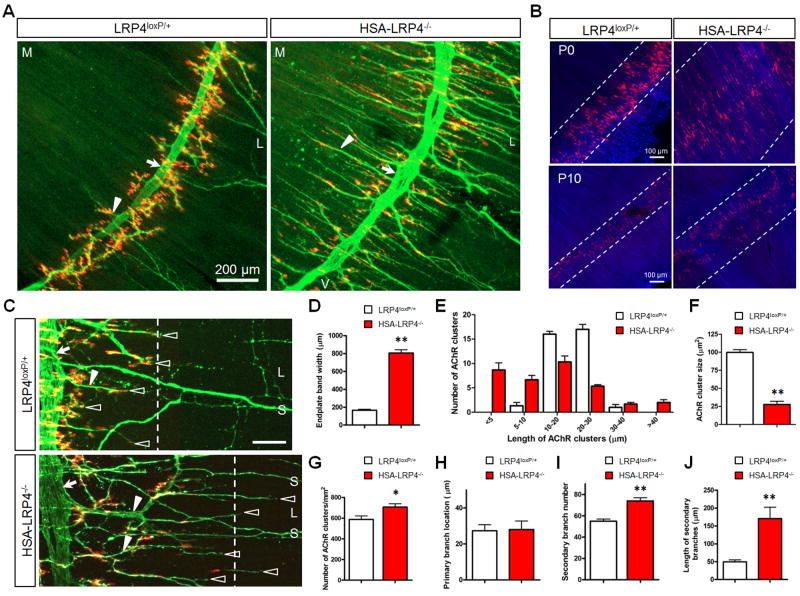
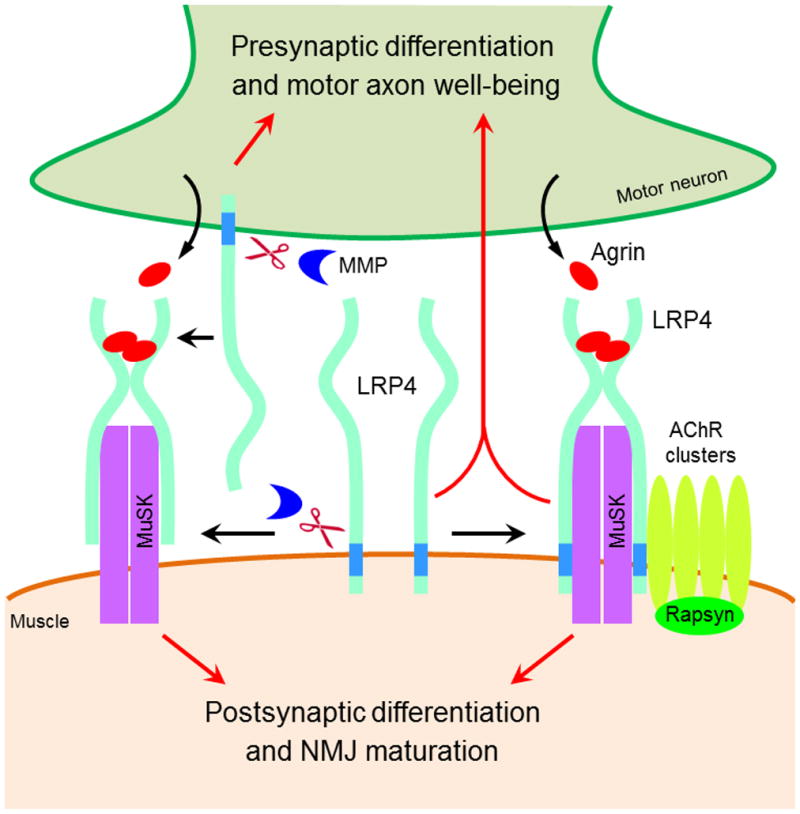
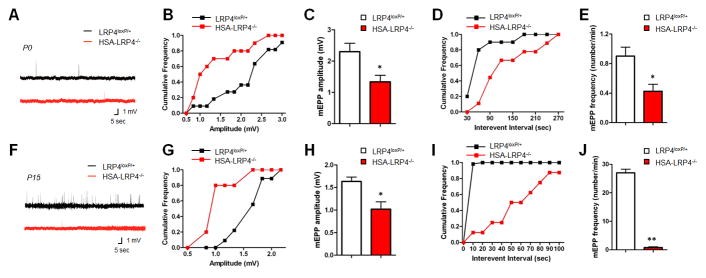
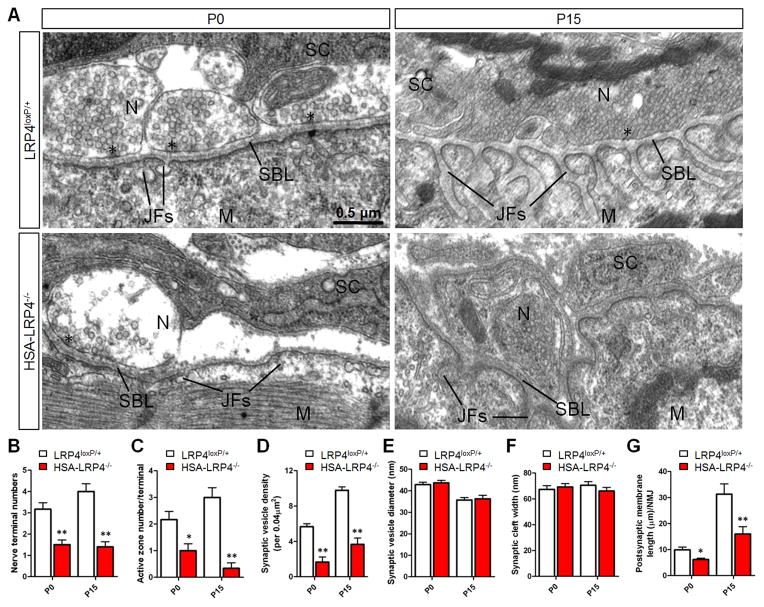
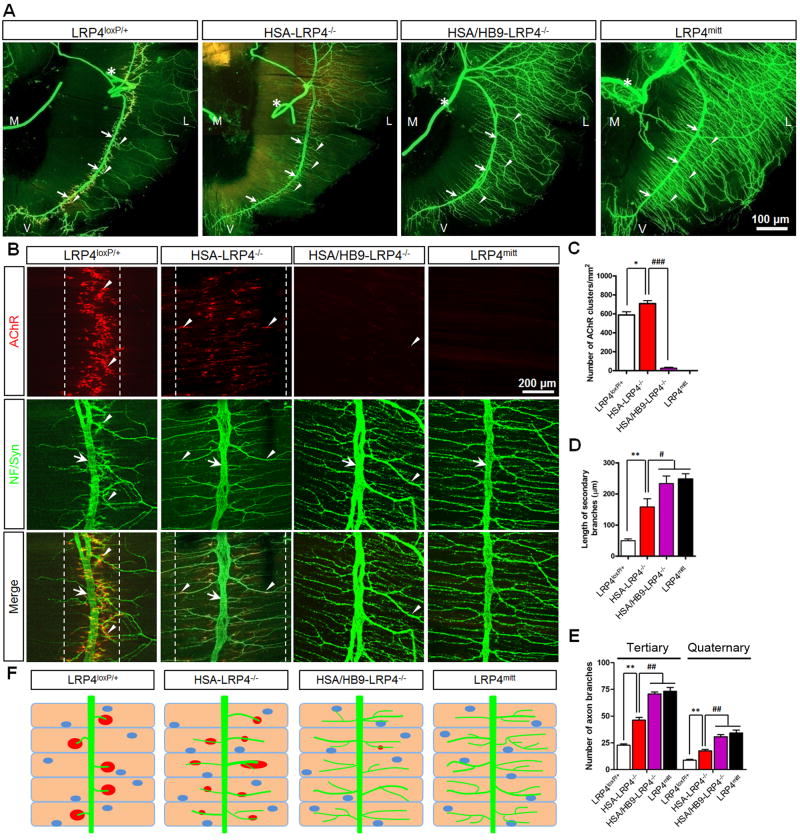
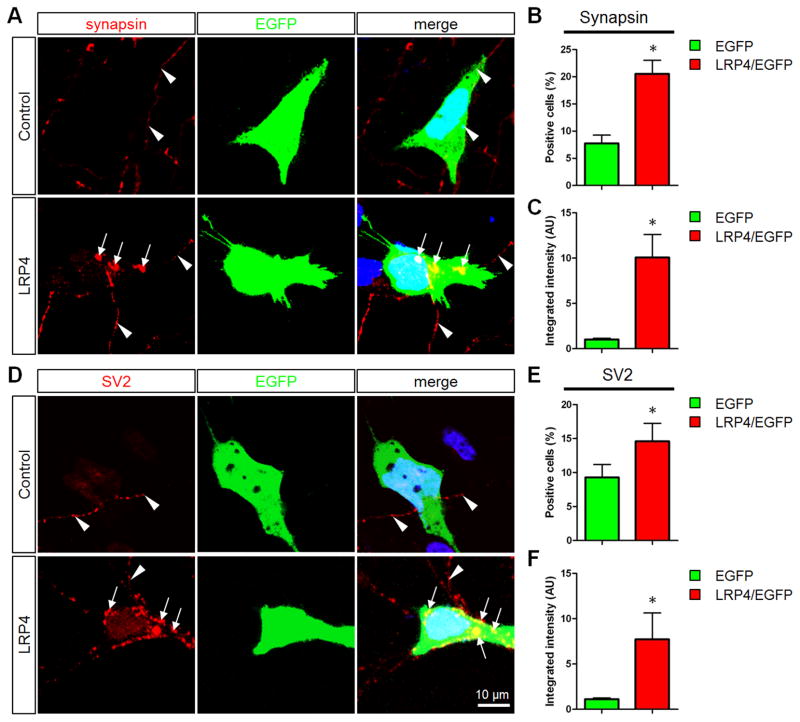
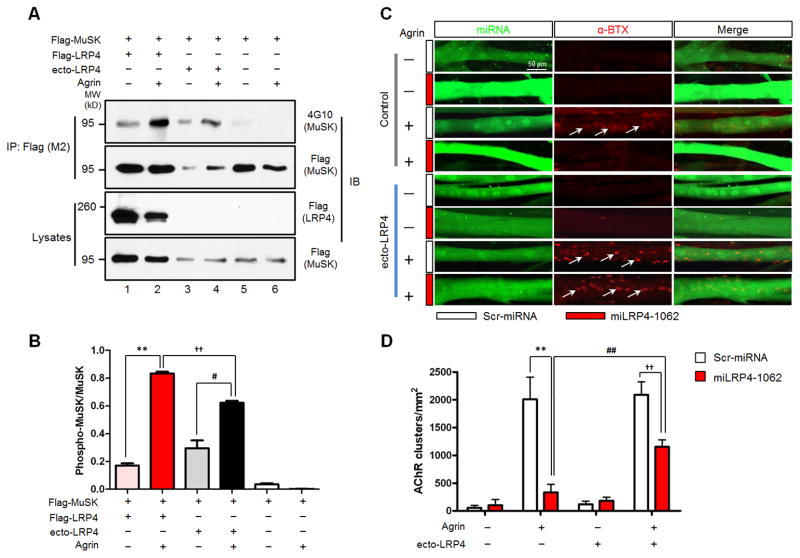
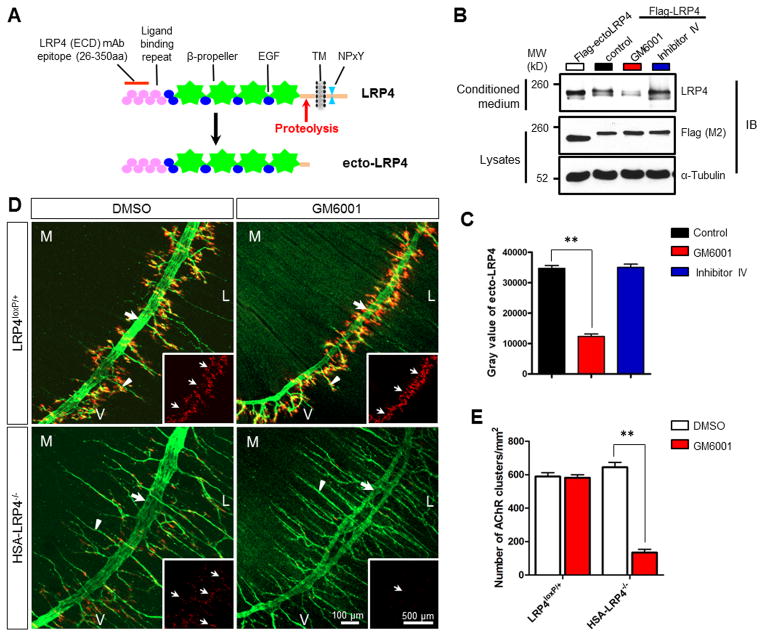
Neuromuscular junction (NMJ) formation requires precise interaction between motoneurons and muscle fibers. LRP4 is a receptor of agrin that is thought to act in cis to stimulate MuSK in muscle fibers for postsynaptic differentiation. Here we dissected the roles of LRP4 in muscle fibers and motoneurons in NMJ formation by cell-specific mutation. Studies of muscle-specific mutants suggest that LRP4 is involved in deciding where to form AChR clusters in muscle fibers, postsynaptic differentiation, and axon terminal development. LRP4 in HEK293 cells increased synapsin or SV2 puncta in contacting axons of cocultured neurons, suggesting a synaptogenic function. Analysis of LRP4 muscle and motoneuron double mutants and mechanistic studies suggest that NMJ formation may also be regulated by LRP4 in motoneurons, which could serve as agrin's receptor in trans to induce AChR clusters. These observations uncovered distinct roles of LRP4 in motoneurons and muscles in NMJ development.
神经肌肉接头 (NMJ) 的形成需要运动神经元和肌肉纤维之间的精确相互作用。LRP4 是神经节苷脂的受体,被认为在顺式作用中刺激肌肉纤维中的 MuSK 进行突触后分化。在这里,我们通过细胞特异性突变来剖析 LRP4 在 NMJ 形成过程中肌肉纤维和运动神经元中的作用。肌肉特异性突变体的研究表明,LRP4 参与决定肌肉纤维中何处形成 AChR 簇、突触后分化和轴突末端发育。LRP4 在 HEK293 细胞中增加了共培养神经元接触轴突中的突触素或 SV2 斑点,表明其具有形成突触的功能。对 LRP4 肌肉和运动神经元双重突变体的分析和机制研究表明,NMJ 的形成也可能受到运动神经元中 LRP4 的调节,它可能作为神经节苷脂的跨膜受体诱导 AChR 簇的形成。这些观察结果揭示了 LRP4 在 NMJ 发育过程中在运动神经元和肌肉中的不同作用。