Department of Biology, University of New Mexico, Albuquerque, New Mexico, United States of America.
PLoS One. 2012;7(7):e39427. doi: 10.1371/journal.pone.0039427. Epub 2012 Jul 10.
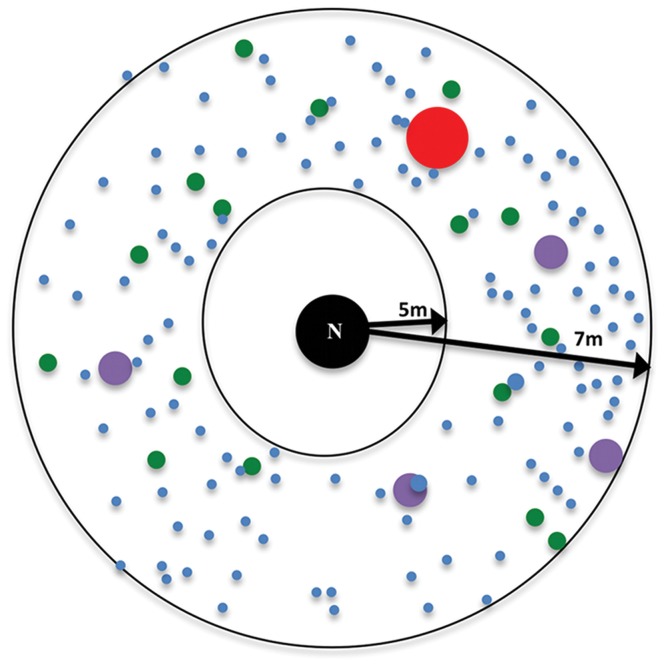
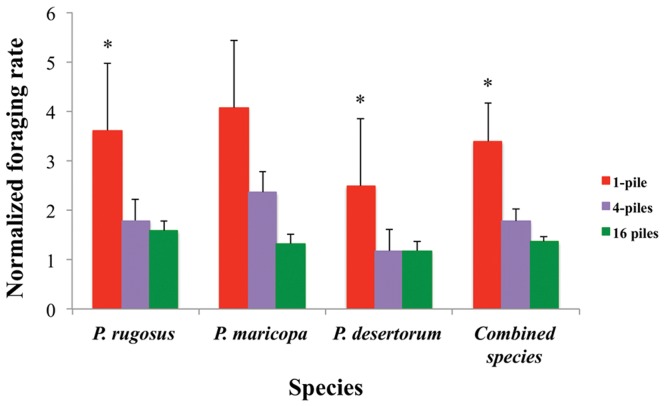
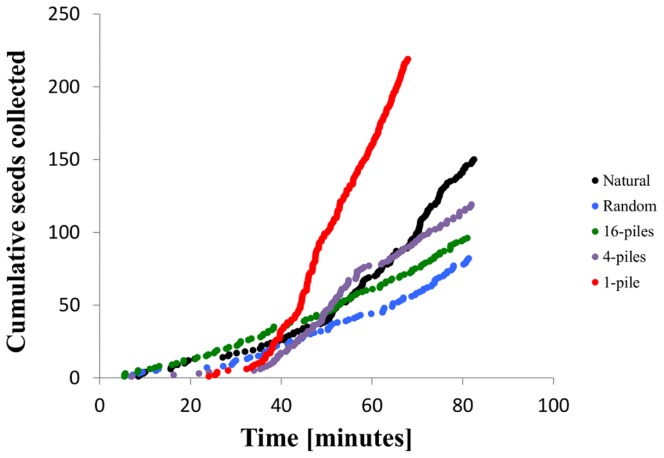
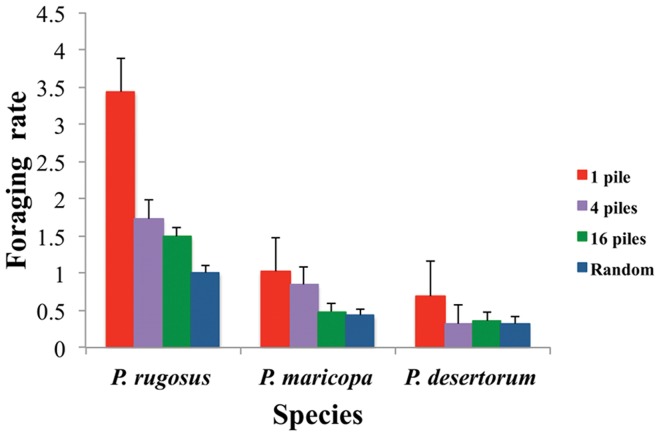
Desert seed-harvester ants, genus Pogonomyrmex, are central place foragers that search for resources collectively. We quantify how seed harvesters exploit the spatial distribution of seeds to improve their rate of seed collection. We find that foraging rates are significantly influenced by the clumpiness of experimental seed baits. Colonies collected seeds from larger piles faster than randomly distributed seeds. We developed a method to compare foraging rates on clumped versus random seeds across three Pogonomyrmex species that differ substantially in forager population size. The increase in foraging rate when food was clumped in larger piles was indistinguishable across the three species, suggesting that species with larger colonies are no better than species with smaller colonies at collecting clumped seeds. These findings contradict the theoretical expectation that larger groups are more efficient at exploiting clumped resources, thus contributing to our understanding of the importance of the spatial distribution of food sources and colony size for communication and organization in social insects.
荒漠种子采集蚁,属名 Pogonomyrmex,是一种集中觅食的蚂蚁,它们集体寻找资源。我们量化了种子采集蚁如何利用种子的空间分布来提高种子采集的效率。我们发现觅食率受到实验种子诱饵聚集程度的显著影响。蚁群从较大的种子堆中收集种子的速度比随机分布的种子快。我们开发了一种方法,可以在三种 Pogonomyrmex 物种之间比较聚集和随机种子的觅食率,这三种物种的觅食者种群大小有很大差异。当食物聚集在更大的堆中时,觅食率的增加在三个物种中是无法区分的,这表明具有较大蚁群的物种在收集聚集种子方面并不比具有较小蚁群的物种更好。这些发现与更大的群体在利用聚集资源方面更有效率的理论预期相矛盾,这有助于我们理解食物来源的空间分布和群体大小对于社会昆虫的通讯和组织的重要性。