Yaghoobi-Ershadi Mr, Hakimiparizi M, Zahraei-Ramazani Ar, Abdoli H, Akhavan Aa, Aghasi M, Arandian Mh, Ranjbar Aa
Department of Medical Entomology and Vector Control, School of Public Health, Tehran University of Medical Sciences, Iran.
Iran J Arthropod Borne Dis. 2010;4(1):17-23. Epub 2010 Jun 30.
Cutaneous leishmaniasis due to Leishmania major has become a hot topic in Iran. The objective of this study was to determine some ecological aspects of sand flies in the study area.
Sand flies were collected biweekly from indoors and outdoors fixed places in the selected villages, using 30 sticky paper traps from the beginning to the end of the active season of 2006 in Kerman Province, south of Iran. The flies were mounted and identified. Some blood fed and gravid female sand flies of rodent burrows and indoors were dissected and examined microscopically for natural promastigote infection of Leishmania parasite during August to September.
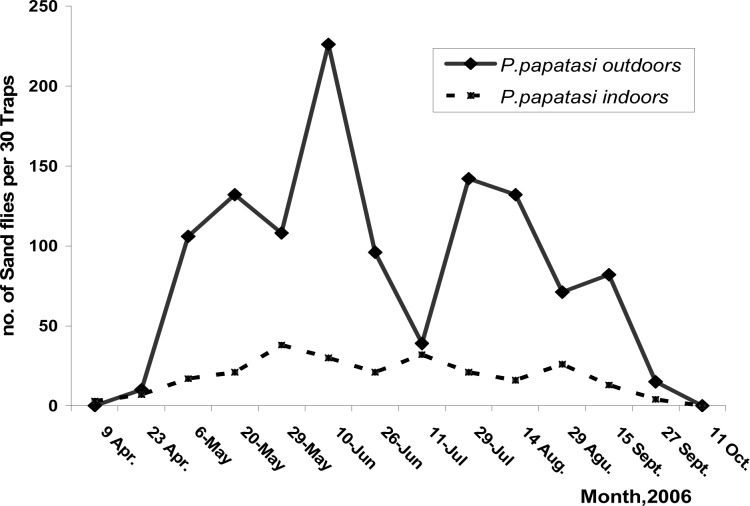
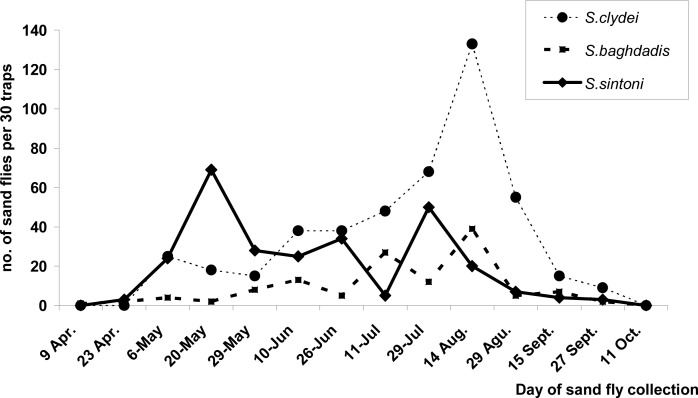
In total, 2439 specimens comprising 8 species (3 Phlebotomus and 5 Sergentomyia) were identified. The most common sand fly was P. papatasi and represented 87.1% of sand flies from indoors and 57.2% from outdoors. The activity of the species extended from April to end October. There are two peaks in the density curve of this species, one in June and the second in August. Natural promastigote infection was found in P. papatasi (12.7%).
Phlebotomus papatasi is considered as a probable vector among gerbils and to humans with a high percentage of promastigote infection in this new focus of cutaneous leishmaniasis. The Bahraman area which until recently was unknown as an endemic area seems now to represent a focus of zoonotic cutaneous leishmaniasis transmission in Iran.
由硕大利什曼原虫引起的皮肤利什曼病已成为伊朗的一个热门话题。本研究的目的是确定研究区域内白蛉的一些生态特征。
2006年活跃季节期间,于伊朗南部克尔曼省,从选定村庄的室内和室外固定地点每两周收集一次白蛉,使用30个粘纸诱捕器,从开始到结束。将捕获的白蛉制成标本并进行鉴定。在8月至9月期间,解剖并显微镜检查了一些来自啮齿动物洞穴和室内的吸血和怀孕雌性白蛉,以检测利什曼原虫的自然前鞭毛体感染情况。
总共鉴定出2439个标本,包括8个物种(3种白蛉属和5种司蛉属)。最常见的白蛉是巴氏白蛉,占室内白蛉的87.1%,室外白蛉的57.2%。该物种的活动时间从4月持续到10月底。该物种的密度曲线有两个峰值,一个在6月,另一个在8月。在巴氏白蛉中发现了自然前鞭毛体感染(12.7%)。
在这个新的皮肤利什曼病疫源地,巴氏白蛉被认为是沙鼠和人类之间可能传播媒介,其前鞭毛体感染率很高。直到最近还未知为流行区的巴赫拉曼地区,现在似乎成为了伊朗动物源性皮肤利什曼病传播的一个疫源地。