Department of Biochemistry, Yong Loo Lin School of Medicine, National University of Singapore, Singapore, Republic of Singapore.
PLoS One. 2012;7(7):e40341. doi: 10.1371/journal.pone.0040341. Epub 2012 Jul 17.
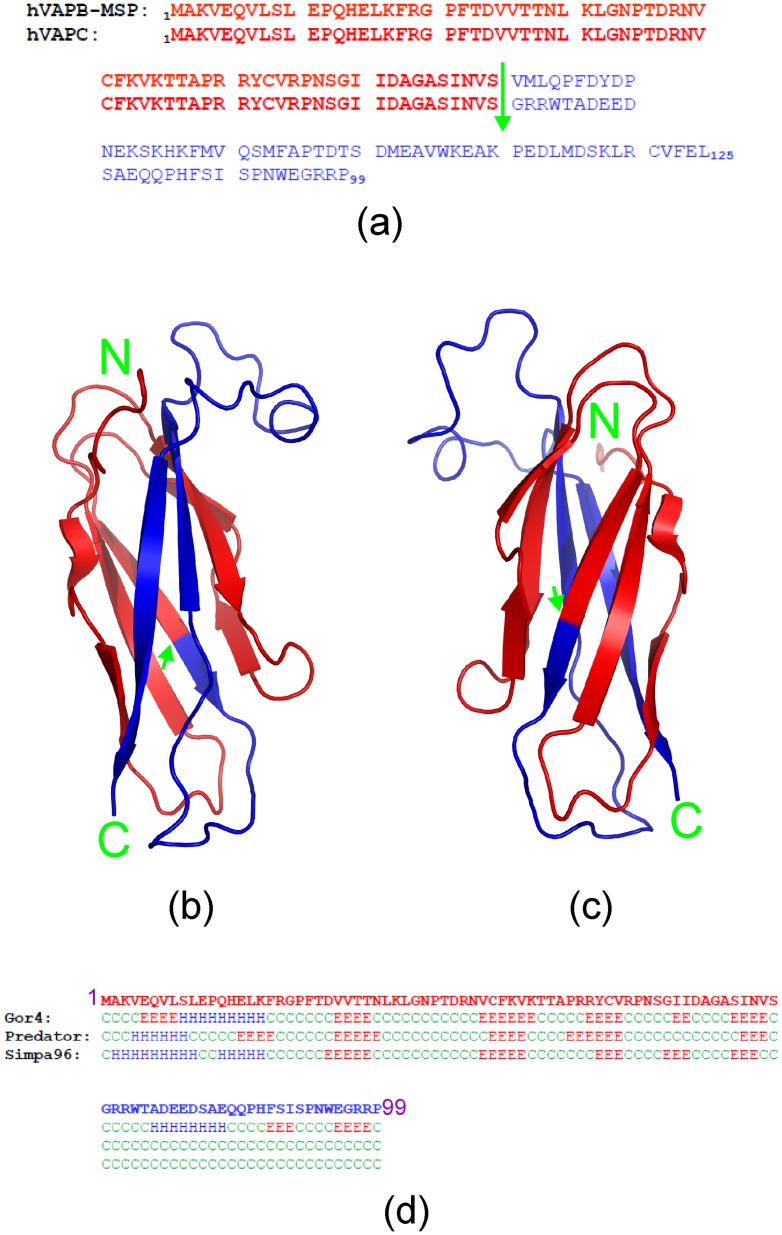
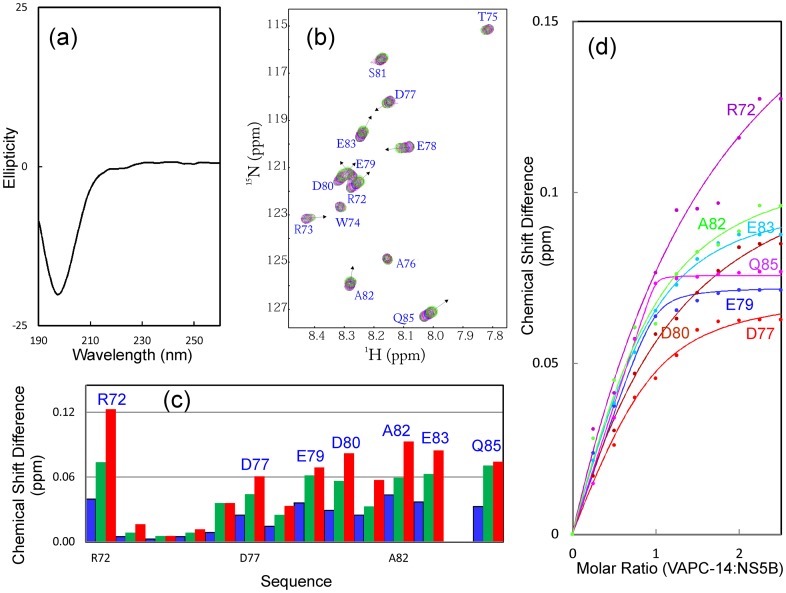
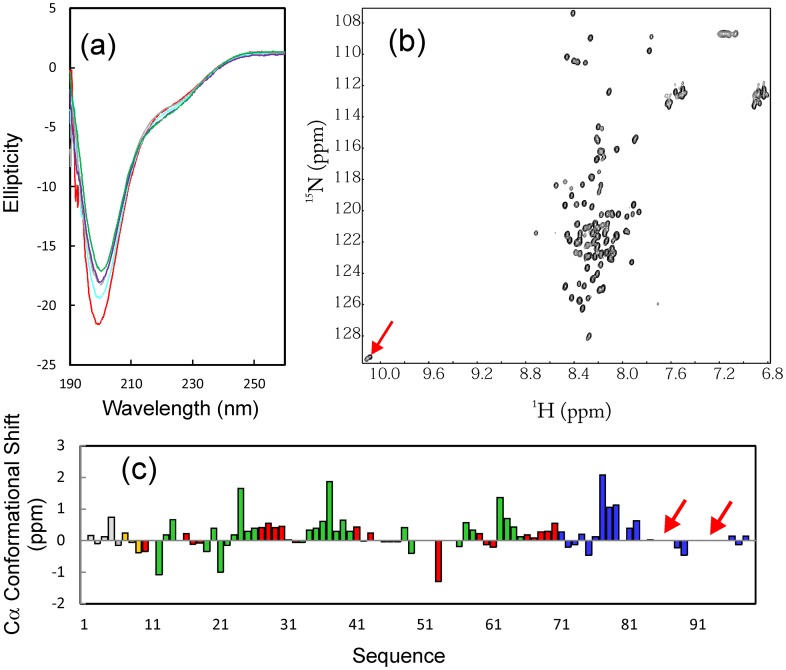
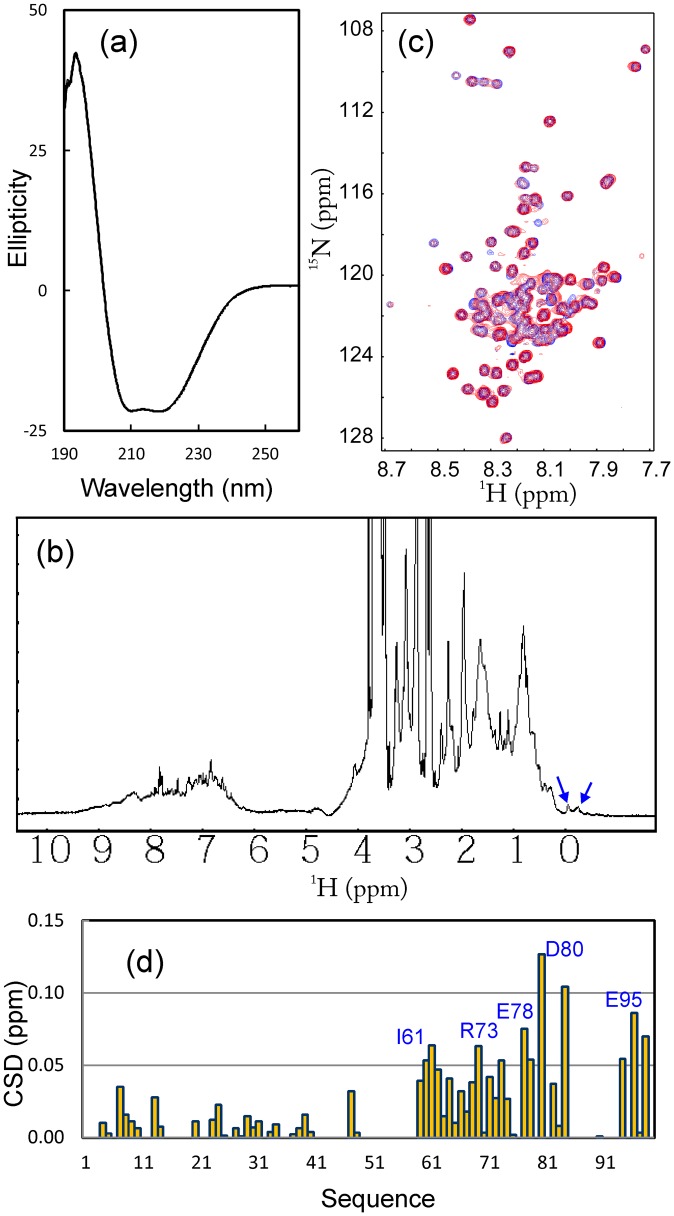
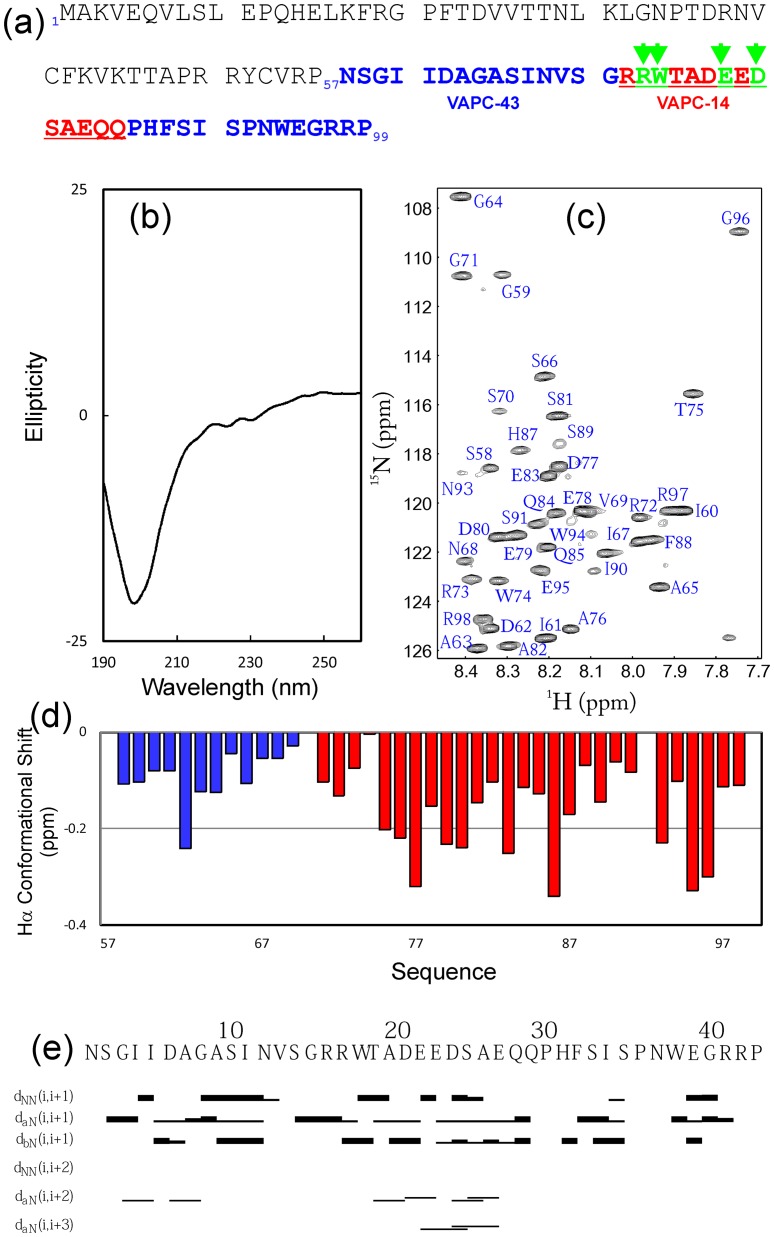
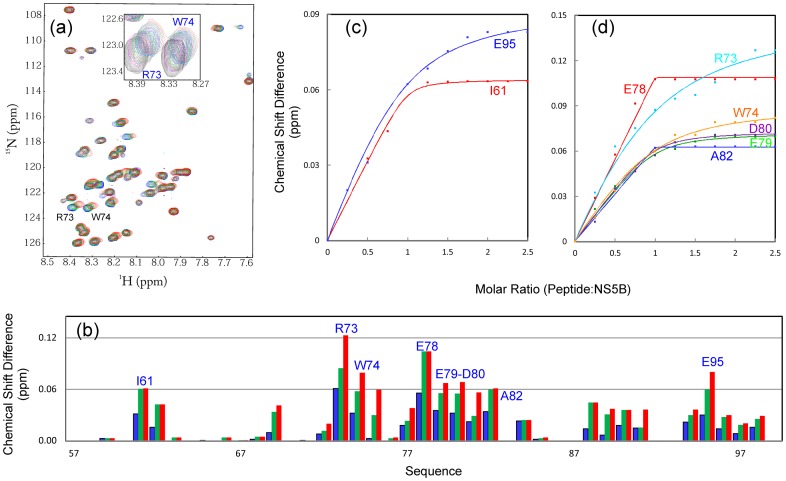
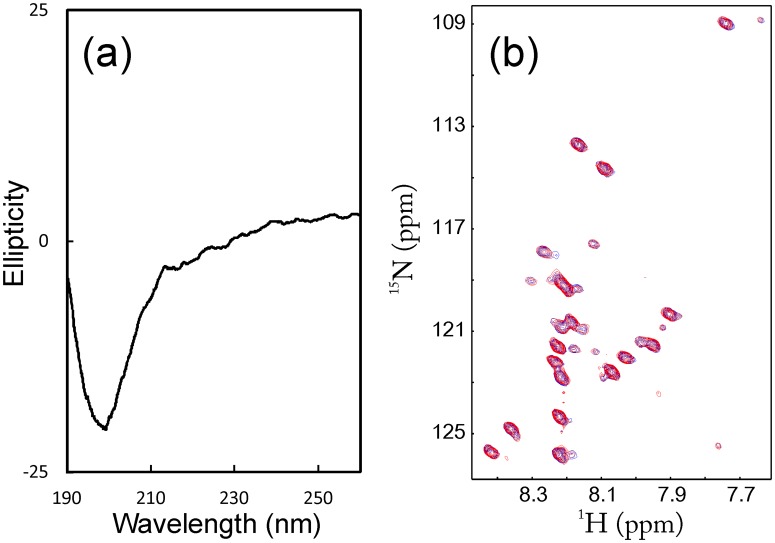
Nearly 200 million people are infected by hepatitis C virus (HCV) worldwide. For replicating the HCV genome, the membrane-associated machinery needs to be formed by both HCV non-structural proteins (including NS5B) and human host factors such as VAPB. Recently, the 99-residue VAPC, a splicing variant of VAPB, was demonstrated to inhibit HCV replication via binding to NS5B, thus acting as an endogenous inhibitor of HCV infection. So far, the structure of VAPC remains unknown, and its interaction with NS5B has not been biophysically characterized. In this study, we conducted extensive CD and NMR investigations on VAPC which led to several striking findings: 1) although the N-terminal 70 residues are identical in VAPC and VAPB, they constitute the characteristic β-barrel MSP fold in VAPB, while VAPC is entirely unstructured in solution, only with helical-like conformations weakly populated. 2) VAPC is indeed capable of binding to NS5B, with an average dissociation constant (Kd) of ∼20 µM. Intriguingly, VAPC remains dynamic even in the complex, suggesting that the VAPC-NS5B is a "fuzzy complex". 3) NMR mapping revealed that the major binding region for NS5B is located over the C-terminal half of VAPC, which is composed of three discrete clusters, of which only the first contains the region identical in VAPC and VAPB. The second region containing ∼12 residues appears to play a key role in binding since mutation of 4 residues within this region leads to almost complete loss of the binding activity. 4) A 14-residue mimetic, VAPC-14 containing the second region, only has a ∼3-fold reduction of the affinity. Our study not only provides critical insights into how a human factor mediates the formation of the HCV replication machinery, but also leads to design of VAPC-14 which may be further used to explore the function of VAPC and to develop anti-HCV molecules.
全球有近 2 亿人感染丙型肝炎病毒 (HCV)。为了复制 HCV 基因组,需要 HCV 非结构蛋白(包括 NS5B)和人宿主因子(如 VAPB)形成膜相关机制。最近,99 个残基的 VAPC,即 VAPB 的剪接变体,被证明通过与 NS5B 结合来抑制 HCV 复制,从而作为 HCV 感染的内源性抑制剂。到目前为止,VAPC 的结构仍然未知,其与 NS5B 的相互作用尚未通过生物物理方法进行表征。在这项研究中,我们对 VAPC 进行了广泛的 CD 和 NMR 研究,得出了一些引人注目的发现:1)尽管 VAPC 和 VAPB 的 N 端 70 个残基相同,但它们在 VAPB 中构成特征性的β桶 MSP 折叠,而 VAPC 在溶液中完全没有结构,只有螺旋样构象微弱存在。2)VAPC 确实能够与 NS5B 结合,平均解离常数(Kd)约为 20 µM。有趣的是,即使在复合物中,VAPC 仍然是动态的,这表明 VAPC-NS5B 是一种“模糊复合物”。3)NMR 图谱显示,NS5B 的主要结合区域位于 VAPC 的 C 端半部分,由三个离散的簇组成,其中只有第一个簇包含 VAPC 和 VAPB 中相同的区域。第二个包含约 12 个残基的区域似乎在结合中起着关键作用,因为该区域内的 4 个残基的突变导致结合活性几乎完全丧失。4)含有第二个区域的 14 个残基模拟物 VAPC-14 的亲和力仅降低了约 3 倍。我们的研究不仅为宿主因子如何介导 HCV 复制机制的形成提供了重要的见解,还设计了 VAPC-14,它可能进一步用于探索 VAPC 的功能,并开发抗 HCV 分子。