Department of Surgery, Medical College of Wisconsin and Zablocki VA Medical Center, Milwaukee, Wisconsin, USA.
J Neurogastroenterol Motil. 2012 Jul;18(3):246-57. doi: 10.5056/jnm.2012.18.3.246. Epub 2012 Jul 10.
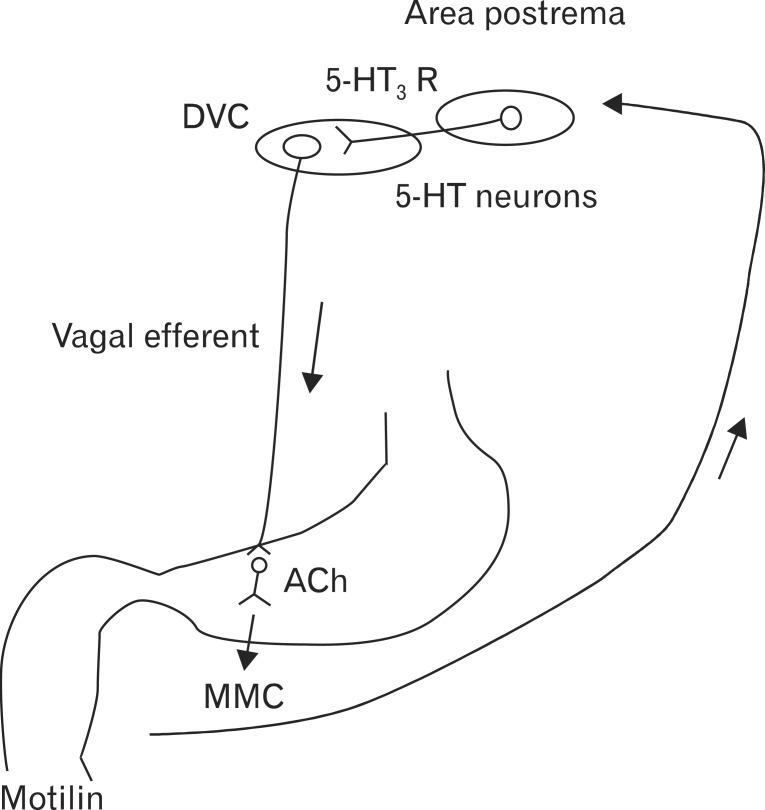
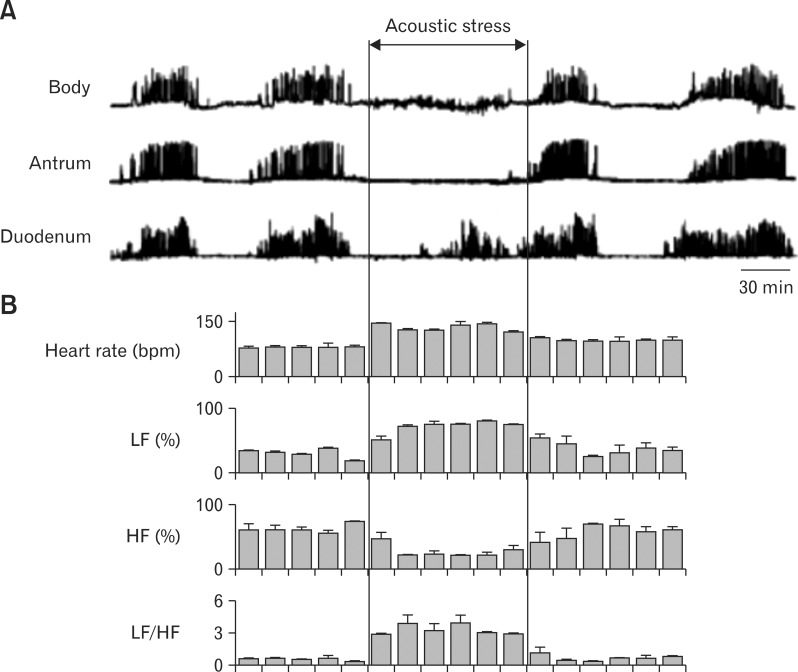
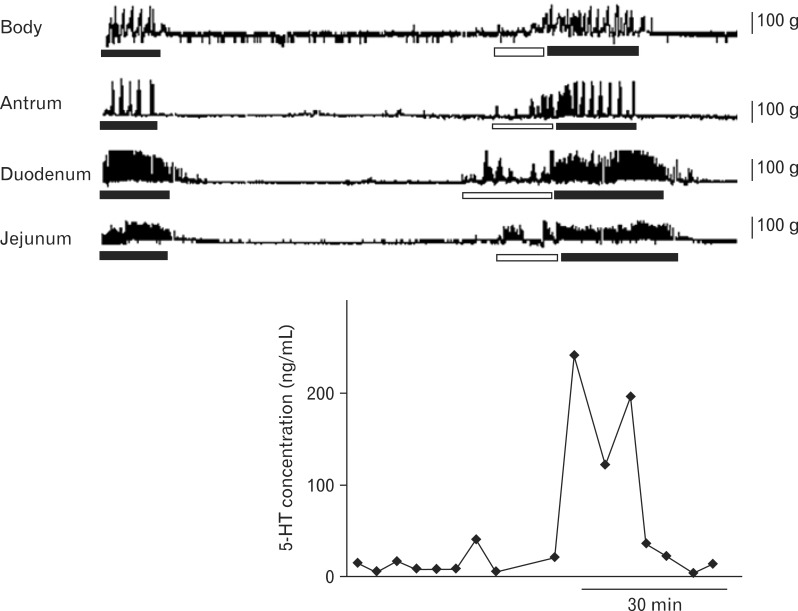
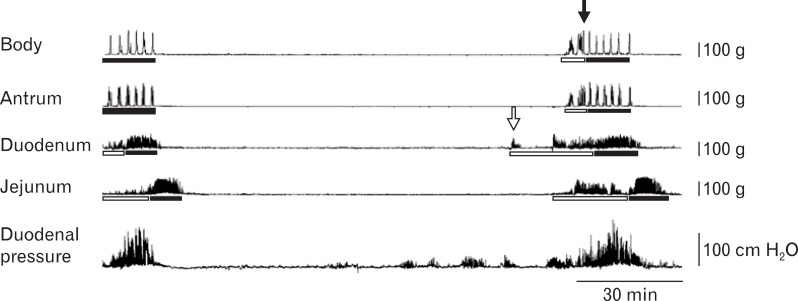
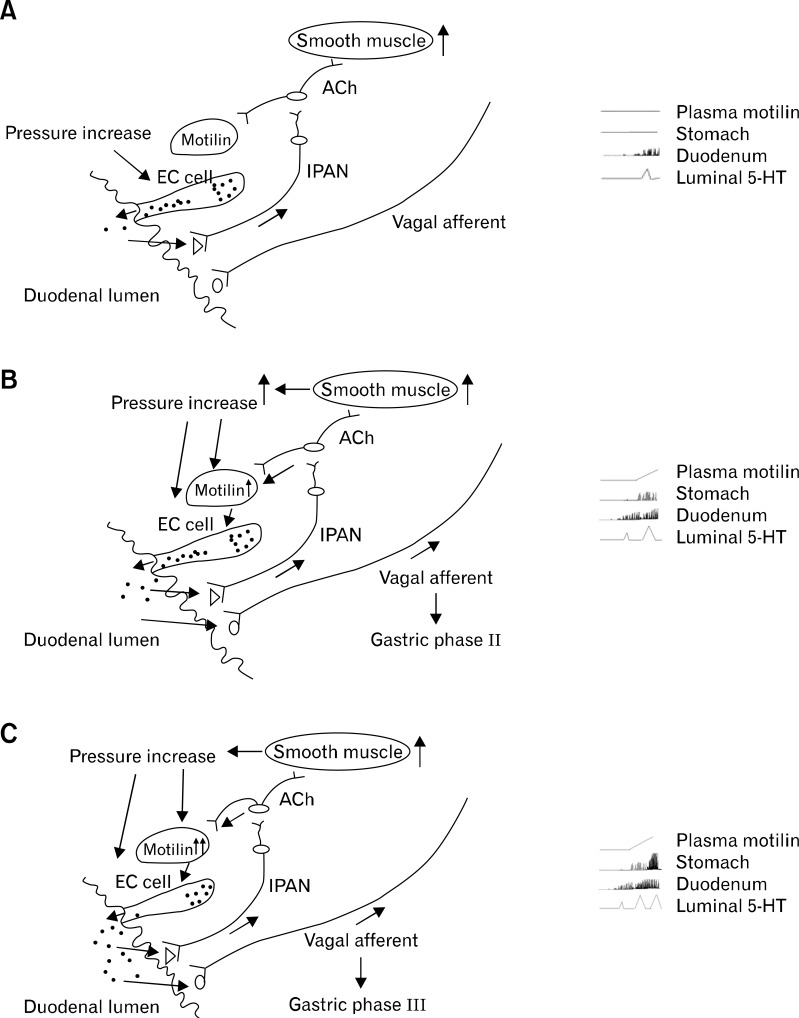
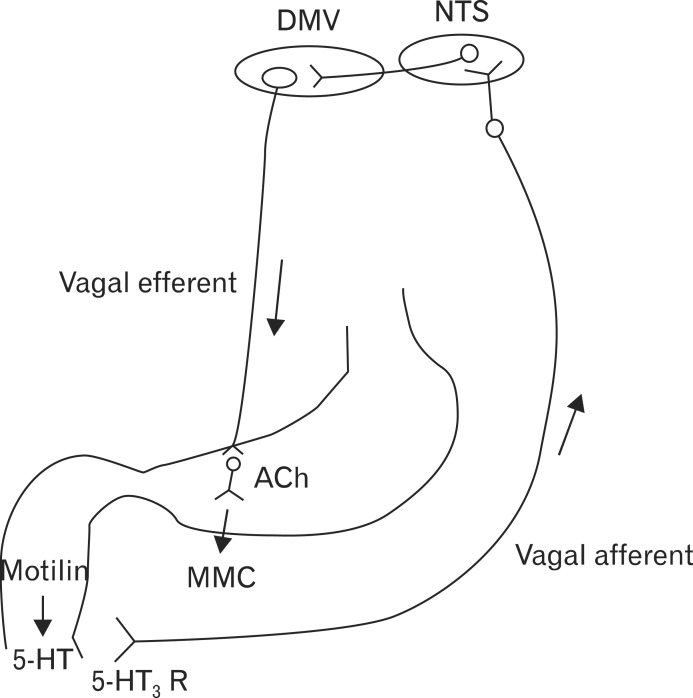
Migrating motor complex (MMC) is well characterized by the appearance of gastrointestinal contractions in the interdigestive state. This review article discussed the mechanism of gastrointestinal MMC. Luminal administration of 5-hydroxytryptamine (5-HT) initiates duodenal phase II followed by gastrointestinal phase III with a concomitant increase of plasma motilin release in conscious dogs. Duodenal 5-HT concentration is increased during gastric phase II and phase III. Intravenous infusion of motilin increases luminal 5-HT content and induces gastrointestinal phase III. 5-HT(4) antagonists significantly inhibits both of gastric and intestinal phase III, while 5-HT(3) antagonists inhibited only gastric phase III. These suggest that gastrointestinal MMC cycle is mediated via the interaction between motilin and 5-HT by the positive feedback mechanism. Gastric MMC is regulated via vagus, 5-HT(3/4) receptors and motilin, while intestinal MMC is regulated via intrinsic primary afferent neurons and 5-HT(4) receptors. Stress is highly associated with the pathogenesis of functional dyspepsia. Acoustic stress attenuates gastric phase III without affecting intestinal phase III in conscious dogs, via reduced vagal activity and increased sympathetic activity. It has been shown that subset of functional dyspepsia patients show reduced vagal activity and impaired gastric phase III. The physiological importance of gastric MMC is a mechanical and chemical cleansing of the empty stomach in preparation for the next meal. The impaired gastric MMC may aggravate dyspeptic symptoms following a food ingestion. Thus, maintaining gastric MMC in the interdigestive state is an important factor to prevent the postprandial dyspeptic symptoms.
移行性复合运动(MMC)的特征是在消化间期出现胃肠道收缩。本文综述了胃肠道 MMC 的发生机制。在清醒犬中,腔内给予 5-羟色胺(5-HT)可引发十二指肠相 II,随后出现胃肠道相 III,并伴有血浆胃动素释放增加。胃相 II 和相 III 期间十二指肠 5-HT 浓度增加。胃动素静脉输注可增加腔内 5-HT 含量并诱导胃肠道相 III。5-HT(4)拮抗剂可显著抑制胃和肠相 III,而 5-HT(3)拮抗剂仅抑制胃相 III。这表明胃肠道 MMC 周期通过动力素和 5-HT 之间的正反馈机制介导。胃 MMC 通过迷走神经、5-HT(3/4)受体和胃动素调节,而肠 MMC 通过内在初级传入神经元和 5-HT(4)受体调节。应激与功能性消化不良的发病机制高度相关。声应激可通过降低迷走神经活动和增加交感神经活动,减弱而不影响清醒犬的肠相 III,从而减弱胃相 III。研究表明,功能性消化不良患者的部分人群表现出迷走神经活动减少和胃相 III 受损。胃 MMC 的生理重要性在于为空胃提供机械和化学清洁,为下一顿饭做准备。胃 MMC 受损可能会加重进食后消化不良症状。因此,在消化间期保持胃 MMC 是预防餐后消化不良症状的重要因素。