Department of Nuclear Medicine, Netherlands Cancer Institute-Antoni van Leeuwenhoek Hospital, Plesmanlaan 121, 1066 CX Amsterdam, The Netherlands.
J Oncol. 2012;2012:438647. doi: 10.1155/2012/438647. Epub 2012 Jul 10.
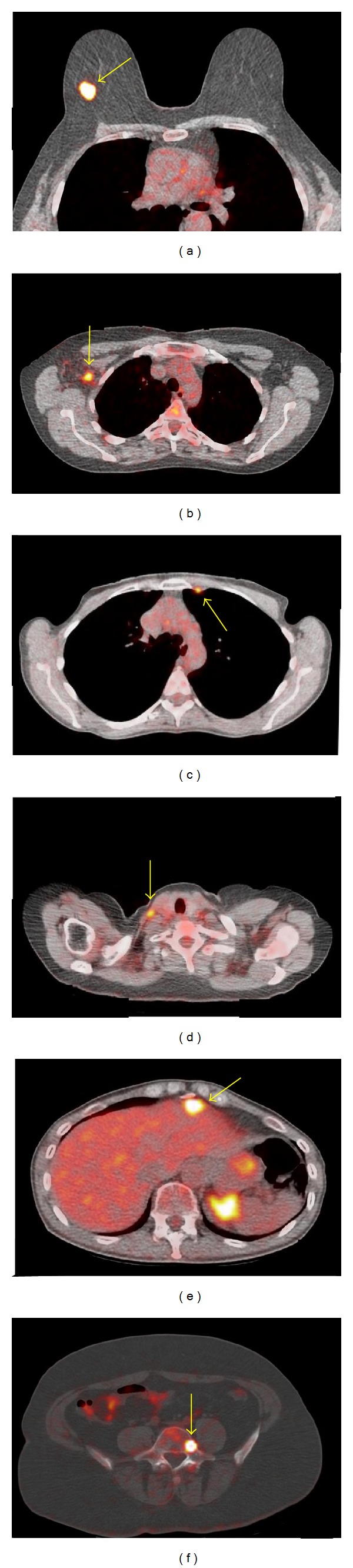
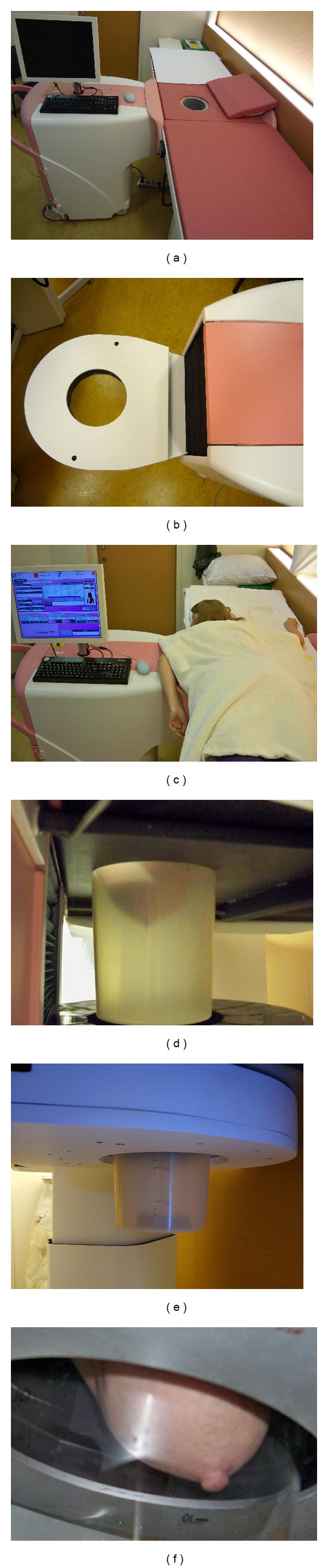
Positron emission tomography (PET), with or without integrated computed tomography (CT), using 18F-fluorodeoxyglucose (FDG) is based on the principle of elevated glucose metabolism in malignant tumors, and its use in breast cancer patients is frequently being investigated. It has been shown useful for classification, staging, and response monitoring, both in primary and recurrent disease. However, because of the partial volume effect and limited resolution of most whole-body PET scanners, sensitivity for the visualization of small tumors is generally low. To improve the detection and quantification of primary breast tumors with FDG PET, several dedicated breast PET devices have been developed. In this nonsystematic review, we shortly summarize the value of whole-body PET/CT in breast cancer and provide an overview of currently available dedicated breast PETs.
正电子发射断层扫描(PET),结合或不结合计算机断层扫描(CT),使用 18F-氟脱氧葡萄糖(FDG),基于恶性肿瘤葡萄糖代谢升高的原理,常用于乳腺癌患者。它已被证明对原发性和复发性疾病的分类、分期和反应监测都有用。然而,由于大多数全身 PET 扫描仪的部分容积效应和有限的分辨率,对小肿瘤的可视化的敏感性通常较低。为了提高 FDG PET 对原发性乳腺癌的检测和定量能力,已经开发了几种专用的乳腺 PET 设备。在本非系统性综述中,我们简要总结了全身 PET/CT 在乳腺癌中的价值,并概述了目前可用的专用乳腺 PET。