Experimental Eye Research Institute, Ruhr University Eye Hospital, Bochum, Germany.
PLoS One. 2012;7(7):e40616. doi: 10.1371/journal.pone.0040616. Epub 2012 Jul 26.
Antibodies against retinal and optic nerve antigens are detectable in glaucoma patients. Recent studies using a model of experimental autoimmune glaucoma demonstrated that immunization with certain ocular antigens causes an immun-mediated retinal ganglion cell loss in rats.
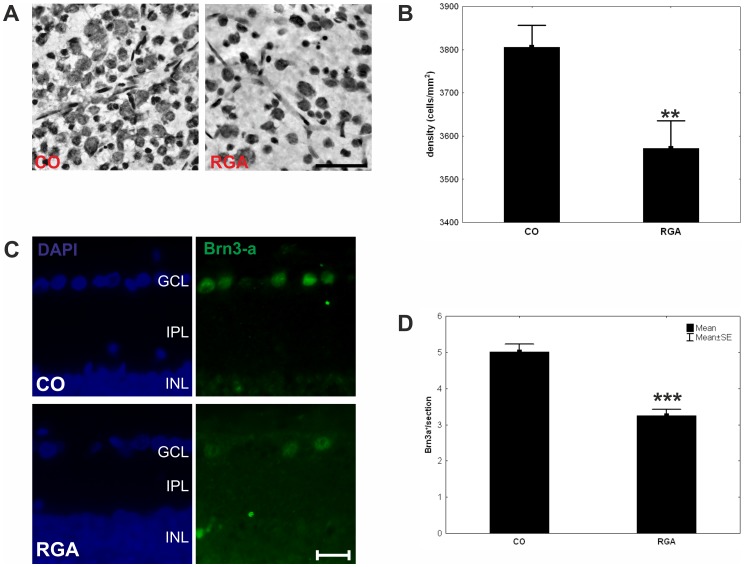
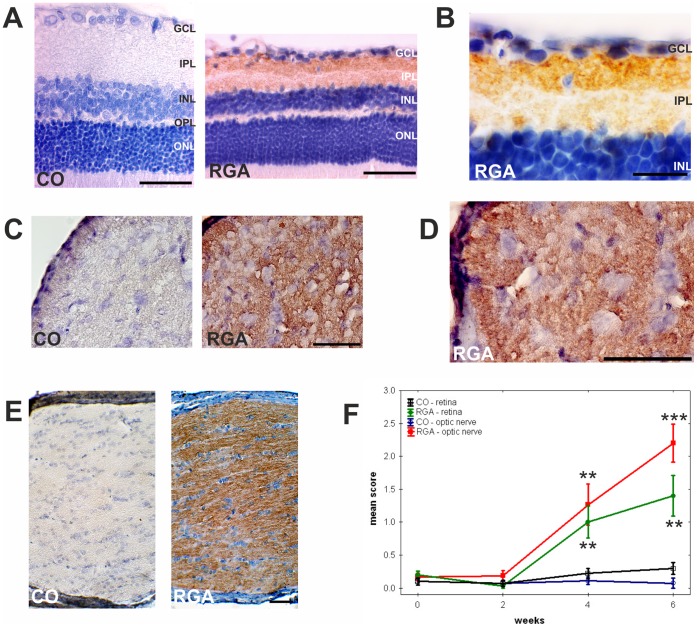
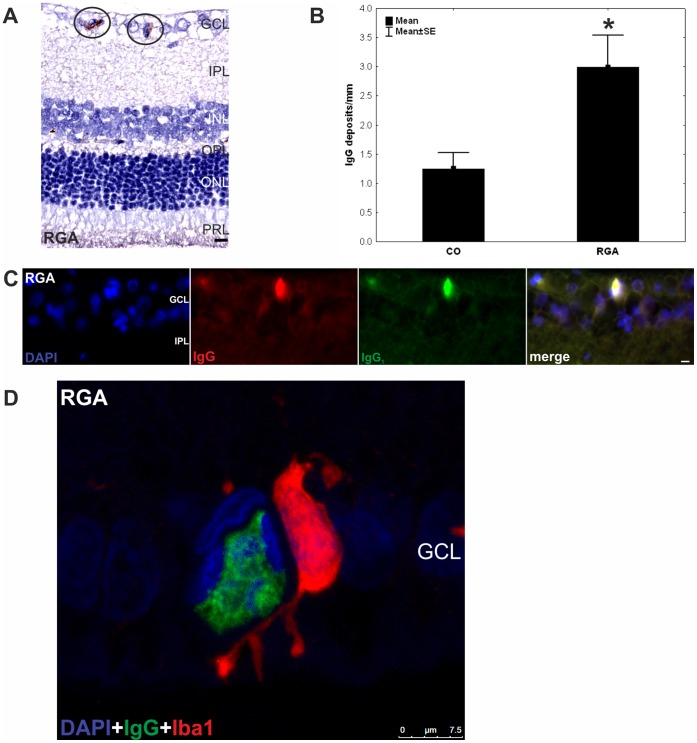
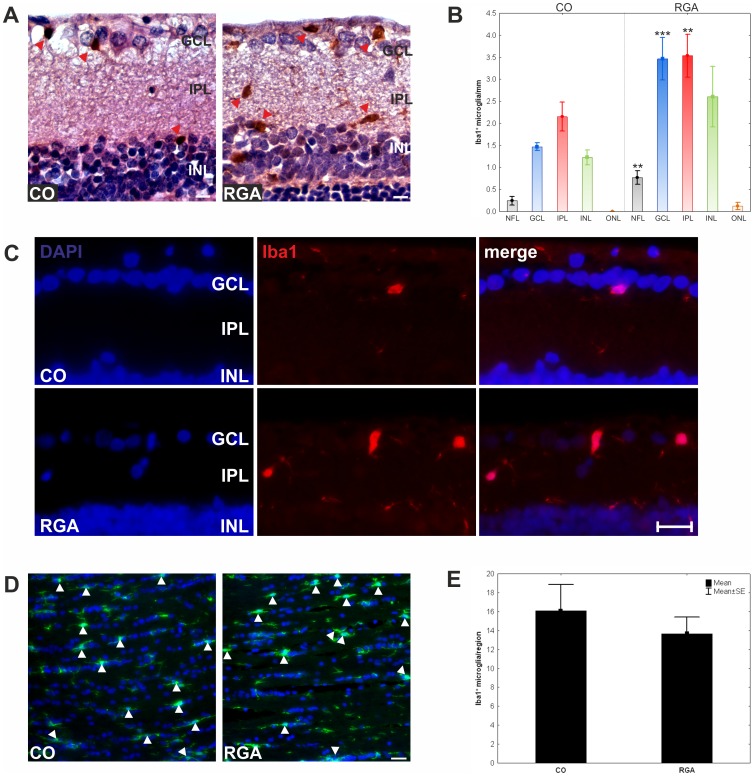
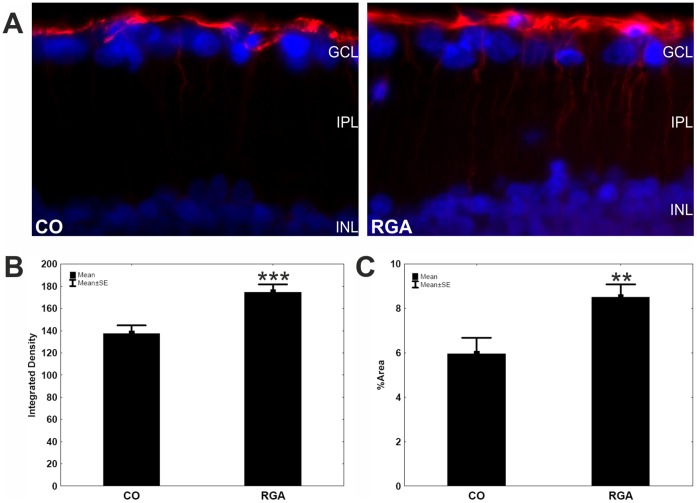
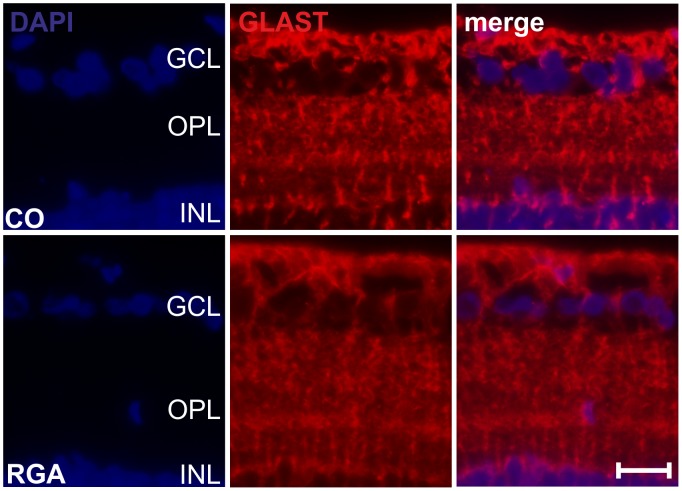
METHODOLOGY/PRINCIPAL FINDINGS: Rats immunized with a retinal ganglion cell layer homogenate (RGA) had a reduced retinal ganglion cell density on retinal flatmounts (p = 0.007) and a lower number of Brn3(+) retinal ganglion cells (p = 0.0001) after six weeks. The autoreactive antibody development against retina and optic nerve was examined throughout the study. The levels of autoreactive antibodies continuously increased up to 6 weeks (retina: p = 0.004; optic nerve: p = 0.000003). Additionally, antibody deposits were detected in the retina (p = 0.02). After 6 weeks a reactive gliosis (GFAP density: RGA: 174.7±41.9; CO: 137.6±36.8, p = 0.0006; %GFAP(+) area: RGA: 8.5±3.4; CO: 5.9±3.6, p = 0.006) as well as elevated level of Iba1(+) microglia cells (p = 0.003) was observed in retinas of RGA animals.
CONCLUSIONS/SIGNIFICANCE: Our findings suggest that these antibodies play a substantial role in mechanisms leading to retinal ganglion cell death. This seems to lead to glia cell activation as well as the invasion of microglia, which might be associated with debris clearance.
在青光眼患者中可检测到针对视网膜和视神经抗原的抗体。最近使用实验性自身免疫性青光眼模型的研究表明,用某些眼部抗原免疫可导致大鼠免疫介导的视网膜神经节细胞丧失。
方法/主要发现:用视网膜神经节细胞层匀浆(RGA)免疫的大鼠在视网膜平片上的视网膜神经节细胞密度降低(p=0.007),Brn3+视网膜神经节细胞数量减少(p=0.0001)六周后。整个研究过程中都检查了针对视网膜和视神经的自身抗体的发展情况。自身抗体的水平持续增加,直至 6 周(视网膜:p=0.004;视神经:p=0.000003)。此外,在视网膜中检测到抗体沉积(p=0.02)。6 周后,反应性神经胶质增生(GFAP 密度:RGA:174.7±41.9;CO:137.6±36.8,p=0.0006;%GFAP(+)面积:RGA:8.5±3.4;CO:5.9±3.6,p=0.006)以及 RGA 动物视网膜中 Iba1+小胶质细胞水平升高(p=0.003)。
结论/意义:我们的发现表明,这些抗体在导致视网膜神经节细胞死亡的机制中起重要作用。这似乎导致胶质细胞激活以及小胶质细胞的浸润,这可能与碎片清除有关。