• 文献检索
  • 文档翻译
  • 深度研究
  • 学术资讯
  • Suppr Zotero 插件Zotero 插件
  • 邀请有礼
  • 套餐&价格
  • 历史记录
应用&插件
Suppr Zotero 插件Zotero 插件浏览器插件Mac 客户端Windows 客户端微信小程序
定价
高级版会员购买积分包购买API积分包
服务
文献检索文档翻译深度研究API 文档MCP 服务
关于我们
关于 Suppr公司介绍联系我们用户协议隐私条款
关注我们

Suppr 超能文献

核心技术专利:CN118964589B侵权必究
粤ICP备2023148730 号-1Suppr @ 2026

文献检索

告别复杂PubMed语法,用中文像聊天一样搜索,搜遍4000万医学文献。AI智能推荐,让科研检索更轻松。

立即免费搜索

文件翻译

保留排版,准确专业,支持PDF/Word/PPT等文件格式,支持 12+语言互译。

免费翻译文档

深度研究

AI帮你快速写综述,25分钟生成高质量综述,智能提取关键信息,辅助科研写作。

立即免费体验

情绪表达的诊断特征被优先处理。

Diagnostic features of emotional expressions are processed preferentially.

机构信息

Department of Psychiatry and Psychotherapy, University Medical Center Freiburg, Freiburg, Germany.

出版信息

PLoS One. 2012;7(7):e41792. doi: 10.1371/journal.pone.0041792. Epub 2012 Jul 25.

DOI:10.1371/journal.pone.0041792
PMID:22848607
原文链接:https://pmc.ncbi.nlm.nih.gov/articles/PMC3405011/
Abstract

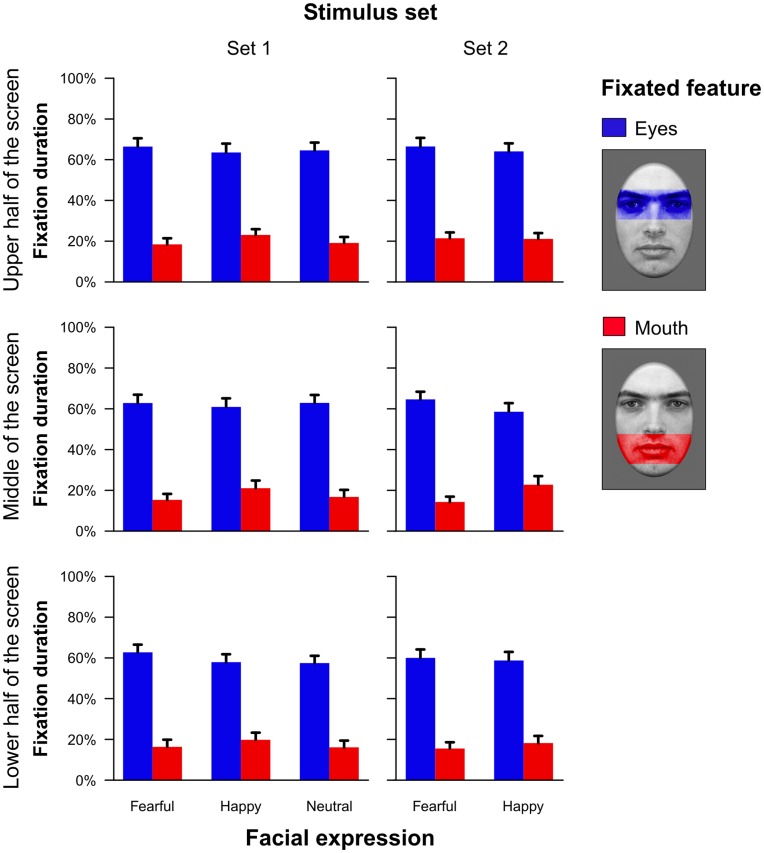
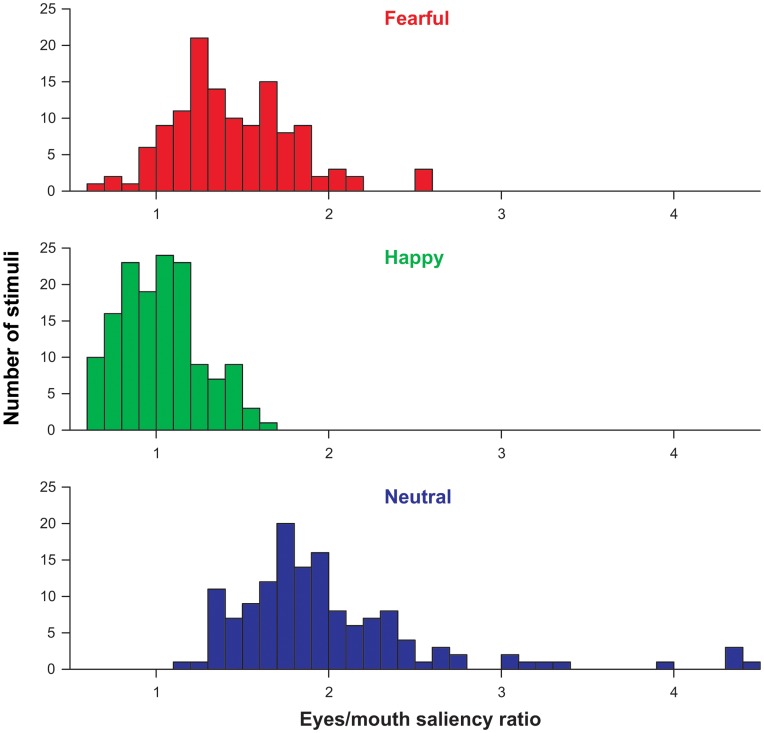
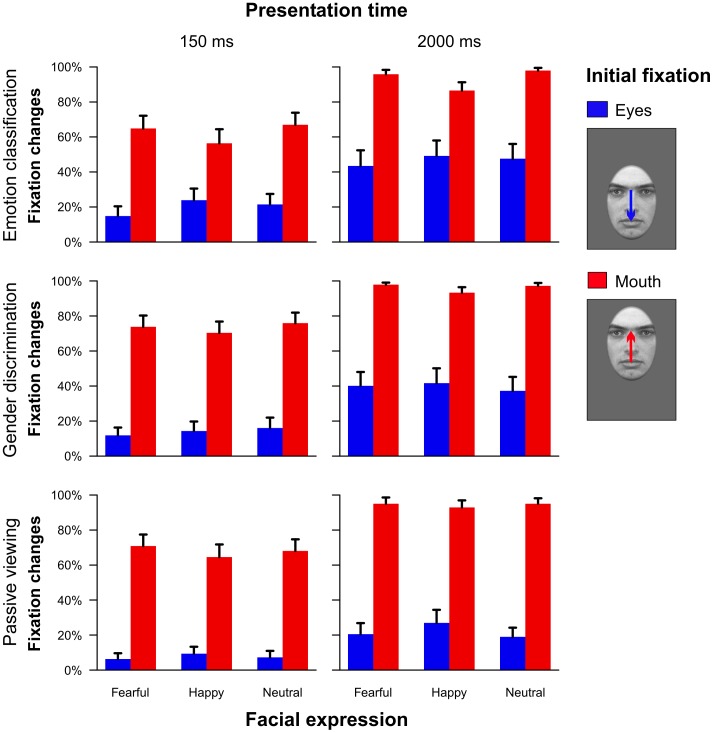
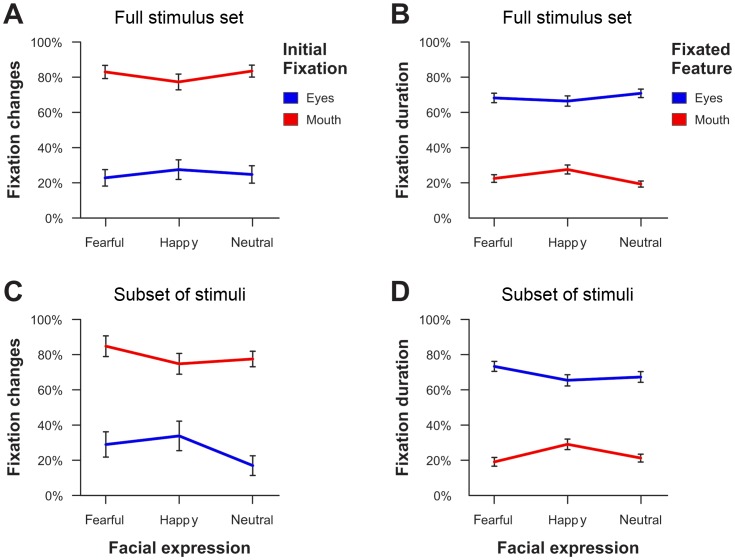
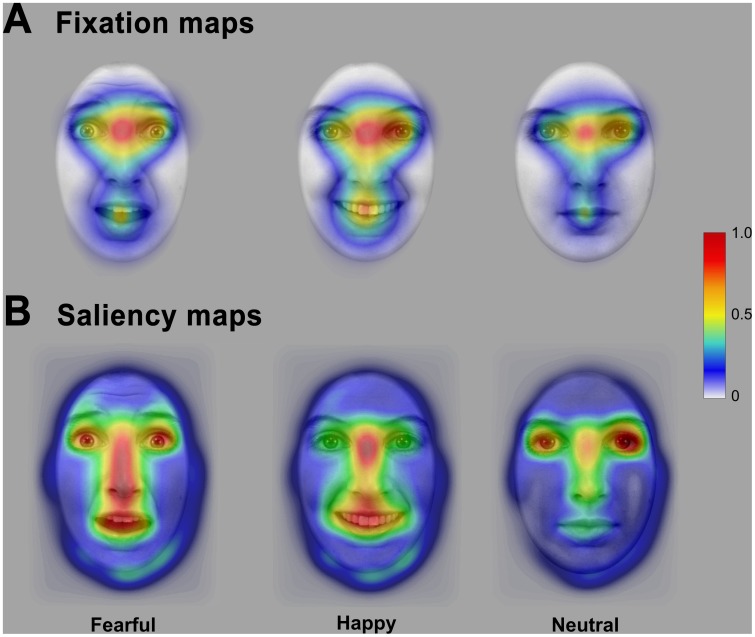
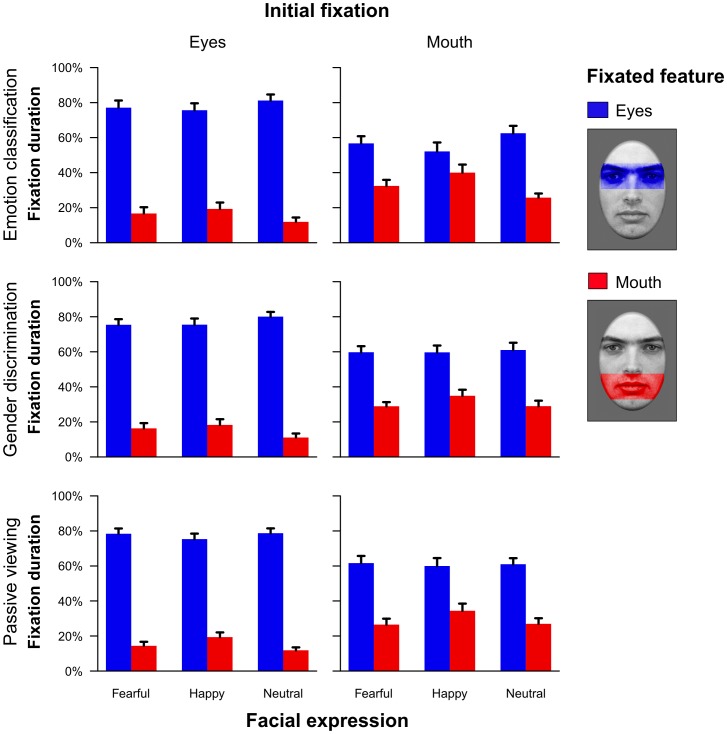
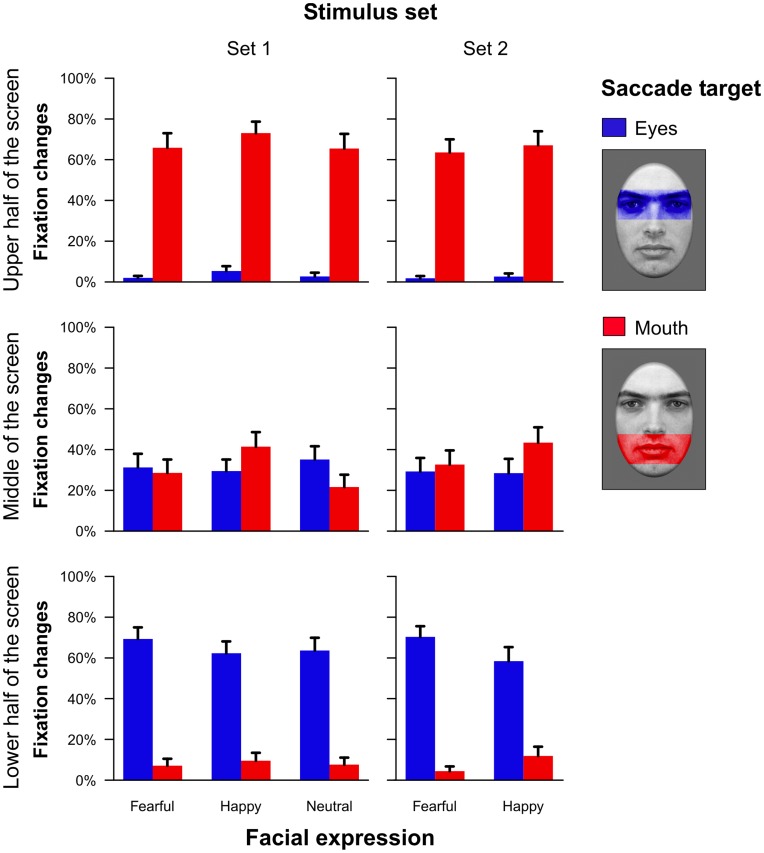
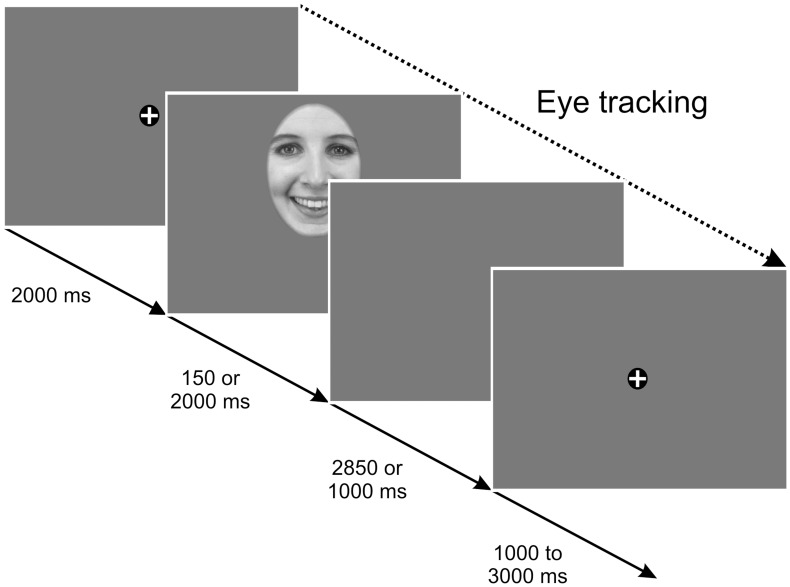
Diagnostic features of emotional expressions are differentially distributed across the face. The current study examined whether these diagnostic features are preferentially attended to even when they are irrelevant for the task at hand or when faces appear at different locations in the visual field. To this aim, fearful, happy and neutral faces were presented to healthy individuals in two experiments while measuring eye movements. In Experiment 1, participants had to accomplish an emotion classification, a gender discrimination or a passive viewing task. To differentiate fast, potentially reflexive, eye movements from a more elaborate scanning of faces, stimuli were either presented for 150 or 2000 ms. In Experiment 2, similar faces were presented at different spatial positions to rule out the possibility that eye movements only reflect a general bias for certain visual field locations. In both experiments, participants fixated the eye region much longer than any other region in the face. Furthermore, the eye region was attended to more pronouncedly when fearful or neutral faces were shown whereas more attention was directed toward the mouth of happy facial expressions. Since these results were similar across the other experimental manipulations, they indicate that diagnostic features of emotional expressions are preferentially processed irrespective of task demands and spatial locations. Saliency analyses revealed that a computational model of bottom-up visual attention could not explain these results. Furthermore, as these gaze preferences were evident very early after stimulus onset and occurred even when saccades did not allow for extracting further information from these stimuli, they may reflect a preattentive mechanism that automatically detects relevant facial features in the visual field and facilitates the orientation of attention towards them. This mechanism might crucially depend on amygdala functioning and it is potentially impaired in a number of clinical conditions such as autism or social anxiety disorders.

摘要

情绪表达的诊断特征在面部的分布是不同的。本研究旨在探讨这些诊断特征是否会被优先注意,即使它们与当前任务无关,或者当面部出现在视野的不同位置时。为此,在两项实验中,向健康个体呈现恐惧、快乐和中性面孔,同时测量眼动。在实验 1 中,参与者必须完成情绪分类、性别识别或被动观看任务。为了区分快速、可能是反射性的眼动和更细致的面部扫描,刺激呈现时间分别为 150 或 2000 毫秒。在实验 2 中,呈现相似的面孔在不同的空间位置,以排除眼动仅反映对特定视野位置的一般偏向的可能性。在这两个实验中,参与者注视眼睛区域的时间都比注视面部其他区域的时间长得多。此外,当呈现恐惧或中性面孔时,眼睛区域会被更显著地注视,而当呈现快乐表情时,注意力会更多地集中在嘴巴上。由于这些结果在其他实验操作中相似,它们表明情绪表达的诊断特征被优先处理,而不受任务需求和空间位置的影响。显著性分析表明,基于下传视觉注意的计算模型无法解释这些结果。此外,由于这些注视偏好在刺激出现后非常早期就出现,并且即使眼跳不允许从这些刺激中提取更多信息,它们也可能反映了一种非注意机制,该机制自动检测视野中相关的面部特征,并促进注意力朝向它们的定向。这种机制可能严重依赖于杏仁核的功能,并且在许多临床情况下可能会受到损害,如自闭症或社交焦虑障碍。
https://cdn.ncbi.nlm.nih.gov/pmc/blobs/588e/3405011/fef6be74bd89/pone.0041792.g008.jpg
https://cdn.ncbi.nlm.nih.gov/pmc/blobs/588e/3405011/1619118c32e8/pone.0041792.g001.jpg
https://cdn.ncbi.nlm.nih.gov/pmc/blobs/588e/3405011/1ae8a8a3190c/pone.0041792.g002.jpg
https://cdn.ncbi.nlm.nih.gov/pmc/blobs/588e/3405011/532acb4dff00/pone.0041792.g003.jpg
https://cdn.ncbi.nlm.nih.gov/pmc/blobs/588e/3405011/19c742421b30/pone.0041792.g004.jpg
https://cdn.ncbi.nlm.nih.gov/pmc/blobs/588e/3405011/6d2acbc11b8c/pone.0041792.g005.jpg
https://cdn.ncbi.nlm.nih.gov/pmc/blobs/588e/3405011/0ab6c9b3ed1d/pone.0041792.g006.jpg
https://cdn.ncbi.nlm.nih.gov/pmc/blobs/588e/3405011/fe44d2bd3fbc/pone.0041792.g007.jpg
https://cdn.ncbi.nlm.nih.gov/pmc/blobs/588e/3405011/fef6be74bd89/pone.0041792.g008.jpg
https://cdn.ncbi.nlm.nih.gov/pmc/blobs/588e/3405011/1619118c32e8/pone.0041792.g001.jpg
https://cdn.ncbi.nlm.nih.gov/pmc/blobs/588e/3405011/1ae8a8a3190c/pone.0041792.g002.jpg
https://cdn.ncbi.nlm.nih.gov/pmc/blobs/588e/3405011/532acb4dff00/pone.0041792.g003.jpg
https://cdn.ncbi.nlm.nih.gov/pmc/blobs/588e/3405011/19c742421b30/pone.0041792.g004.jpg
https://cdn.ncbi.nlm.nih.gov/pmc/blobs/588e/3405011/6d2acbc11b8c/pone.0041792.g005.jpg
https://cdn.ncbi.nlm.nih.gov/pmc/blobs/588e/3405011/0ab6c9b3ed1d/pone.0041792.g006.jpg
https://cdn.ncbi.nlm.nih.gov/pmc/blobs/588e/3405011/fe44d2bd3fbc/pone.0041792.g007.jpg
https://cdn.ncbi.nlm.nih.gov/pmc/blobs/588e/3405011/fef6be74bd89/pone.0041792.g008.jpg

相似文献

1
Diagnostic features of emotional expressions are processed preferentially.情绪表达的诊断特征被优先处理。
PLoS One. 2012;7(7):e41792. doi: 10.1371/journal.pone.0041792. Epub 2012 Jul 25.
2
Effects of Briefly Presented Masked Emotional Facial Expressions on Gaze Behavior: An Eye-Tracking Study.短暂呈现的掩蔽情绪面部表情对注视行为的影响:一项眼动追踪研究。
Psychol Rep. 2019 Aug;122(4):1432-1448. doi: 10.1177/0033294118789041. Epub 2018 Jul 22.
3
Fixation to features and neural processing of facial expressions in a gender discrimination task.性别歧视任务中对面部表情特征的注视与神经处理
Brain Cogn. 2015 Oct;99:97-111. doi: 10.1016/j.bandc.2015.05.007. Epub 2015 Aug 13.
4
The Role of Emotional Content and Perceptual Saliency During the Programming of Saccades Toward Faces.眼球扫视朝向面孔的编程过程中情绪内容和感知显著性的作用。
Cogn Sci. 2021 Oct;45(10):e13042. doi: 10.1111/cogs.13042.
5
Facial expression discrimination varies with presentation time but not with fixation on features: a backward masking study using eye-tracking.面部表情识别随呈现时间而变化,但不随对特征的注视而变化:一项使用眼动追踪的后向掩蔽研究。
Cogn Emot. 2014;28(1):115-31. doi: 10.1080/02699931.2013.812557. Epub 2013 Jul 23.
6
Amygdala activation predicts gaze toward fearful eyes.杏仁核激活可预测对恐惧眼神的注视。
J Neurosci. 2009 Jul 15;29(28):9123-6. doi: 10.1523/JNEUROSCI.1883-09.2009.
7
The impact on emotion classification performance and gaze behavior of foveal versus extrafoveal processing of facial features.注视点与非注视点加工面部特征对情绪分类性能和注视行为的影响。
J Exp Psychol Hum Percept Perform. 2020 Mar;46(3):292-312. doi: 10.1037/xhp0000712.
8
The role of superior temporal sulcus in the control of irrelevant emotional face processing: A transcranial direct current stimulation study.颞上沟在无关情绪面孔加工控制中的作用:一项经颅直流电刺激研究。
Neuropsychologia. 2014 Nov;64:124-33. doi: 10.1016/j.neuropsychologia.2014.09.015. Epub 2014 Sep 27.
9
Detection of emotional faces: The role of spatial frequencies and local features.情绪面孔的检测:空间频率和局部特征的作用。
Vision Res. 2023 Oct;211:108281. doi: 10.1016/j.visres.2023.108281. Epub 2023 Jul 6.
10
Saccadic latency is modulated by emotional content of spatially filtered face stimuli.眼跳潜伏期受空间滤波面部刺激情绪内容的调节。
Emotion. 2012 Dec;12(6):1384-92. doi: 10.1037/a0028677. Epub 2012 Jul 9.

引用本文的文献

1
Facial features associated with fear and happiness attract gaze during brief exposure without enhancing emotion recognition.与恐惧和快乐相关的面部特征在短暂暴露期间吸引目光,但不会增强情绪识别。
Sci Rep. 2025 Aug 19;15(1):30442. doi: 10.1038/s41598-025-12327-6.
2
Distinct contributions of foveal and extrafoveal visual information to emotion judgments and gaze behavior for faces.中央凹和中央凹外视觉信息对人脸情绪判断和注视行为的不同贡献。
J Vis. 2025 Jul 1;25(8):4. doi: 10.1167/jov.25.8.4.
3
Expectations guide predictive eye movements and information sampling during face recognition.

本文引用的文献

1
Discrepant integration times for upright and inverted faces.正立和倒立面孔的整合时间差异。
Perception. 2011;40(8):989-99. doi: 10.1068/p6955.
2
Attention misplaced: the role of diagnostic features in the face-inversion effect.注意力错位:诊断特征在面孔倒置效应中的作用。
J Exp Psychol Hum Percept Perform. 2011 Oct;37(5):1396-406. doi: 10.1037/a0024247.
3
Atypical reflexive gaze patterns on emotional faces in autism spectrum disorders.自闭症谱系障碍患者对情绪面孔的非典型反射性注视模式。
期望在人脸识别过程中引导预测性眼动和信息采样。
iScience. 2024 Sep 10;27(10):110920. doi: 10.1016/j.isci.2024.110920. eCollection 2024 Oct 18.
4
Dimensions of Alexithymia and Identification of Emotions in Masked and Unmasked Faces.述情障碍的维度及对有掩饰和无掩饰面部表情中情绪的识别
Behav Sci (Basel). 2024 Aug 9;14(8):692. doi: 10.3390/bs14080692.
5
Positive and negative facial valence perception are modulated differently by eccentricity in the parafovea: Replication from KDEF to NimStim.周边视野的偏心率对正性和负性面部效价感知的调节作用不同:KDEF 对 NimStim 的复制。
Sci Rep. 2024 Jun 14;14(1):13757. doi: 10.1038/s41598-024-63724-2.
6
Temporal progression of pupil dilation and gaze behavior to emotion expressions in preschoolers with autism spectrum disorder.自闭症谱系障碍学龄前儿童瞳孔扩张和注视行为随情绪表达的时间变化。
Sci Rep. 2024 Apr 3;14(1):7843. doi: 10.1038/s41598-024-58480-2.
7
Depressive symptoms and visual attention to others' eyes in healthy individuals.健康个体中的抑郁症状与对他人眼睛的视觉注意。
BMC Psychiatry. 2024 Mar 6;24(1):184. doi: 10.1186/s12888-024-05633-2.
8
Less attention to emotional faces is associated with low empathy and prosociality in 12-to 20-month old infants.12 至 20 个月大的婴儿对情绪面孔的关注度较低,与同理心和亲社会行为较低有关。
Infancy. 2024 Mar-Apr;29(2):113-136. doi: 10.1111/infa.12569. Epub 2024 Jan 3.
9
Mass-univariate analysis of scalp ERPs reveals large effects of gaze fixation location during face processing that only weakly interact with face emotional expression.头皮 ERP 的单变量分析揭示了在面孔处理过程中注视位置的显著影响,这些影响与面孔情绪表达仅存在微弱的相互作用。
Sci Rep. 2023 Oct 9;13(1):17022. doi: 10.1038/s41598-023-44355-5.
10
Threat induction biases processing of emotional expressions.威胁诱导会使情绪表达的处理产生偏差。
Front Psychol. 2022 Nov 24;13:967800. doi: 10.3389/fpsyg.2022.967800. eCollection 2022.
J Neurosci. 2010 Sep 15;30(37):12281-7. doi: 10.1523/JNEUROSCI.0688-10.2010.
4
Different amygdala subregions mediate valence-related and attentional effects of oxytocin in humans.不同的杏仁核亚区介导催产素在人类中与效价相关和注意力相关的效应。
Proc Natl Acad Sci U S A. 2010 May 18;107(20):9400-5. doi: 10.1073/pnas.1000985107. Epub 2010 Apr 26.
5
FACES--a database of facial expressions in young, middle-aged, and older women and men: development and validation.FACES——一个包含年轻、中年和老年女性和男性面部表情的数据库:开发与验证。
Behav Res Methods. 2010 Feb;42(1):351-62. doi: 10.3758/BRM.42.1.351.
6
Amygdala activation predicts gaze toward fearful eyes.杏仁核激活可预测对恐惧眼神的注视。
J Neurosci. 2009 Jul 15;29(28):9123-6. doi: 10.1523/JNEUROSCI.1883-09.2009.
7
No effect of inversion on attentional and affective processing of facial expressions.倒置对面部表情的注意力和情感加工没有影响。
Emotion. 2009 Apr;9(2):248-59. doi: 10.1037/a0014715.
8
Exploration of core features of a human face by healthy and autistic adults analyzed by visual scanning.通过视觉扫描分析健康成年人与自闭症成年人对人脸核心特征的探究。
Neuropsychologia. 2009 Mar;47(4):1004-12. doi: 10.1016/j.neuropsychologia.2008.10.023. Epub 2008 Nov 5.
9
Linking physiology with behaviour: Functional specialisation of the visual field is reflected in gaze patterns during visual search.将生理学与行为联系起来:视野的功能特化在视觉搜索过程中的注视模式中得以体现。
Vision Res. 2009 Jan;49(2):237-48. doi: 10.1016/j.visres.2008.10.021. Epub 2008 Dec 10.
10
Temporal dynamics of awareness for facial identity revealed with ERP.利用事件相关电位揭示面部身份意识的时间动态变化。
Brain Cogn. 2009 Mar;69(2):296-305. doi: 10.1016/j.bandc.2008.08.008. Epub 2008 Sep 24.