Department of Plant Pathology, College of Agriculture and Biotechnology, China Agricultural University, Beijing, China.
PLoS One. 2012;7(7):e42069. doi: 10.1371/journal.pone.0042069. Epub 2012 Jul 27.
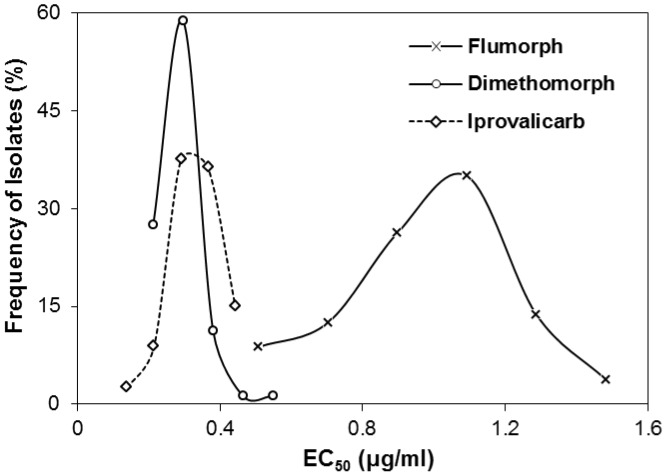
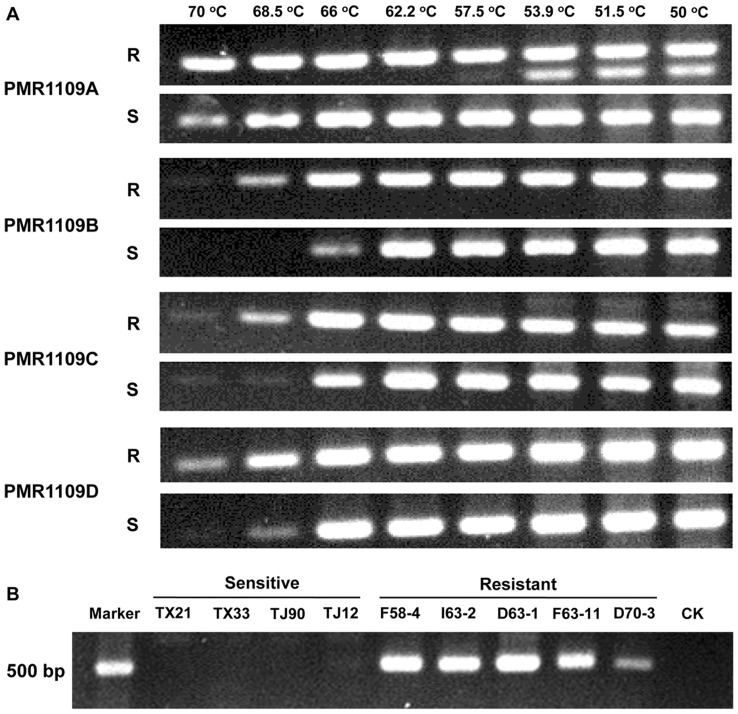
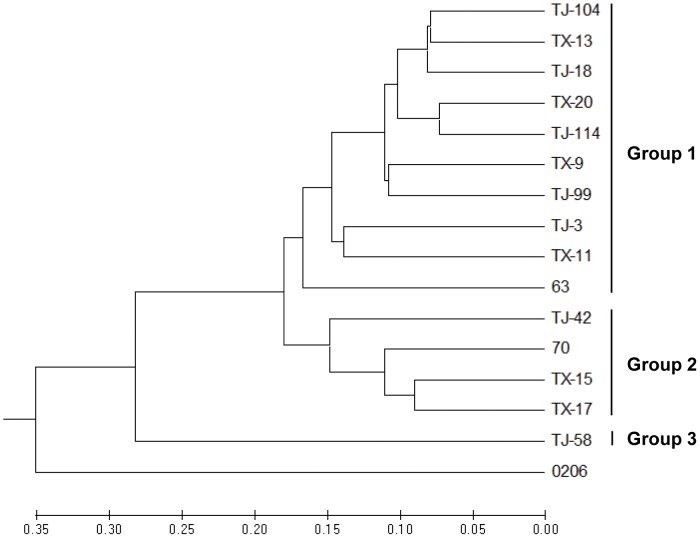
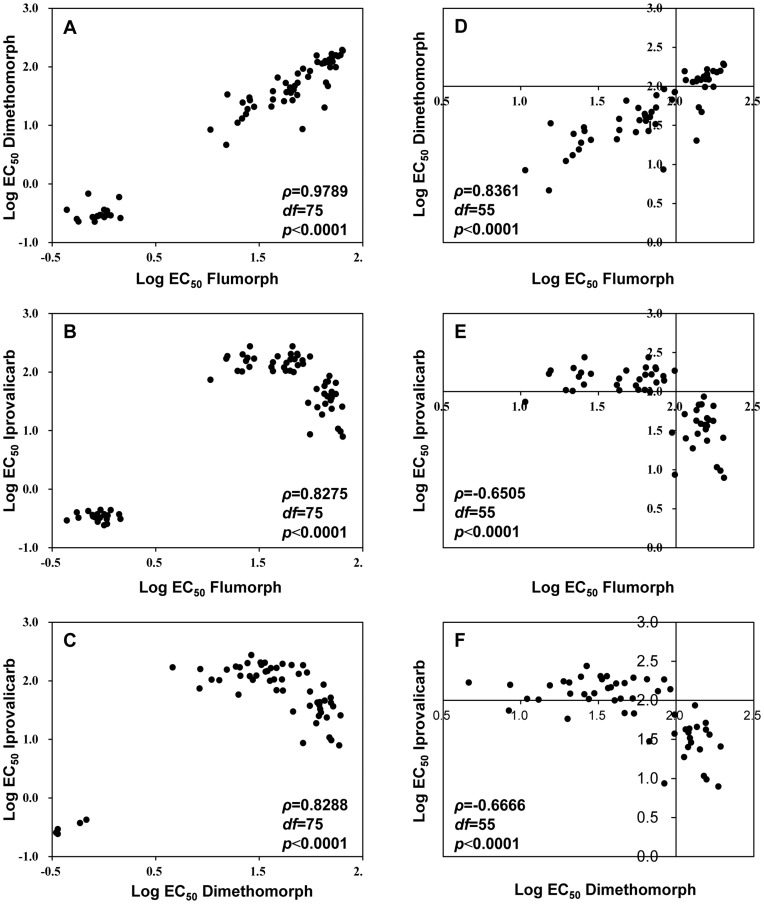
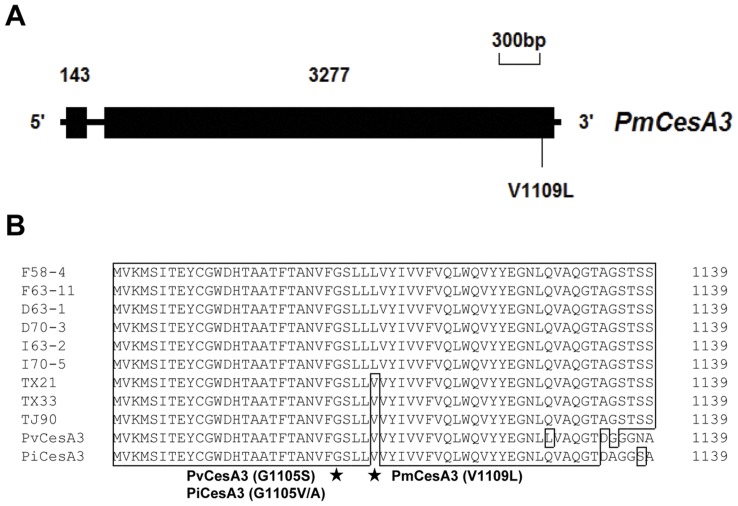
The risk that the plant pathogen Phytophthora melonis develops resistance to carboxylic acid amide (CAA) fungicides was determined by measuring baseline sensitivities of field isolates, generating resistant mutants, and measuring the fitness of the resistant mutants. The baseline sensitivities of 80 isolates to flumorph, dimethomorph and iprovalicarb were described by unimodal curves, with mean EC(50) values of 0.986 (±0.245), 0.284 (±0.060) and 0.327 (±0.068) µg/ml, respectively. Seven isolates with different genetic background (as indicated by RAPD markers) were selected to generate CAA-resistance. Fifty-five resistant mutants were obtained from three out of seven isolates by spontaneous selection and UV-mutagenesis with frequencies of 1×10(-7) and 1×10(-6), respectively. CAA-resistance was stable for all mutants. The resistance factors of these mutants ranged from 7 to 601. The compound fitness index (CFI = mycelial growth × zoospore production × pathogenicity) was often lower for the CAA-resistant isolates than for wild-type isolates, suggesting that the risk of P. melonis developing resistance to CAA fungicides is low to moderate. Among the CAA-resistant isolates, a negative correlation between EC(50) values was found for iprovalicarb vs. flumorph and for iprovalicarb vs. dimethomorph. Comparison of the full-length cellulose synthase 3 (CesA3) between wild-type and CAA-resistant isolates revealed only one point mutation at codon position 1109: a valine residue (codon GTG in wild-type isolates) was converted to leucine (codon CTG in resistant mutants). This represents a novel point mutation with respect to mutations in CesA3 conferring resistance to CAA fungicides. Based on this mutation, an efficient allelic-specific PCR (AS-PCR) method was developed for rapid detection of CAA-resistance in P. melonis populations.
采用测定田间分离物的基础敏感性、产生抗药性突变体和测定抗药性突变体适合度的方法,确定了甜瓜疫霉对羧酸酰胺(CAA)类杀菌剂产生抗药性的风险。80 个分离物对氟吗啉、烯酰吗啉和异丙菌胺的基础敏感性用单峰曲线来描述,其 EC50 值的平均值分别为 0.986(±0.245)、0.284(±0.060)和 0.327(±0.068)μg/ml。选择 7 个具有不同遗传背景(如随机扩增多态性 DNA 标记所示)的分离物来产生 CAA 抗药性。通过自发选择和 UV 诱变,从 7 个分离物中的 3 个分离物中获得了 55 个抗药性突变体,其频率分别为 1×10(-7)和 1×10(-6)。所有突变体的 CAA 抗药性均稳定。这些突变体的抗药性因子范围为 7 至 601。化合物适合度指数(CFI = 菌丝生长 × 游动孢子产生 × 致病性)对于 CAA 抗药性分离物通常低于野生型分离物,这表明甜瓜疫霉对 CAA 类杀菌剂产生抗药性的风险为低至中度。在 CAA 抗药性分离物中,发现异丙菌胺对氟吗啉和异丙菌胺对烯酰吗啉的 EC50 值之间存在负相关。野生型和 CAA 抗药性分离物之间全长纤维素合酶 3(CesA3)的比较仅在密码子 1109 位置发现一个点突变:缬氨酸残基(野生型分离物中的 GTG 密码子)转换为亮氨酸(突变体中的 CTG 密码子)。这代表了一个新的点突变,与赋予 CAA 类杀菌剂抗药性的 CesA3 突变不同。基于该突变,开发了一种有效的等位基因特异性 PCR(AS-PCR)方法,用于快速检测甜瓜疫霉菌种群中的 CAA 抗药性。