Department of Psychology, Centre for Comparative and Evolutionary Psychology, University of Portsmouth, Portsmouth, UK.
Proc Biol Sci. 2012 Oct 7;279(1744):4042-50. doi: 10.1098/rspb.2012.1470. Epub 2012 Aug 1.
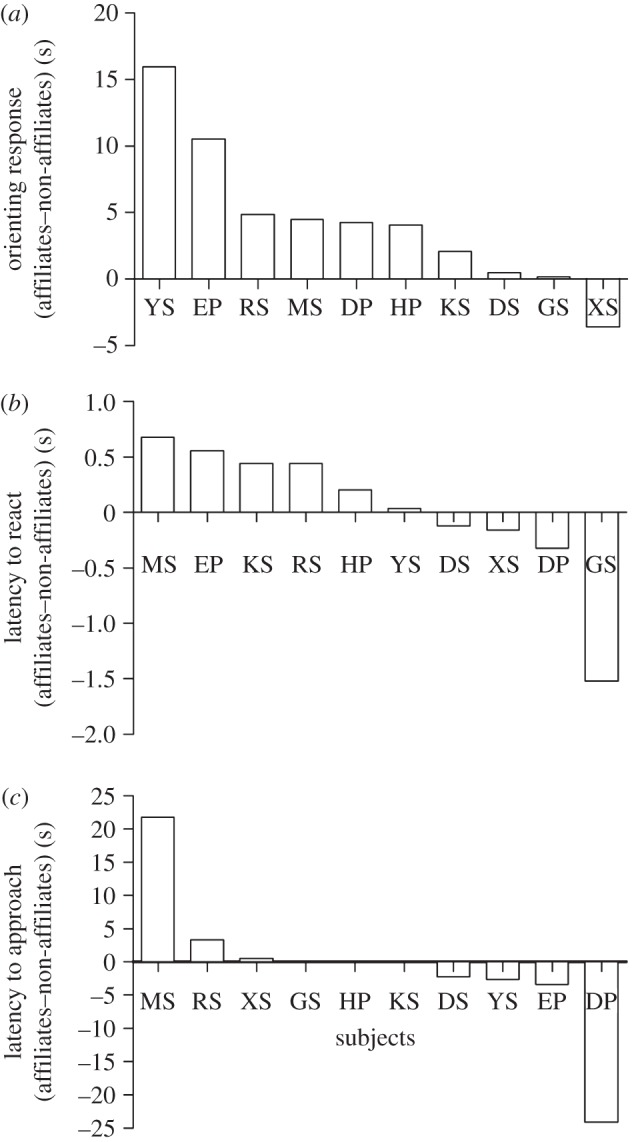
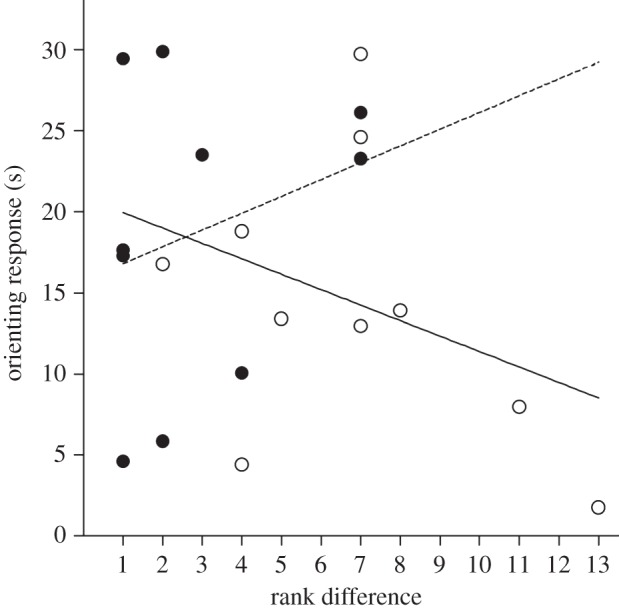
Enduring positive social bonds between individuals are crucial for humans' health and well being. Similar bonds can be found in a wide range of taxa, revealing the evolutionary origins of humans' social bonds. Evidence suggests that these strong social bonds can function to buffer the negative effects of living in groups, but it is not known whether they also function to minimize predation risk. Here, we show that crested macaques (Macaca nigra) react more strongly to playbacks of recruitment alarm calls (i.e. calls signalling the presence of a predator and eliciting cooperative mobbing behaviour) if they were produced by an individual with whom they share a strong social bond. Dominance relationships between caller and listener had no effect on the reaction of the listener. Thus, strong social bonds may improve the coordination and efficiency of cooperative defence against predators, and therefore increase chances of survival. This result broadens our understanding of the evolution and function of social bonds by highlighting their importance in the anti-predator context.
个体之间持久的积极社会联系对人类的健康和幸福至关重要。在广泛的分类群中都可以发现类似的联系,这揭示了人类社会联系的进化起源。有证据表明,这些牢固的社会联系可以缓冲群居生活的负面影响,但尚不清楚它们是否也可以降低被捕食的风险。在这里,我们发现黑冠猕猴(Macaca nigra)对由与其具有强烈社会联系的个体发出的招募警报叫声(即表示存在捕食者并引发合作性驱敌行为的叫声)的反应更强烈。呼叫者和收听者之间的支配关系对收听者的反应没有影响。因此,牢固的社会联系可以提高合作防御捕食者的协调性和效率,从而增加生存的机会。这一结果通过强调社会联系在反捕食者环境中的重要性,拓宽了我们对社会联系的进化和功能的理解。