Department of Neuropsychiatry, Oita University Faculty of Medicine, Yufu-Shi, Oita, Japan.
PLoS One. 2012;7(7):e39375. doi: 10.1371/journal.pone.0039375. Epub 2012 Jul 30.
Cortisol is an essential hormone in the regulation of the stress response along the HPA axis, and salivary cortisol has been used as a measure of free circulating cortisol levels. Recently, salivary alpha-amylase (sAA) has also emerged as a novel biomarker for psychosocial stress responsiveness within the sympathetic adrenomedullary (SAM) system.
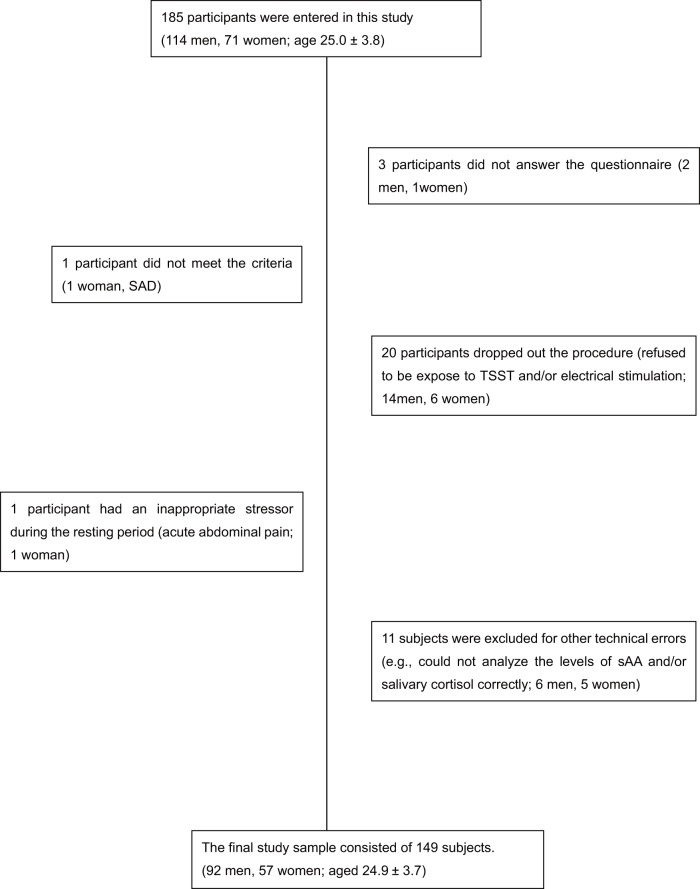
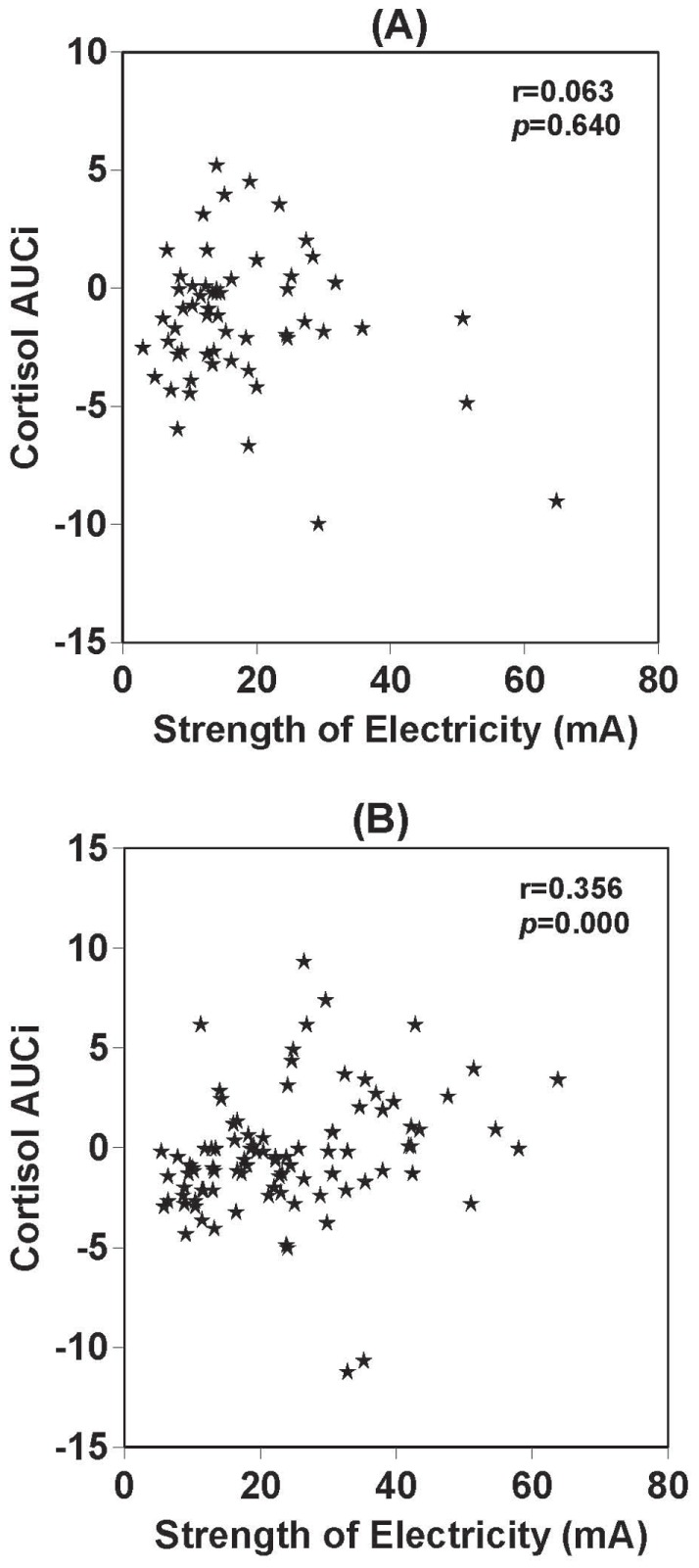
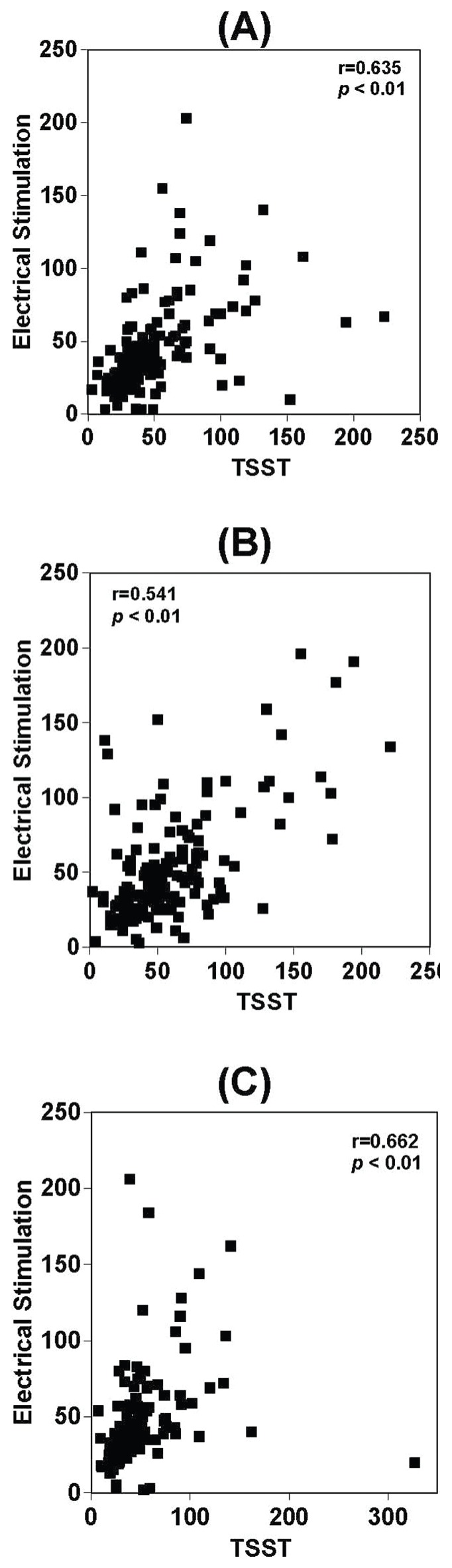
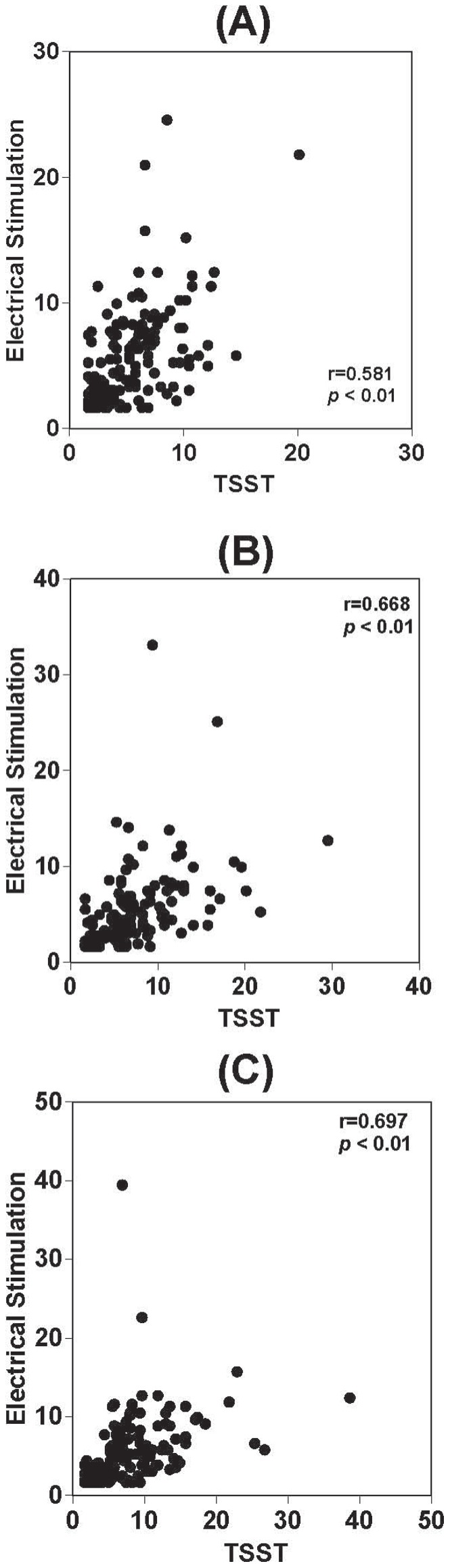
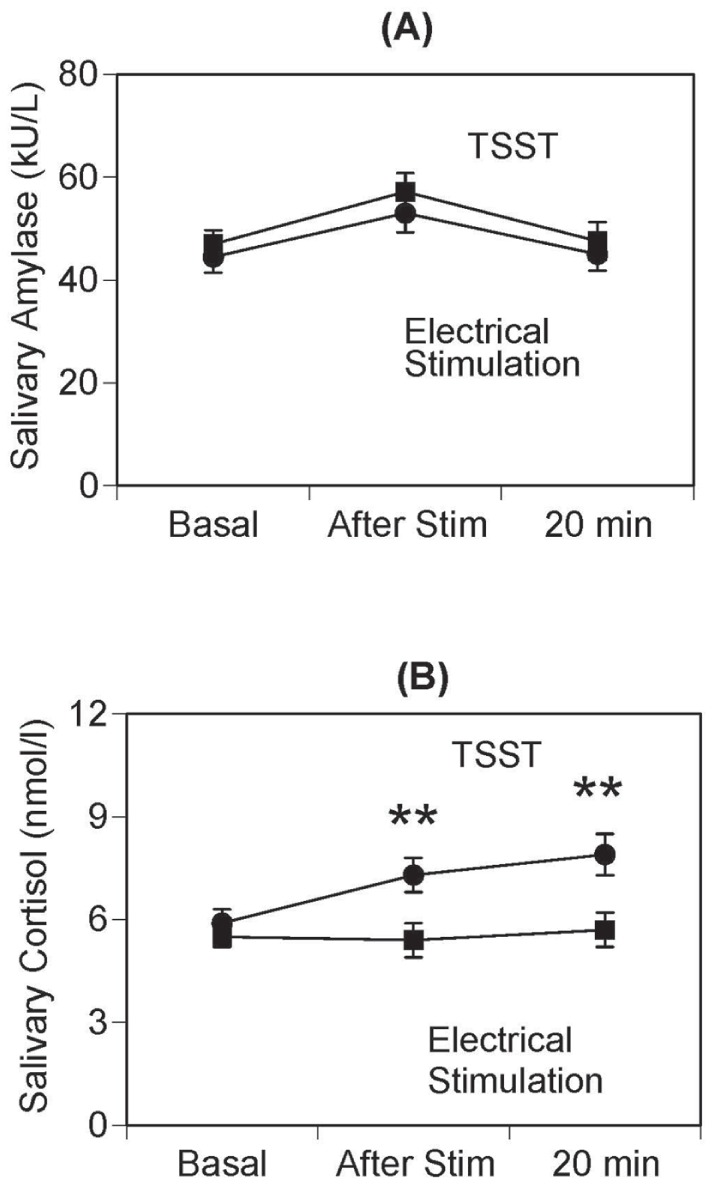
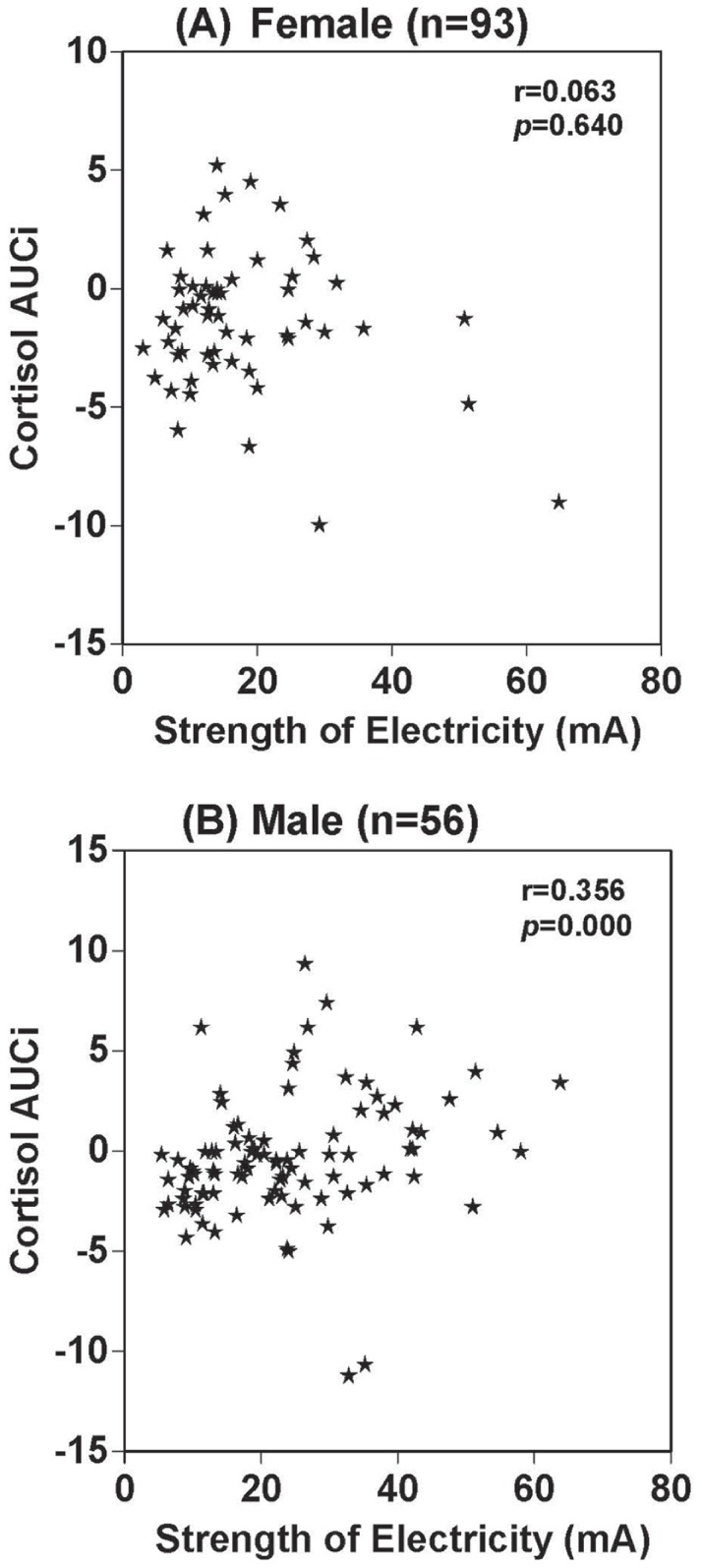
We measured sAA and salivary cortisol in healthy volunteers after exposure to the Trier Social Stress Test (TSST) and electric stimulation stress. One hundred forty-nine healthy volunteers participated in this study. All subjects were exposed to both the TSST and electric stimulation stress on separate days. We measured sAA and salivary cortisol levels three times immediately before, immediately after, and 20 min after the stress challenge. The State (STAI-S) and Trait (STAI-T) versions of the Spielberger Anxiety Inventory test and the Profile of Mood State (POMS) tests were administered to participants before the electrical stimulation and TSST protocols. We also measured HF, LF and LF/HF Heart Rate Variability ratio immediately after electrical stimulation and TSST exposure. Following TSST exposure or electrical stimulation, sAA levels displayed a rapid increase and recovery, returning to baseline levels 20 min after the stress challenge. Salivary cortisol responses showed a delayed increase, which remained significantly elevated from baseline levels 20 min after the stress challenge. Analyses revealed no differences between men and women with regard to their sAA response to the challenges (TSST or electric stimulations), while we found significantly higher salivary cortisol responses to the TSST in females. We also found that younger subjects tended to display higher sAA activity. Salivary cortisol levels were significantly correlated with the strength of the applied electrical stimulation.
These preliminary results suggest that the HPA axis (but not the SAM system) may show differential response patterns to distinct kinds of stressors.
皮质醇是调节 HPA 轴应激反应的重要激素,唾液皮质醇已被用作衡量游离循环皮质醇水平的指标。最近,唾液α-淀粉酶(sAA)也已成为交感肾上腺髓质(SAM)系统中心理社会应激反应的新型生物标志物。
我们在健康志愿者暴露于特里尔社会应激测试(TSST)和电刺激应激后测量了 sAA 和唾液皮质醇。149 名健康志愿者参加了这项研究。所有受试者均在不同天接受 TSST 和电刺激应激。我们在应激挑战前、应激后即刻和应激后 20 分钟三次测量 sAA 和唾液皮质醇水平。在电刺激和 TSST 方案之前,参与者接受了 Spielberger 焦虑量表(STAI-S)和特质(STAI-T)版本以及心境状态量表(POMS)测试。我们还在电刺激和 TSST 暴露后即刻测量了 HF、LF 和 LF/HF 心率变异性比。在 TSST 暴露或电刺激后,sAA 水平迅速增加并恢复,在应激挑战后 20 分钟恢复到基线水平。唾液皮质醇反应显示出延迟增加,在应激挑战后 20 分钟仍显著高于基线水平。分析表明,男性和女性在对挑战(TSST 或电刺激)的 sAA 反应方面没有差异,而我们发现女性对 TSST 的唾液皮质醇反应明显更高。我们还发现,年轻受试者的 sAA 活性较高。唾液皮质醇水平与应用的电刺激强度显著相关。
这些初步结果表明,HPA 轴(而不是 SAM 系统)可能对不同类型的应激源表现出不同的反应模式。