BRIGHT Institute and Department of Internal Medicine, Division of Molecular Oncology, Washington University School of Medicine, Saint Louis, Missouri, United States of America.
PLoS One. 2012;7(7):e42005. doi: 10.1371/journal.pone.0042005. Epub 2012 Jul 31.
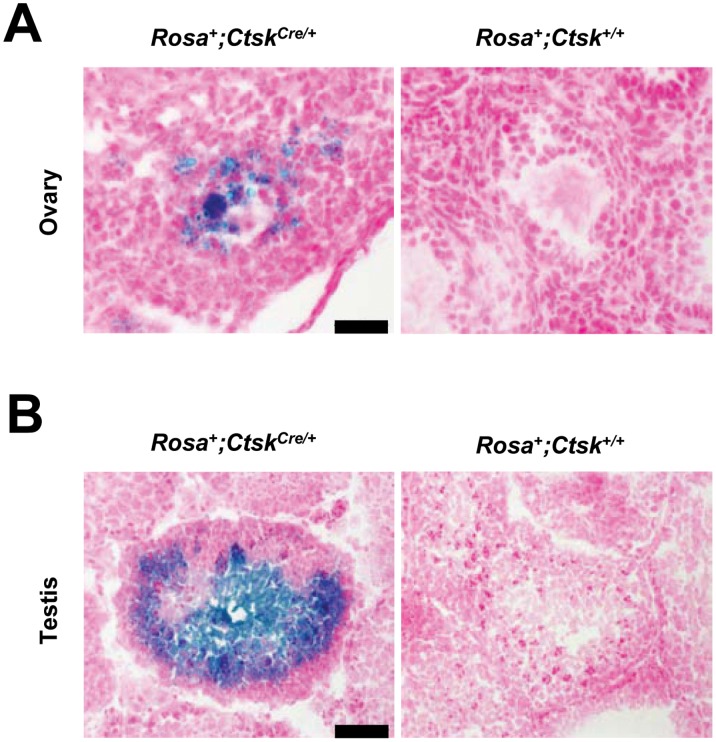
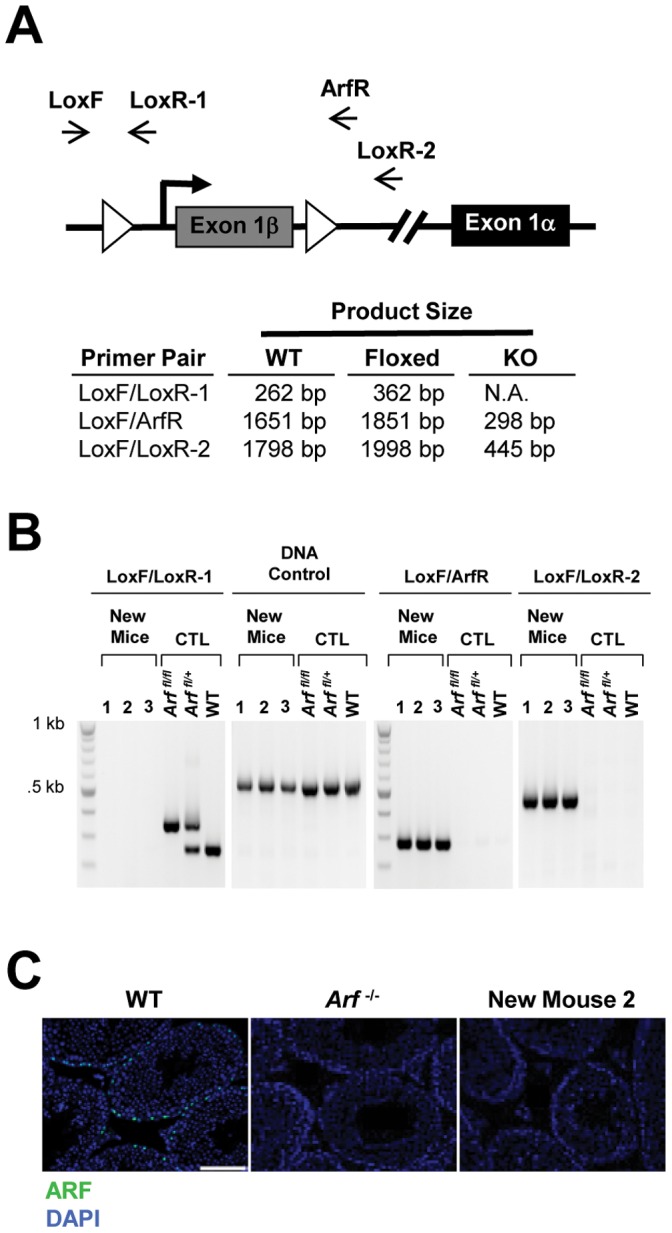
Osteoclasts are terminally differentiated cells that attach to bone and secrete proteases to degrade the bone matrix. The primary protease responsible for the degradation of the organic component of the bone matrix is Cathepsin K, which was largely thought to be unique to osteoclasts. Given its apparent selective expression in osteoclasts, the Cathepsin K promoter has been engineered to drive the expression of Cre recombinase in mice and has been the most relevant tool for generating osteoclast-specific gene loss. In an effort to understand the role of the ARF tumor suppressor in osteoclasts, we crossed Arf (fl/fl) mice to Ctsk(Cre/+) mice, which unexpectedly resulted in the germline loss of Arf. We subsequently confirmed Cre activity in gametes by generating Ctsk(Cre/+); Rosa(+) mice. These results raise significant concerns regarding in vivo bone phenotypes created using Ctsk(Cre/+) mice and warrant further investigation into the role of Cathepsin K in gametes as well as alternative tools for studying osteoclast-specific gene loss in vivo.
破骨细胞是终末分化细胞,附着在骨上并分泌蛋白酶降解骨基质。负责降解骨基质有机成分的主要蛋白酶是组织蛋白酶 K,它被认为主要存在于破骨细胞中。鉴于其在破骨细胞中明显的选择性表达,组织蛋白酶 K 启动子被设计用于在小鼠中驱动 Cre 重组酶的表达,并且是生成破骨细胞特异性基因缺失的最相关工具。为了了解 ARF 肿瘤抑制因子在破骨细胞中的作用,我们将 Arf(fl/fl) 小鼠与 Ctsk(Cre/+) 小鼠杂交,出乎意料的是,Arf 在生殖系中丢失。随后,我们通过生成 Ctsk(Cre/+);Rosa(+) 小鼠来证实配子中的 Cre 活性。这些结果对使用 Ctsk(Cre/+) 小鼠创建的体内骨表型提出了重大关注,并需要进一步研究组织蛋白酶 K 在配子中的作用以及体内研究破骨细胞特异性基因缺失的替代工具。