Experimental Therapeutics, British Columbia Cancer Research Centre, 675 West 10th Avenue, Vancouver, BC, Canada, V5Z 1L3.
Mol Cancer. 2012 Aug 6;11:52. doi: 10.1186/1476-4598-11-52.
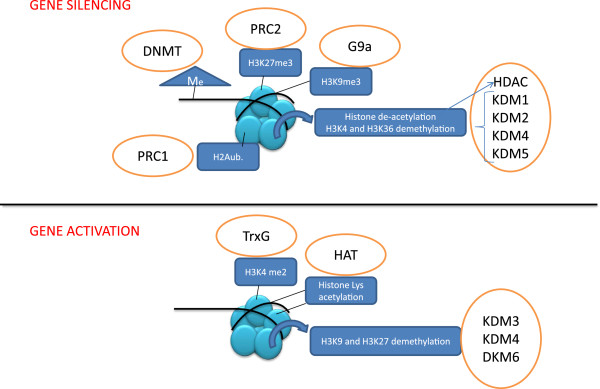
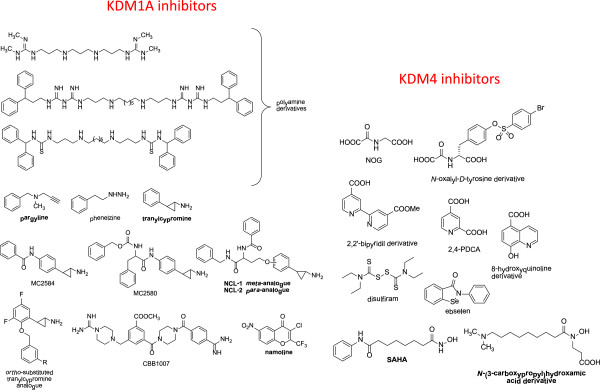
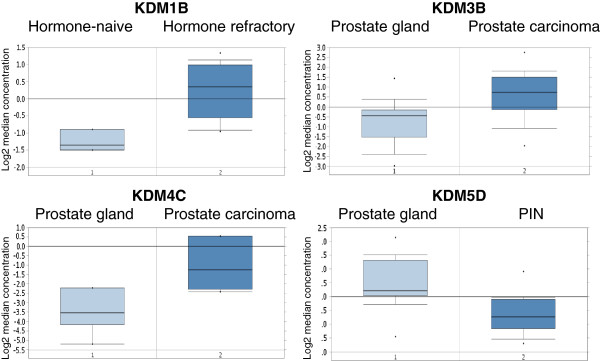
Early prostate cancer (PCa) is generally treatable and associated with good prognosis. After a variable time, PCa evolves into a highly metastatic and treatment-refractory disease: castration-resistant PCa (CRPC). Currently, few prognostic factors are available to predict the emergence of CRPC, and no curative option is available. Epigenetic gene regulation has been shown to trigger PCa metastasis and androgen-independence. Most epigenetic studies have focused on DNA and histone methyltransferases. While DNA methylation leads to gene silencing, histone methylation can trigger gene activation or inactivation, depending on the target amino acid residues and the extent of methylation (me1, me2, or me3). Interestingly, some histone modifiers are essential for PCa tumor-initiating cell (TIC) self-renewal. TICs are considered the seeds responsible for metastatic spreading and androgen-independence. Histone Lysine Demethylases (KDMs) are a novel class of epigenetic enzymes which can remove both repressive and activating histone marks. KDMs are currently grouped into 7 major classes, each one targeting a specific methylation site. Since their discovery, KDM expression has been found to be deregulated in several neoplasms. In PCa, KDMs may act as either tumor suppressors or oncogenes, depending on their gene regulatory function. For example, KDM1A and KDM4C are essential for PCa androgen-dependent proliferation, while PHF8 is involved in PCa migration and invasion. Interestingly, the possibility of pharmacologically targeting KDMs has been demonstrated. In the present paper, we summarize the emerging role of KDMs in regulating the metastatic potential and androgen-dependence of PCa. In addition, we speculate on the possible interaction between KDMs and other epigenetic effectors relevant for PCa TICs. Finally, we explore the role of KDMs as novel prognostic factors and therapeutic targets. We believe that studies on histone demethylation may add a novel perspective in our efforts to prevent and cure advanced PCa.
早期前列腺癌 (PCa) 通常是可治疗的,并且预后良好。经过一段时间后,PCa 会发展为高度转移性和治疗抵抗性疾病:去势抵抗性 PCa (CRPC)。目前,可用的预后因素很少能够预测 CRPC 的出现,也没有治愈的选择。表观遗传基因调控已被证明可引发 PCa 转移和雄激素非依赖性。大多数表观遗传研究都集中在 DNA 和组蛋白甲基转移酶上。虽然 DNA 甲基化导致基因沉默,但组蛋白甲基化可以根据靶氨基酸残基和甲基化程度 (me1、me2 或 me3) 触发基因激活或失活。有趣的是,一些组蛋白修饰剂对于 PCa 肿瘤起始细胞 (TIC) 的自我更新是必不可少的。TIC 被认为是负责转移扩散和雄激素非依赖性的种子。组蛋白赖氨酸去甲基酶 (KDMs) 是一类新型的表观遗传酶,可去除抑制性和激活性组蛋白标记。KDMs 目前分为 7 个主要类别,每个类别都针对特定的甲基化位点。自发现以来,在几种肿瘤中发现 KDM 表达失调。在 PCa 中,KDMs 可能作为肿瘤抑制因子或癌基因发挥作用,具体取决于它们的基因调控功能。例如,KDM1A 和 KDM4C 对于 PCa 雄激素依赖性增殖是必不可少的,而 PHF8 则参与 PCa 的迁移和侵袭。有趣的是,已经证明可以通过药理学靶向 KDMs。在本文中,我们总结了 KDMs 在调节 PCa 的转移潜力和雄激素依赖性方面的新作用。此外,我们推测 KDMs 与其他与 PCa TIC 相关的表观遗传效应物之间可能存在相互作用。最后,我们探讨了 KDMs 作为新型预后因素和治疗靶点的作用。我们相信,组蛋白去甲基化的研究可能为我们预防和治疗晚期 PCa 提供新的视角。