MRC Unit for Maternal and Infant Health Care Strategies, University of Pretoria, Private Bag X323, Arcadia 0007, Pretoria, South Africa.
Implement Sci. 2012 Aug 13;7:75. doi: 10.1186/1748-5908-7-75.
Kangaroo mother care (KMC) is a safe and effective method of caring for low birth weight infants and is promoted for its potential to improve newborn survival. Many countries find it difficult to take KMC to scale in healthcare facilities providing newborn care. KMC Ghana was an initiative to scale up KMC in four regions in Ghana. Research findings from two outreach trials in South Africa informed the design of the initiative. Two key points of departure were to equip healthcare facilities that conduct deliveries with the necessary skills for KMC practice and to single out KMC for special attention instead of embedding it in other newborn care initiatives. This paper describes the contextualisation and practical application of previous research findings and the results of monitoring the progress of the implementation of KMC in Ghana.
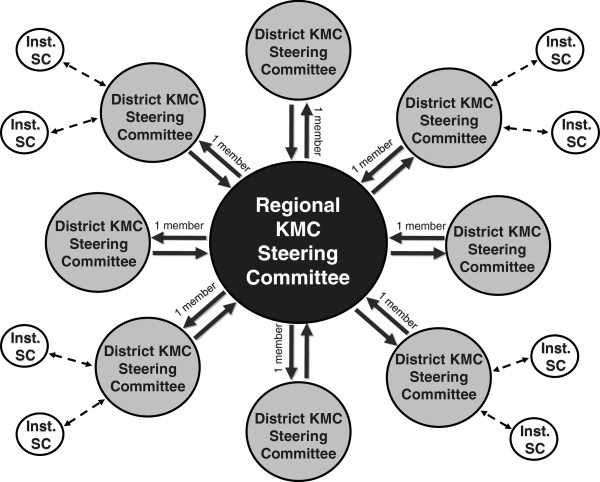
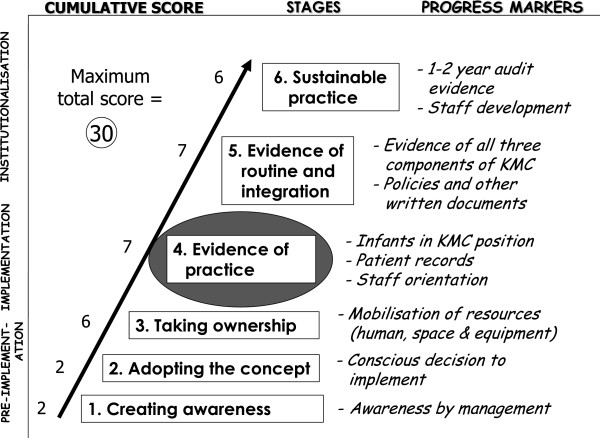
A three-phase outreach intervention was adapted from previous research findings to suit the local setting. A more structured system of KMC regional steering committees was introduced to drive the process and take the initiative forward. During Phase I, health workers in regions and districts were oriented in KMC and received basic support for the management of the outreach. Phase II entailed the strengthening of the regional steering committees. Phase III comprised a more formal assessment, utilising a previously validated KMC progress-monitoring instrument.
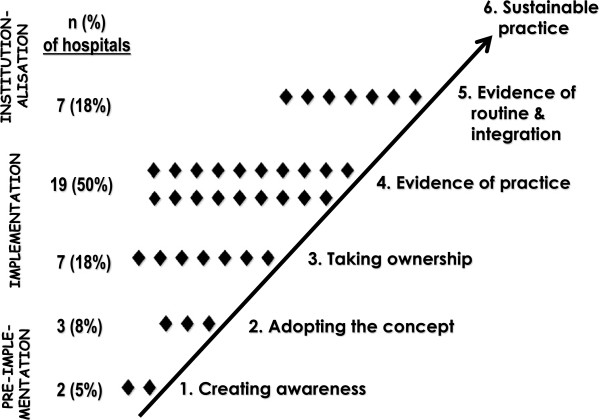
Twenty-six out of 38 hospitals (68 %) scored over 10 out of 30 and had reached the level of 'evidence of practice' by the end of Phase III. Seven hospitals exceeded expected performance by scoring at the level of 'evidence of routine and institutionalised practice.' The collective mean score for all participating hospitals was 12.07. Hospitals that had attained baby-friendly status or had been re-accredited in the five years before the intervention scored significantly better than the rest, with a mean score of 14.64.
The KMC Ghana initiative demonstrated how research findings regarding successful outreach for the implementation of KMC could be transferred to a different context by making context-appropriate adaptations to the model.
袋鼠式护理(KMC)是一种安全有效的护理低出生体重婴儿的方法,因其提高新生儿存活率的潜力而得到推广。许多国家发现,在提供新生儿护理的医疗保健设施中,难以大规模实施 KMC。KMC 加纳倡议旨在加纳的四个地区扩大 KMC 的规模。南非两项外展试验的研究结果为该倡议的设计提供了信息。两个出发点是为进行分娩的医疗保健设施配备实施 KMC 实践所需的技能,并将 KMC 单独列为特别关注的项目,而不是将其纳入其他新生儿护理倡议中。本文介绍了将先前研究结果进行本土化并应用于实践的情况,以及监测 KMC 在加纳实施进展的结果。
借鉴先前的研究结果,对一项为期三阶段的外展干预措施进行了调整,以适应当地情况。引入了一种更具结构性的 KMC 区域指导委员会制度,以推动这一进程并推动倡议向前发展。在第一阶段,区域和地区的卫生工作者接受了 KMC 培训,并获得了开展外展工作的基本支持。第二阶段包括加强区域指导委员会。第三阶段包括更正式的评估,使用先前经过验证的 KMC 进展监测工具。
在第三阶段结束时,38 家医院中的 26 家(68%)的得分超过 30 分中的 10 分,达到了“实践证据”的水平。有 7 家医院的得分达到了“常规和制度化实践的证据”水平,超过了预期表现。所有参与医院的总平均得分为 12.07。在干预前五年内获得婴儿友好医院地位或重新认证的医院的得分明显高于其他医院,平均得分为 14.64。
KMC 加纳倡议表明,通过对模型进行适当调整,将实施 KMC 的外展成功的研究结果转移到不同的环境中是可行的。