Department of Internal Medicine (Nephrology), University of Texas Southwestern Medical Center, Dallas, Texas 75390-8856, USA.
Kidney Int. 2012 Dec;82(11):1195-207. doi: 10.1038/ki.2012.268. Epub 2012 Aug 15.
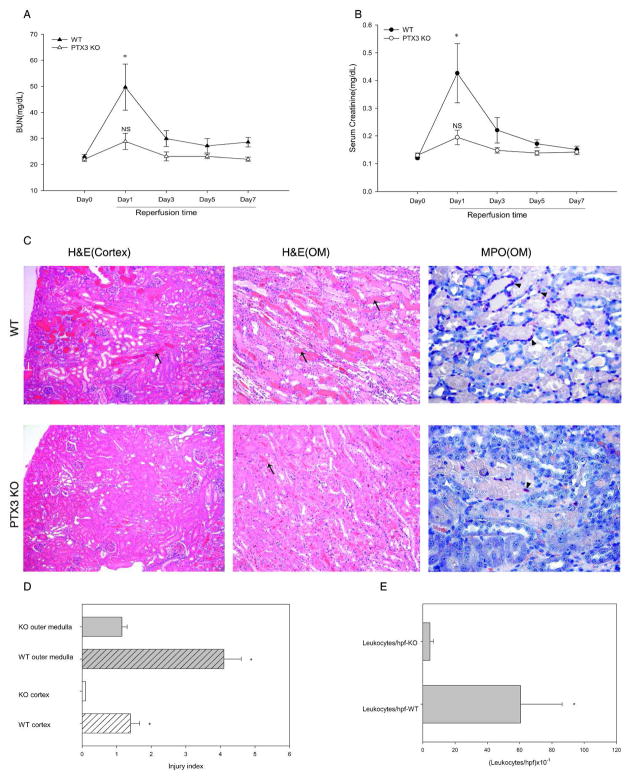
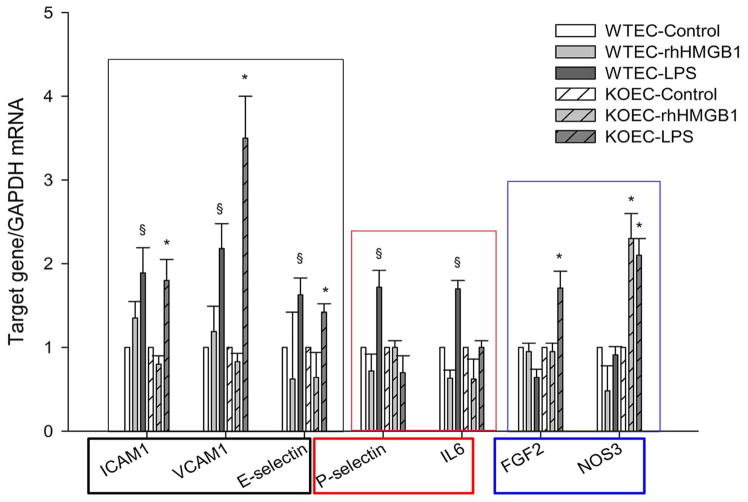
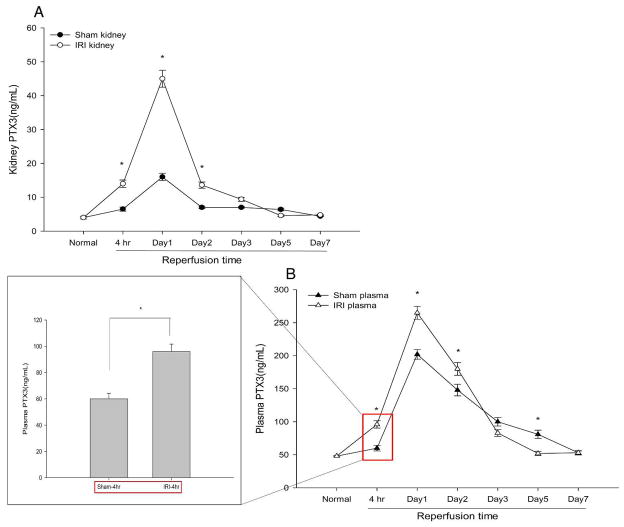
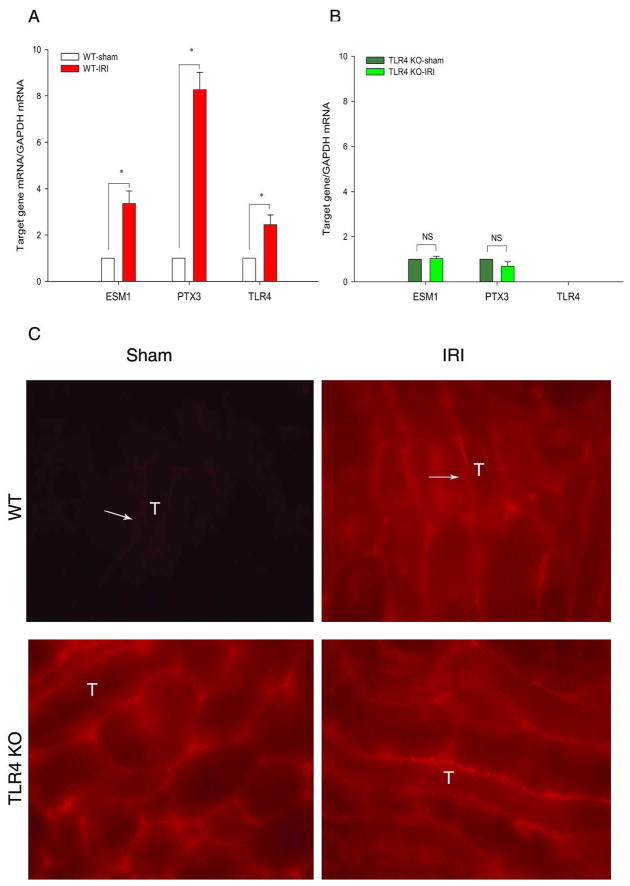
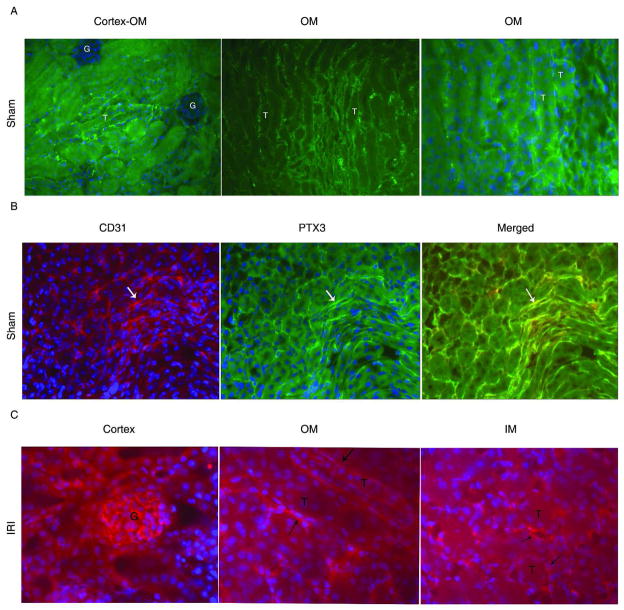
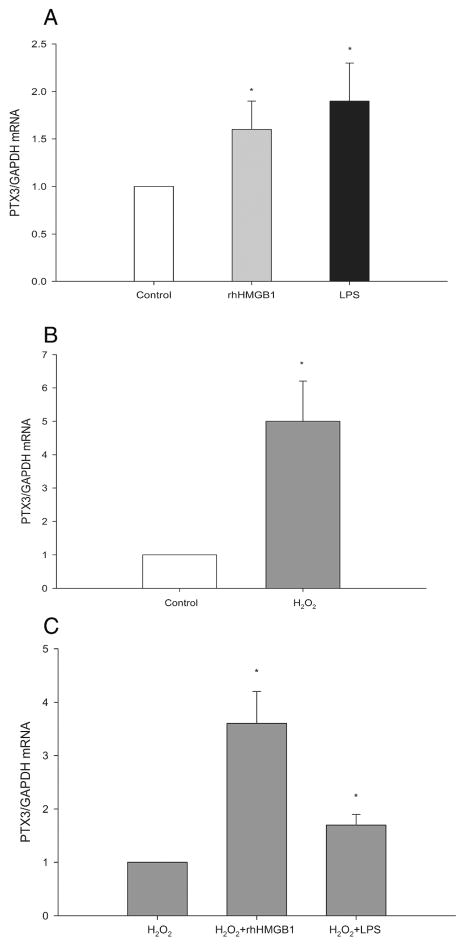
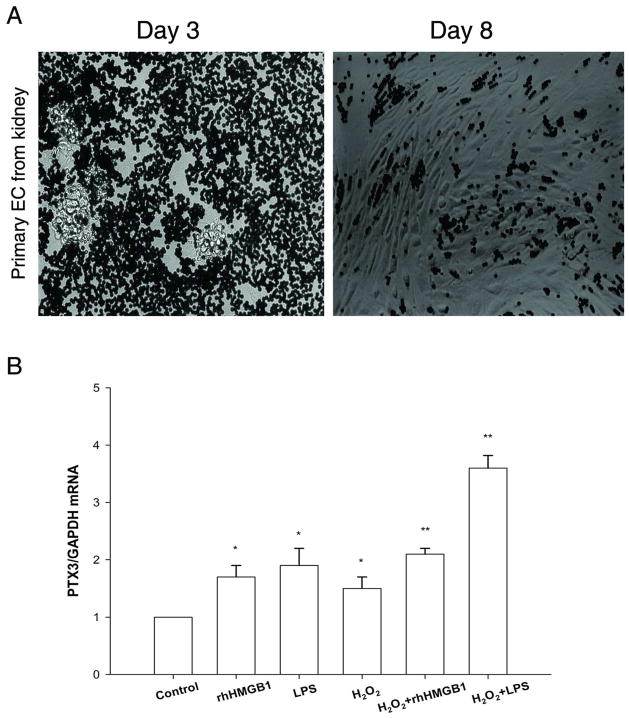
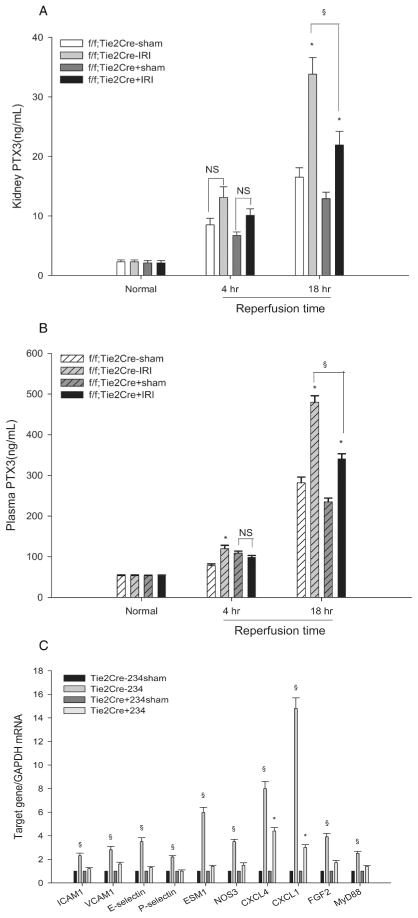
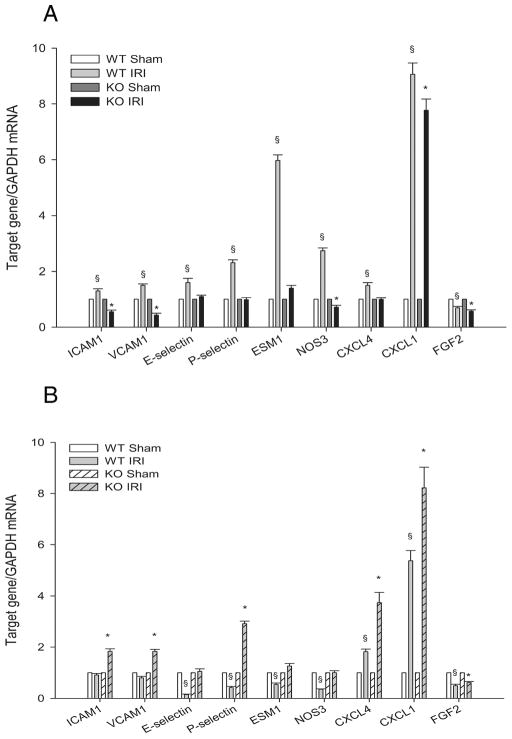
Toll-like receptor 4 (TLR4), a receptor for damage-associated molecular pattern molecules and also the lipopolysaccharide receptor, is required for early endothelial activation leading to maximal inflammation and injury during murine ischemic acute kidney injury. DNA microarray analysis of ischemic kidneys from TLR4-sufficient and -deficient mice showed that pentraxin 3 (PTX3) was upregulated only on the former while transgenic knockout of PTX3 ameliorated acute kidney injury. PTX3 was expressed predominantly on peritubular endothelia of the outer medulla of the kidney in control mice. Acute kidney injury increased PTX3 protein in the kidney and the plasma where it may be a biomarker of the injury. Stimulation by hydrogen peroxide, or the TLR4 ligands recombinant human high-mobility group protein B1 or lipopolysaccharide, induced PTX3 expression in the Mile Sven 1 endothelial cell line and in primary renal endothelial cells, suggesting that endothelial PTX3 was induced by pathways involving TLR4 and reactive oxygen species. This increase was inhibited by conditional endothelial knockout of myeloid differentiation primary response gene 88, a mediator of a TLR4 intracellular signaling pathway. Compared to wild-type mice, PTX3 knockout mice had decreased endothelial expression of cell adhesion molecules at 4 h of reperfusion, possibly contributing to a decreased early maladaptive inflammation in the kidneys of knockout mice. At 24 h of reperfusion, PTX3 knockout increased expression of endothelial adhesion molecules when regulatory and reparative leukocytes enter the kidney. Thus, endothelial PTX3 plays a pivotal role in the pathogenesis of ischemic acute kidney injury.
Toll 样受体 4(TLR4)是一种损伤相关分子模式分子的受体,也是脂多糖受体,在导致鼠缺血性急性肾损伤中最大炎症和损伤的早期内皮细胞激活中是必需的。TLR4 充足和缺乏的缺血性肾脏的 DNA 微阵列分析显示,只有前一组中的 pentraxin 3(PTX3)上调,而 PTX3 的转基因敲除可改善急性肾损伤。PTX3 在控制小鼠的肾脏外髓质的肾小管周围内皮上表达为主。急性肾损伤增加了肾脏和血浆中 PTX3 蛋白,它可能是损伤的生物标志物。过氧化氢或 TLR4 配体重组人高迁移率族蛋白 B1 或脂多糖的刺激,诱导 Mile Sven 1 内皮细胞系和原代肾内皮细胞中 PTX3 的表达,表明内皮细胞 PTX3 是通过涉及 TLR4 和活性氧的途径诱导的。这种增加被髓样分化原初反应基因 88 的条件内皮敲除所抑制,髓样分化原初反应基因 88 是 TLR4 细胞内信号通路的一种介质。与野生型小鼠相比,PTX3 敲除小鼠在再灌注 4 小时时内皮细胞黏附分子的表达减少,这可能导致敲除小鼠肾脏中早期适应性炎症减少。在再灌注 24 小时时,PTX3 敲除增加了调节和修复性白细胞进入肾脏时内皮黏附分子的表达。因此,内皮细胞 PTX3 在缺血性急性肾损伤的发病机制中发挥关键作用。