Department of Urology, Feinberg School of Medicine, Northwestern University, Chicago, Illinois, United States of America.
PLoS One. 2012;7(8):e41273. doi: 10.1371/journal.pone.0041273. Epub 2012 Aug 10.
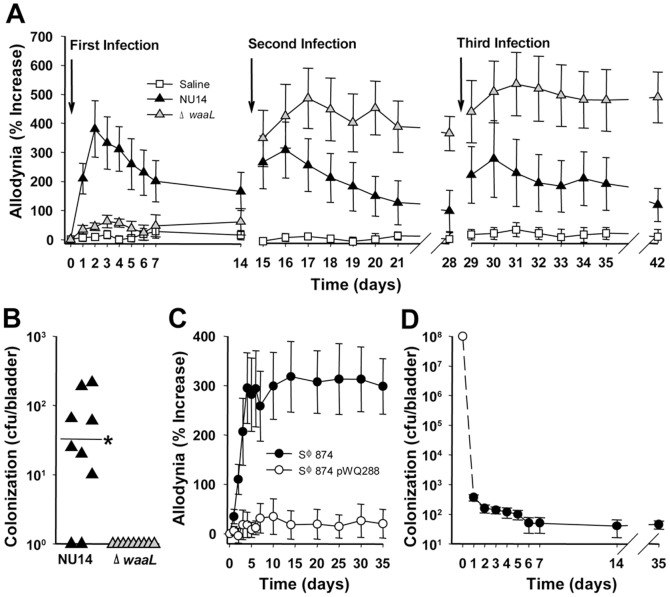
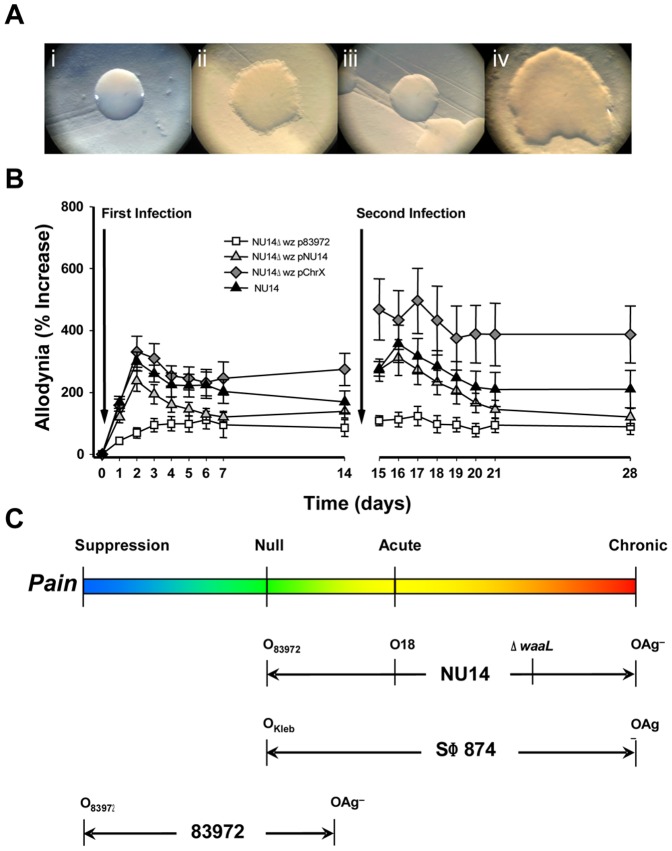
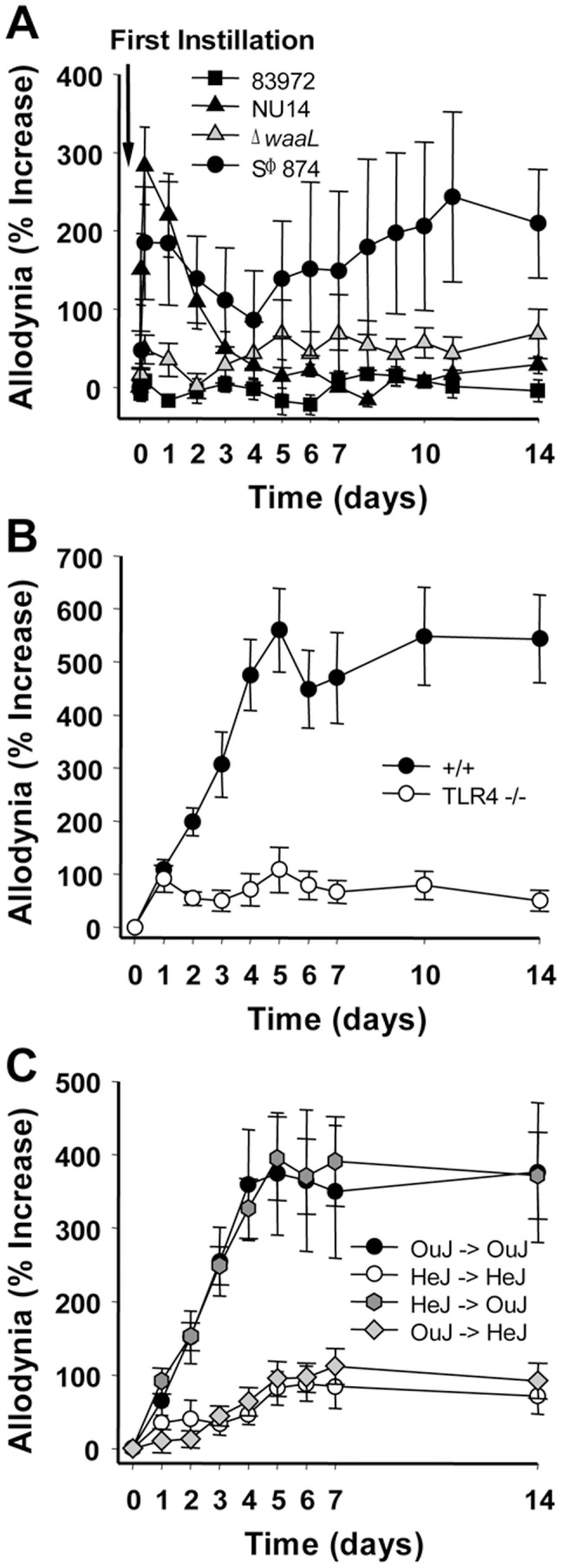
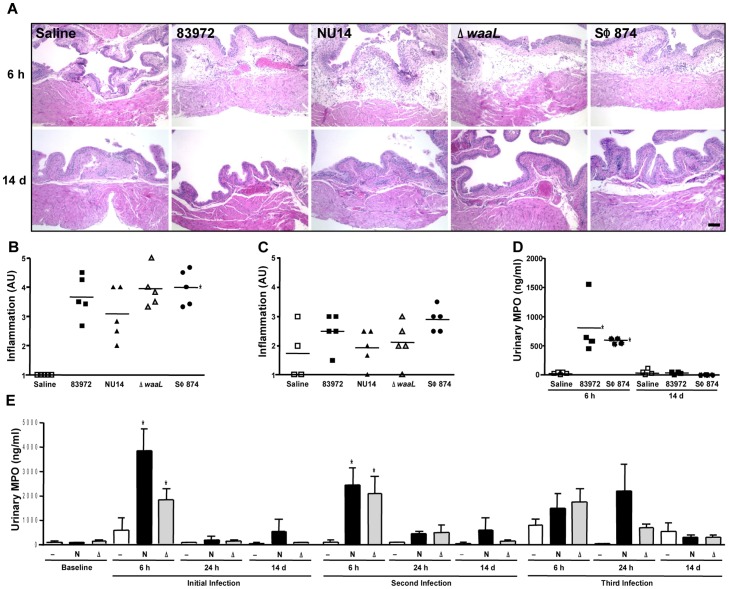
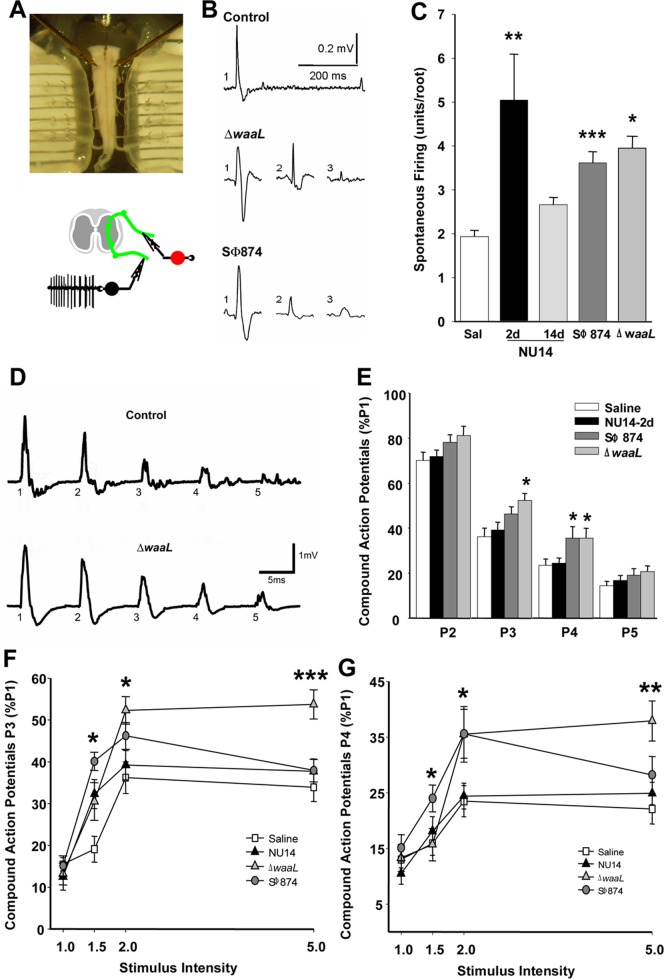
The molecular initiators of infection-associated pain are not understood. We recently found that uropathogenic E. coli (UPEC) elicited acute pelvic pain in murine urinary tract infection (UTI). UTI pain was due to E. coli lipopolysaccharide (LPS) and its receptor, TLR4, but pain was not correlated with inflammation. LPS is known to drive inflammation by interactions between the acylated lipid A component and TLR4, but the function of the O-antigen polysaccharide in host responses is unknown. Here, we examined the role of O-antigen in pain using cutaneous hypersensitivity (allodynia) to quantify pelvic pain behavior and using sacral spinal cord excitability to quantify central nervous system manifestations in murine UTI. A UPEC mutant defective for O-antigen biosynthesis induced chronic allodynia that persisted long after clearance of transient infections, but wild type UPEC evoked only acute pain. E. coli strains lacking O-antigen gene clusters had a chronic pain phenotype, and expressing cloned O-antigen gene clusters altered the pain phenotype in a predictable manner. Chronic allodynia was abrogated in TLR4-deficient mice, but inflammatory responses in wild type mice were similar among E. coli strains spanning a wide range of pain phenotypes, suggesting that O-antigen modulates pain independent of inflammation. Spinal cords of mice with chronic allodynia exhibited increased spontaneous firing and compromised short-term depression, consistent with centralized pain. Taken together, these findings suggest that O-antigen functions as a rheostat to modulate LPS-associated pain. These observations have implications for an infectious etiology of chronic pain and evolutionary modification of pathogens to alter host behaviors.
感染相关疼痛的分子启动子尚不清楚。我们最近发现,尿路致病性大肠杆菌(UPEC)在小鼠尿路感染(UTI)中引发急性盆腔疼痛。UTI 疼痛是由大肠杆菌脂多糖(LPS)及其受体 TLR4 引起的,但疼痛与炎症无关。LPS 通过酰化脂质 A 成分与 TLR4 之间的相互作用已知可引发炎症,但宿主反应中 O-抗原多糖的功能尚不清楚。在这里,我们使用皮肤超敏反应(痛觉过敏)来量化盆腔疼痛行为,并使用骶脊髓兴奋性来量化小鼠 UTI 中的中枢神经系统表现,研究了 O-抗原在疼痛中的作用。一种缺乏 O-抗原生物合成的 UPEC 突变体可引起慢性痛觉过敏,这种过敏在短暂感染清除后仍持续很长时间,但野生型 UPEC 仅引起急性疼痛。缺乏 O-抗原基因簇的大肠杆菌菌株表现出慢性疼痛表型,而表达克隆的 O-抗原基因簇以可预测的方式改变疼痛表型。TLR4 缺陷型小鼠的慢性痛觉过敏被阻断,但在野生型小鼠中,各种疼痛表型的大肠杆菌菌株的炎症反应相似,表明 O-抗原通过与炎症无关的方式调节疼痛。具有慢性痛觉过敏的小鼠脊髓表现出自发放电增加和短期抑郁受损,与中枢性疼痛一致。综上所述,这些发现表明 O-抗原作为一种变阻器来调节 LPS 相关疼痛。这些观察结果对于慢性疼痛的感染病因学和病原体改变宿主行为的进化修饰具有重要意义。