Innovation Moléculaire Thérapeutique, EA 6306 - Université François Rabelais, Parc Grandmont, Tours, France.
PLoS One. 2012;7(8):e43365. doi: 10.1371/journal.pone.0043365. Epub 2012 Aug 14.
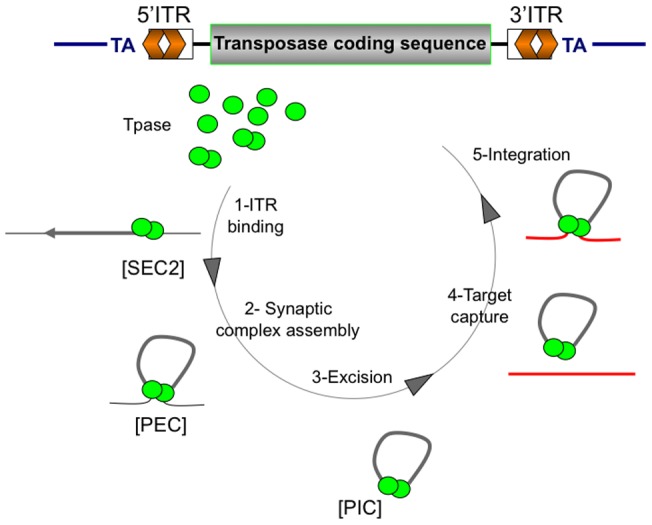
Mariner elements represent the most successful family of autonomous DNA transposons, being present in various plant and animal genomes, including humans. The introduction and co-evolution of mariners within host genomes imply a strict regulation of the transposon activity. Biochemical data accumulated during the past decade have led to a convergent picture of the transposition cycle of mariner elements, suggesting that mariner transposition does not rely on host-specific factors. This model does not account for differences of transposition efficiency in human cells between mariners. We thus wondered whether apparent similarities in transposition cycle could hide differences in the intrinsic parameters that control mariner transposition.
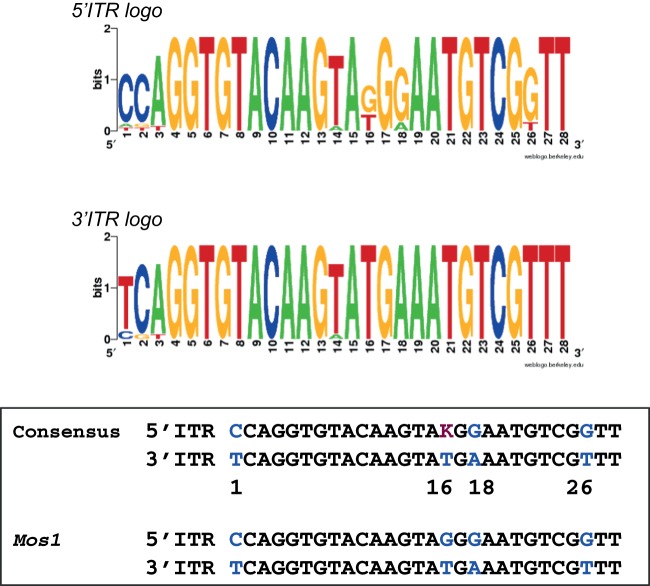
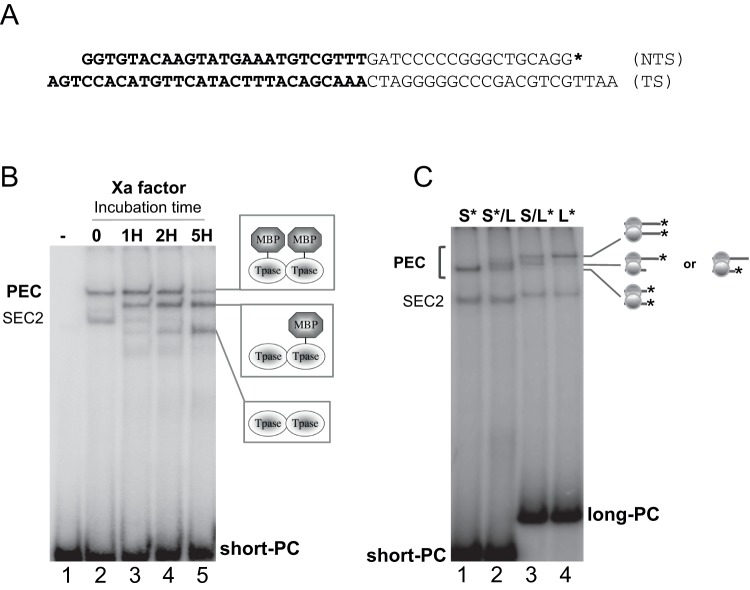
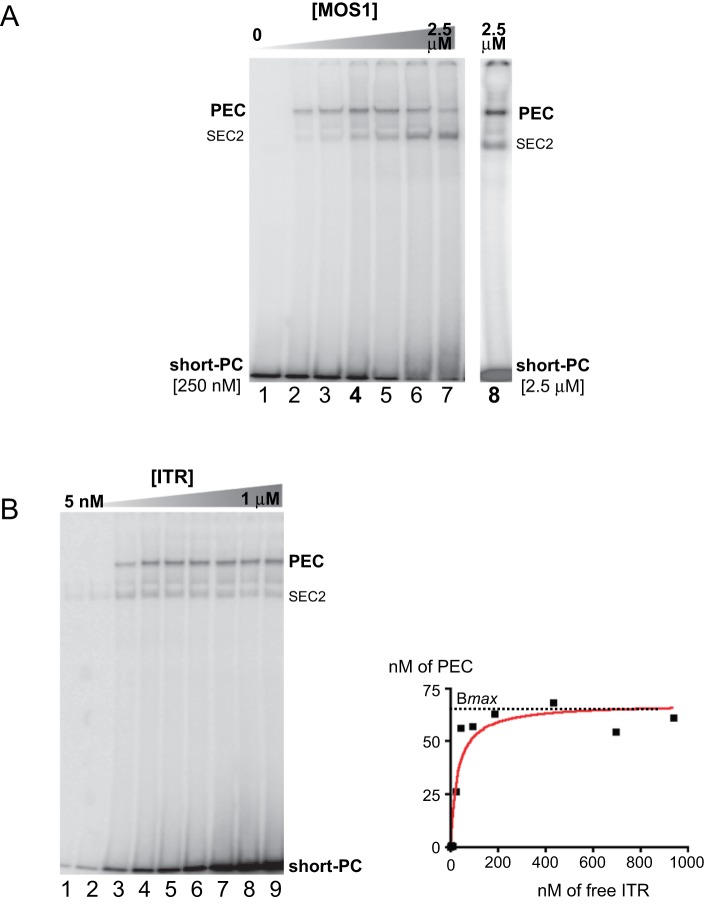
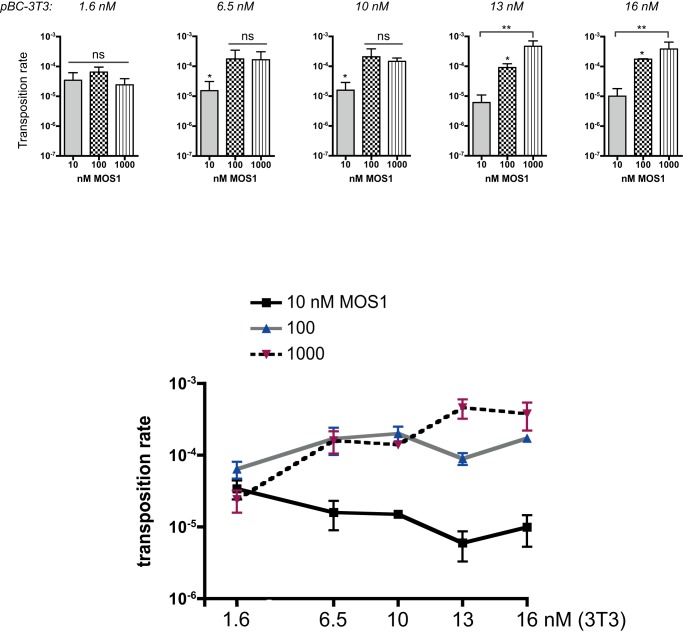
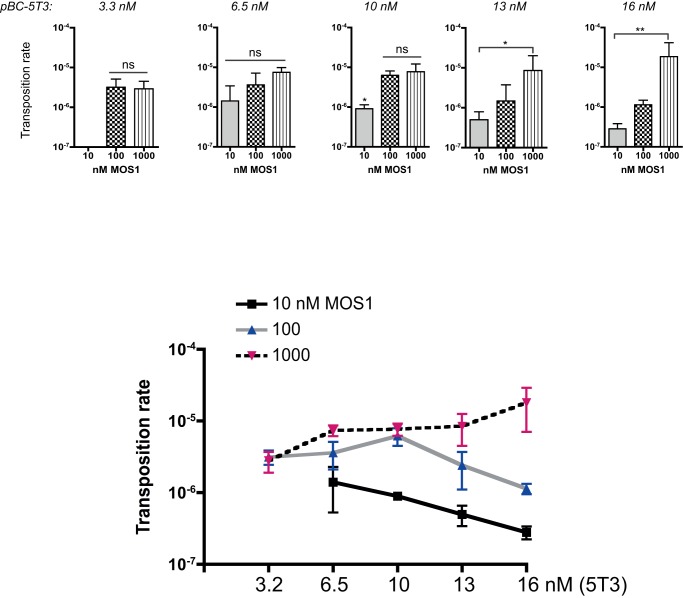
We find that Mos1 transposase concentrations in excess to the Mos1 ends prevent the paired-end complex assembly. However, we observe that Mos1 transposition is not impaired by transposase high concentration, dismissing the idea that transposase over production plays an obligatory role in the down-regulation of mariner transposition. Our main finding is that the paired-end complex is formed in a cooperative way, regardless of the transposase concentration. We also show that an element framed by two identical ITRs (Inverted Terminal Repeats) is more efficient in driving transposition than an element framed by two different ITRs (i.e. the natural Mos1 copy), the latter being more sensitive to transposase concentration variations. Finally, we show that the current Mos1 ITRs correspond to the ancestral ones.
We provide new insights on intrinsic properties supporting the self-regulation of the Mos1 element. These properties (transposase specific activity, aggregation, ITR sequences, transposase concentration/transposon copy number ratio...) could have played a role in the dynamics of host-genomes invasion by Mos1, accounting (at least in part) for the current low copy number of Mos1 within host genomes.
Mariner 元件代表了最成功的自主 DNA 转座子家族,存在于各种植物和动物基因组中,包括人类。Mariner 在内的宿主基因组中的引入和共同进化意味着转座子活性受到严格调控。过去十年积累的生化数据得出了 Mariner 元件转座周期的趋同图,表明 Mariner 转座不依赖于宿主特异性因素。该模型不能解释人类细胞中 mariners 转位效率的差异。因此,我们想知道转座周期的明显相似性是否隐藏了控制 mariners 转座的内在参数的差异。
我们发现,Mos1 转座酶浓度超过 Mos1 末端会阻止配对末端复合物的组装。然而,我们观察到 Mos1 转座不受高浓度转座酶的影响,排除了转座酶过量产生在 mariners 转座下调中起必需作用的想法。我们的主要发现是,配对末端复合物以协作的方式形成,而与转座酶浓度无关。我们还表明,由两个相同的 ITR(倒置末端重复)框定的元件比由两个不同的 ITR(即天然 Mos1 副本)框定的元件更有效地驱动转座,后者对转座酶浓度变化更敏感。最后,我们表明当前的 Mos1 ITR 对应于祖先的 ITR。
我们提供了支持 Mos1 元件自我调节的内在特性的新见解。这些特性(转座酶特异性活性、聚集、ITR 序列、转座酶浓度/转座子拷贝数比……)可能在 Mos1 对宿主基因组的入侵动力学中发挥了作用,至少部分解释了 Mos1 在宿主基因组中的当前低拷贝数。