Kobayashi Kinji, Izawa Takeshi, Kuwamura Mitsuru, Yamate Jyoji
J Toxicol Pathol. 2012 Jun;25(2):135-47. doi: 10.1293/tox.25.135.
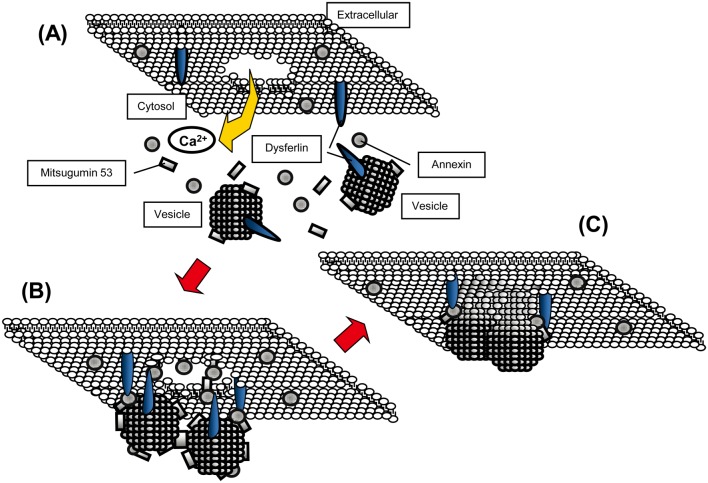
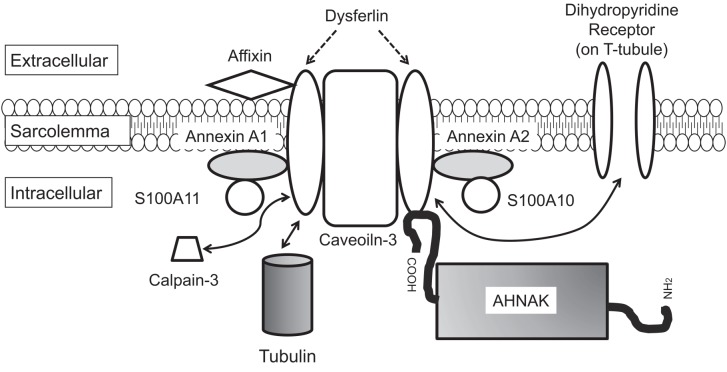
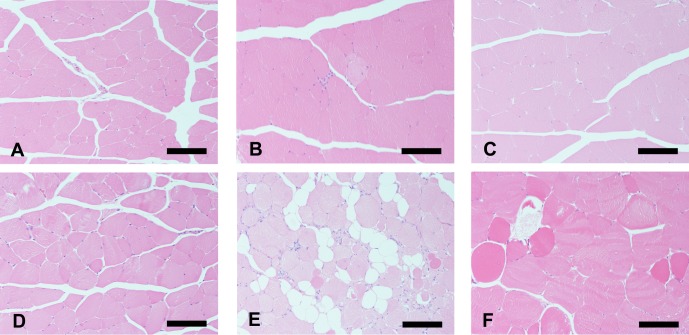
Dysferlin (DYSF) is involved in the membrane-repair process, in the intracellular vesicle system and in T-tubule development in skeletal muscle. It interacts with mitsugumin 53, annexins, caveolin-3, AHNAK, affixin, S100A10, calpain-3, tubulin and dihydropyridine receptor. Limb-girdle muscular dystrophy 2B (LGMD2B) and Miyoshi myopathy (MM) are muscular dystrophies associated with recessively inherited mutations in the DYSF gene. The diseases are characterized by weakness and muscle atrophy that progress slowly and symmetrically in the proximal muscles of the limb girdles. LGMD2B and MM, which are collectively termed "dysferlinopathy", both lead to abnormalities in vesicle traffic and membrane repair at the plasma membrane in muscle fibers. SJL/J (SJL) and A/J mice are naturally occurring animal models for dysferlinopathy. Since there has been no an approach to therapy for dysferlinopathy, the immediate development of a therapeutic method for this genetic disorder is desirable. The murine models are useful in verification experiments for new therapies and they are valuable tools for identifying factors that accelerate dystrophic changes in skeletal muscle. It could be possible that the genetic or immunological background in SJL or A/J mice could modify muscle damage in experiments involving these models, because SJL and A/J mice show differences in the progress and prevalent sites of skeletal muscle lesions as well as in the gene-expression profiles of their skeletal muscle. In this review, we provide up-to-date information on the function of dysferlin, the development of possible therapies for muscle dystrophies (including dysferlinopathy) and the detection of new therapeutic targets for dysferlinopathy by means of experiments using animal models for dysferlinopathy.
抗肌萎缩蛋白(DYSF)参与膜修复过程、细胞内囊泡系统以及骨骼肌T小管的发育。它与肌联蛋白53、膜联蛋白、小窝蛋白-3、AHNAK、亲和蛋白、S100A10、钙蛋白酶-3、微管蛋白和二氢吡啶受体相互作用。肢带型肌营养不良2B(LGMD2B)和宫下肌病(MM)是与DYSF基因隐性遗传突变相关的肌营养不良症。这些疾病的特征是肢体带近端肌肉出现缓慢且对称进展的肌无力和肌肉萎缩。LGMD2B和MM统称为“抗肌萎缩蛋白病”,二者均导致肌纤维质膜处囊泡运输和膜修复异常。SJL/J(SJL)和A/J小鼠是抗肌萎缩蛋白病的天然动物模型。由于尚未有针对抗肌萎缩蛋白病的治疗方法,因此迫切需要开发针对这种遗传疾病的治疗方法。这些小鼠模型在新疗法的验证实验中很有用,并且是识别加速骨骼肌营养不良变化因素的宝贵工具。在涉及这些模型的实验中,SJL或A/J小鼠的遗传或免疫背景可能会改变肌肉损伤,因为SJL和A/J小鼠在骨骼肌病变的进展和常见部位以及骨骼肌的基因表达谱方面存在差异。在这篇综述中,我们提供了关于抗肌萎缩蛋白功能的最新信息、肌肉营养不良症(包括抗肌萎缩蛋白病)可能疗法的进展,以及通过使用抗肌萎缩蛋白病动物模型进行实验来检测抗肌萎缩蛋白病新治疗靶点的相关内容。