Mirzayans Razmik, Andrais Bonnie, Scott April, Murray David
Department of Oncology, University of Alberta, Cross Cancer Institute, Edmonton, AB, Canada.
J Biomed Biotechnol. 2012;2012:170325. doi: 10.1155/2012/170325. Epub 2012 Jul 15.
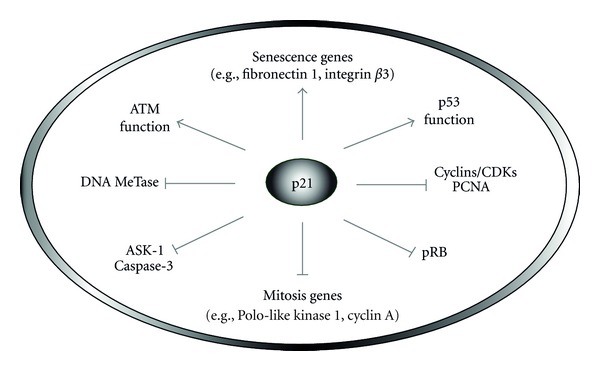
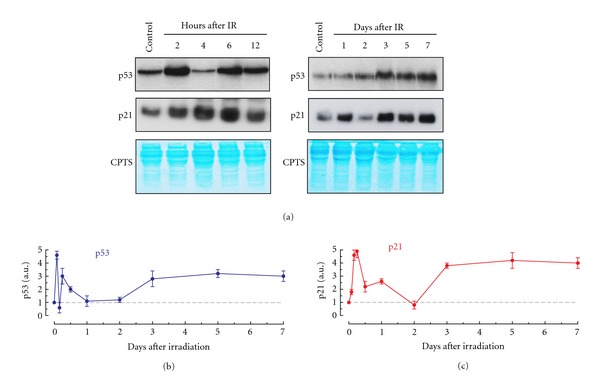
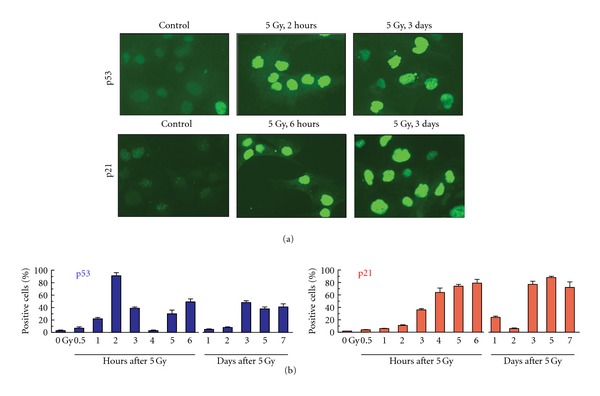
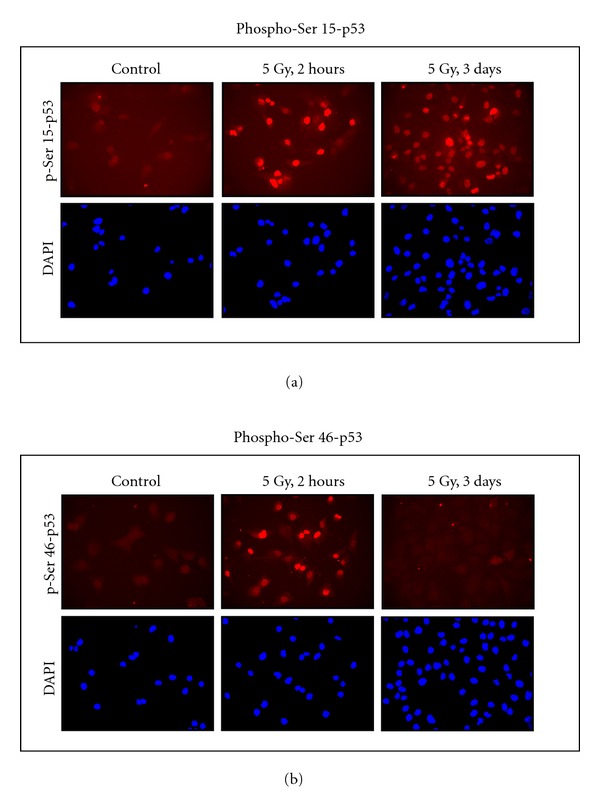
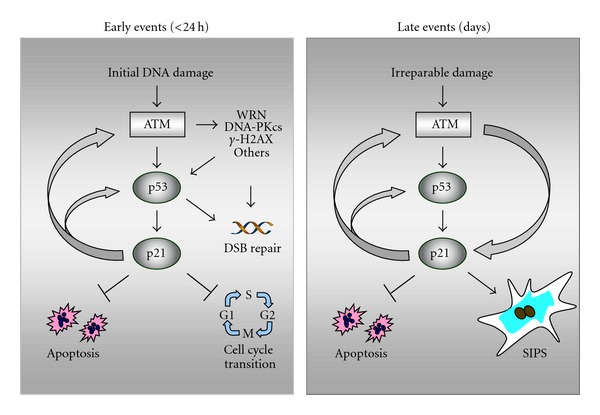
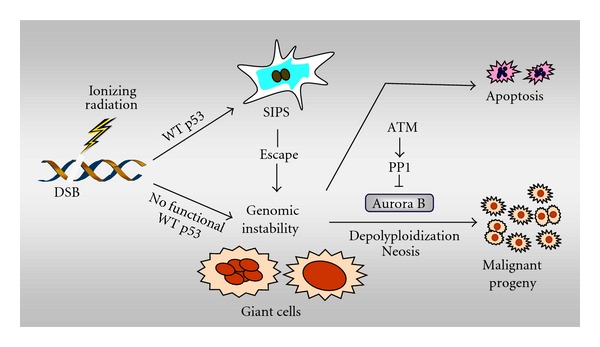
Activation of the p53 signaling pathway by DNA-damaging agents was originally proposed to result either in cell cycle checkpoint activation to promote survival or in apoptotic cell death. This model provided the impetus for numerous studies focusing on the development of p53-based cancer therapies. According to recent evidence, however, most p53 wild-type human cell types respond to ionizing radiation by undergoing stress-induced premature senescence (SIPS) and not apoptosis. SIPS is a sustained growth-arrested state in which cells remain viable and secrete factors that may promote cancer growth and progression. The p21(WAF1) (hereafter p21) protein has emerged as a key player in the p53 pathway. In addition to its well-studied role in cell cycle checkpoints, p21 regulates p53 and its upstream kinase (ATM), controls gene expression, suppresses apoptosis, and induces SIPS. Herein, we review these and related findings with human solid tumor-derived cell lines, report new data demonstrating dynamic behaviors of p53 and p21 in the DNA damage response, and examine the gain-of-function properties of cancer-associated p53 mutations. We point out obstacles in cancer-therapeutic strategies that are aimed at reactivating the wild-type p53 function and highlight some alternative approaches that target the apoptotic threshold in cancer cells with differing p53 status.
DNA损伤剂对p53信号通路的激活最初被认为会导致细胞周期检查点激活以促进存活,或者导致凋亡性细胞死亡。该模型为众多聚焦于基于p53的癌症治疗方法开发的研究提供了动力。然而,根据最近的证据,大多数p53野生型人类细胞类型对电离辐射的反应是经历应激诱导的早衰(SIPS)而非凋亡。SIPS是一种持续的生长停滞状态,细胞在此状态下仍保持存活并分泌可能促进癌症生长和进展的因子。p21(WAF1)(以下简称p21)蛋白已成为p53通路中的关键因子。除了其在细胞周期检查点中经过充分研究的作用外,p21还调节p53及其上游激酶(ATM),控制基因表达,抑制凋亡,并诱导SIPS。在此,我们用人类实体瘤衍生的细胞系回顾这些及相关发现,报告展示p53和p21在DNA损伤反应中的动态行为的新数据,并研究癌症相关p53突变的功能获得特性。我们指出旨在重新激活野生型p53功能的癌症治疗策略中的障碍,并强调一些针对具有不同p53状态的癌细胞凋亡阈值的替代方法。