Pharmacological Institute, College of Medicine, National Taiwan University, Taipei, Taiwan.
PLoS One. 2012;7(8):e42192. doi: 10.1371/journal.pone.0042192. Epub 2012 Aug 13.
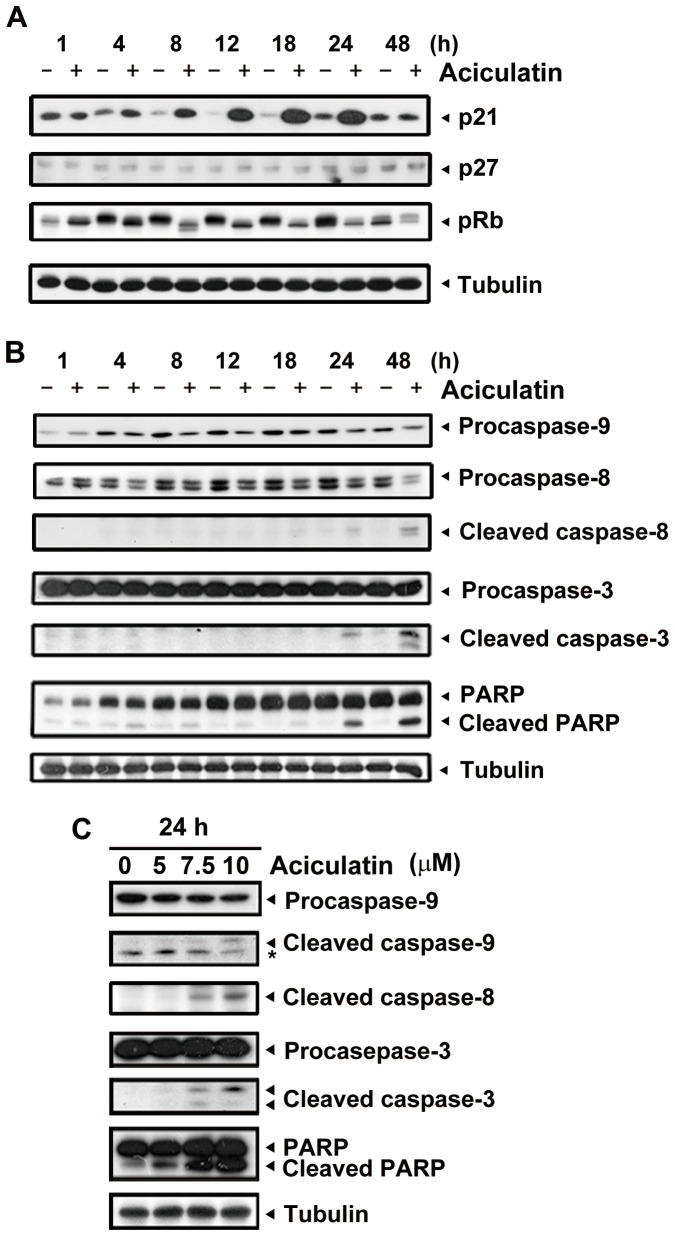
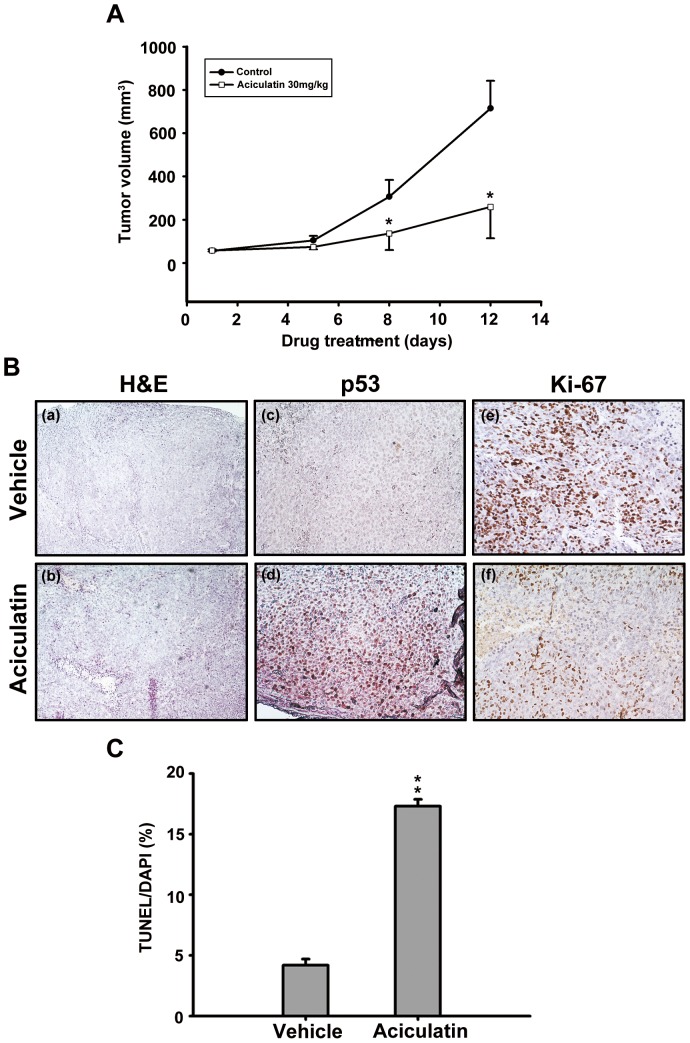
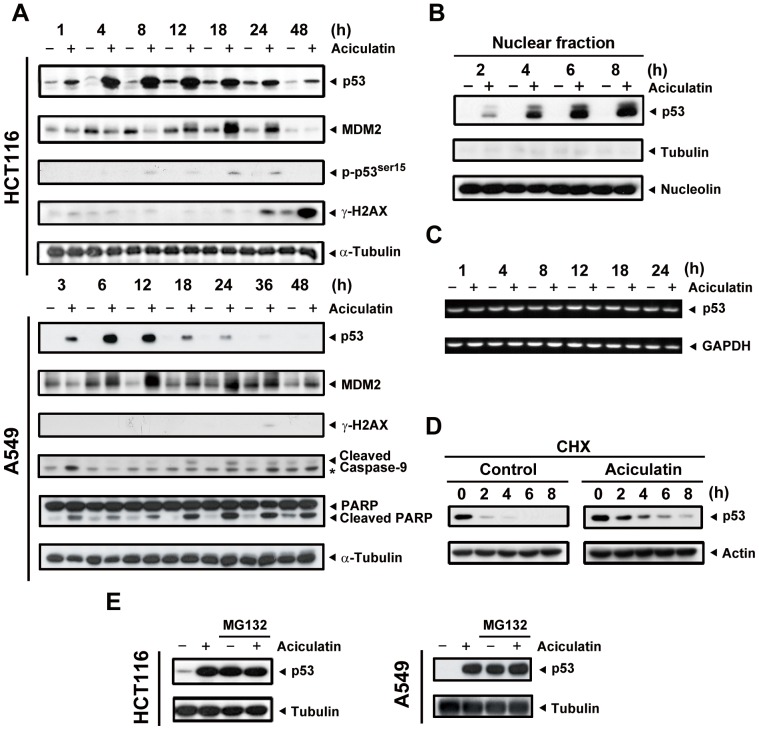
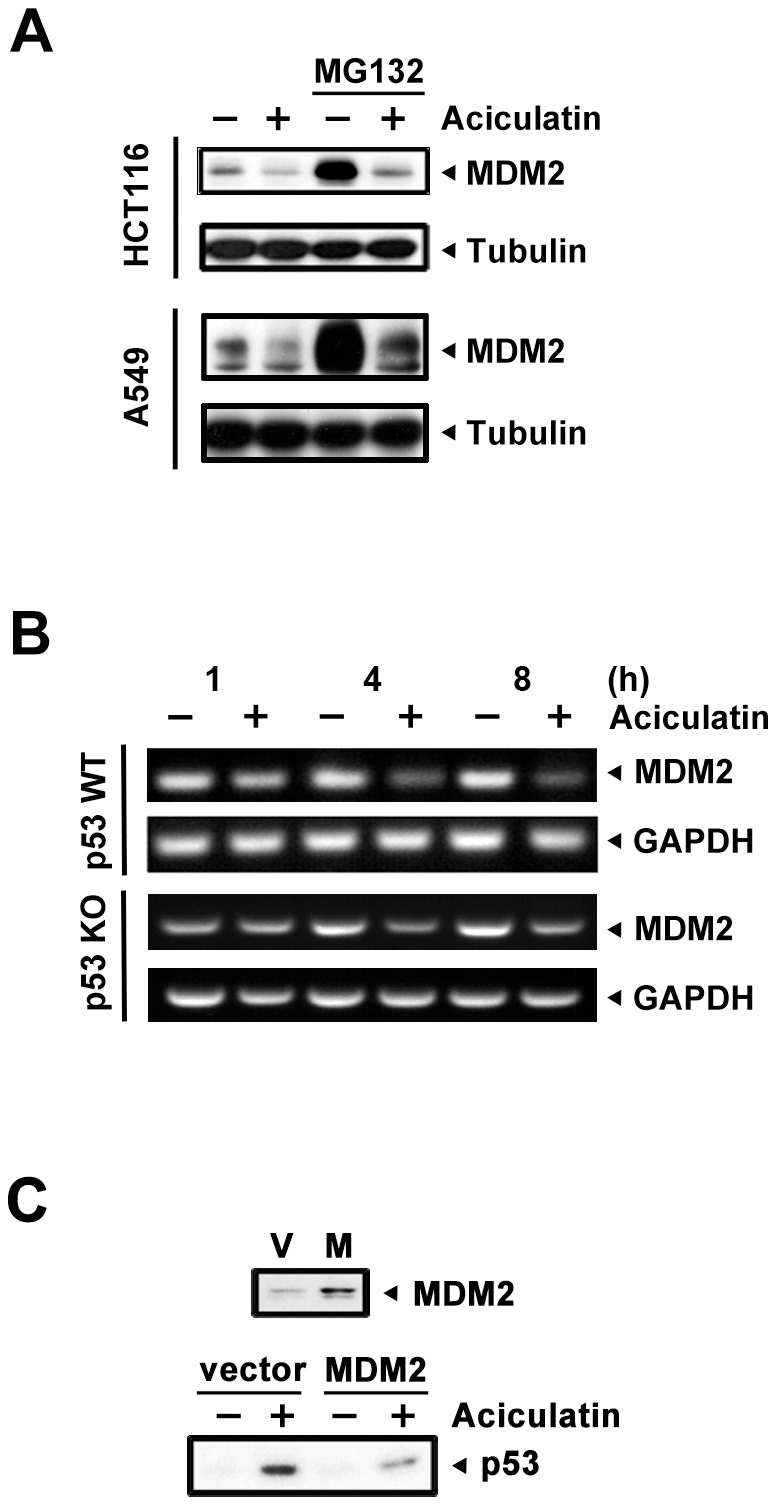
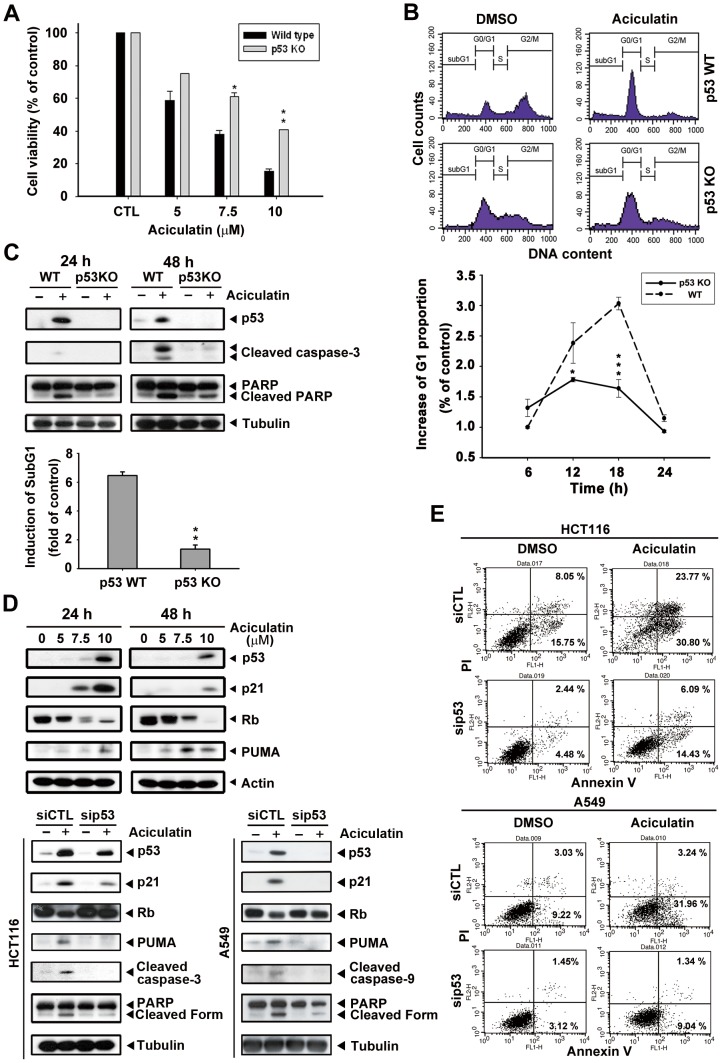
Aciculatin, a natural compound extracted from the medicinal herb Chrysopogon aciculatus, shows potent anti-cancer potency. This study is the first to prove that aciculatin induces cell death in human cancer cells and HCT116 mouse xenografts due to G1 arrest and subsequent apoptosis. The primary reason for cell cycle arrest and cell death was p53 accumulation followed by increased p21 level, dephosphorylation of Rb protein, PUMA expression, and induction of apoptotic signals such as cleavage of caspase-9, caspase-3, and PARP. We demonstrated that p53 allele-null (-/-) (p53-KO) HCT116 cells were more resistant to aciculatin than cells with wild-type p53 (+/+). The same result was achieved by knocking down p53 with siRNA in p53 wild-type cells, indicating that p53 plays a crucial role in aciculatin-induced apoptosis. Although DNA damage is the most common event leading to p53 activation, we found only weak evidence of DNA damage after aciculatin treatment. Interestingly, the aciculatin-induced downregulation of MDM2, an important negative regulator of p53, contributed to p53 accumulation. The anti-cancer activity and importance of p53 after aciculatin treatment were also confirmed in the HCT116 xenograft models. Collectively, these results indicate that aciculatin treatment induces cell cycle arrest and apoptosis via inhibition of MDM2 expression, thereby inducing p53 accumulation without significant DNA damage and genome toxicity.
从药用植物蜈蚣草中提取的天然化合物 Aciculatin 具有很强的抗癌活性。这项研究首次证明 Aciculatin 通过 G1 期阻滞和随后的细胞凋亡诱导人癌细胞和 HCT116 小鼠异种移植细胞死亡。细胞周期阻滞和细胞死亡的主要原因是 p53 积累,随后 p21 水平增加,Rb 蛋白去磷酸化,PUMA 表达,并诱导凋亡信号,如 caspase-9、caspase-3 和 PARP 的切割。我们证明 p53 等位基因缺失 (-/-) (p53-KO) HCT116 细胞比野生型 p53 (+/+) 细胞对 Aciculatin 更具抗性。在 p53 野生型细胞中用 siRNA 敲低 p53 也得到了相同的结果,表明 p53 在 Aciculatin 诱导的细胞凋亡中起着至关重要的作用。尽管 DNA 损伤是导致 p53 激活的最常见事件,但我们发现在 Aciculatin 处理后只有微弱的 DNA 损伤证据。有趣的是,Aciculatin 诱导的 MDM2 下调,MDM2 是 p53 的重要负调控因子,导致 p53 积累。Aciculatin 处理后 p53 的抗癌活性和重要性也在 HCT116 异种移植模型中得到了证实。综上所述,这些结果表明 Aciculatin 通过抑制 MDM2 表达诱导细胞周期阻滞和凋亡,从而在没有明显 DNA 损伤和基因组毒性的情况下诱导 p53 积累。