Laboratory of Biochemistry, Department of Biological Sciences, Faculty of Pharmacy, University of Porto, Porto, Portugal.
PLoS One. 2012;7(8):e42398. doi: 10.1371/journal.pone.0042398. Epub 2012 Aug 13.
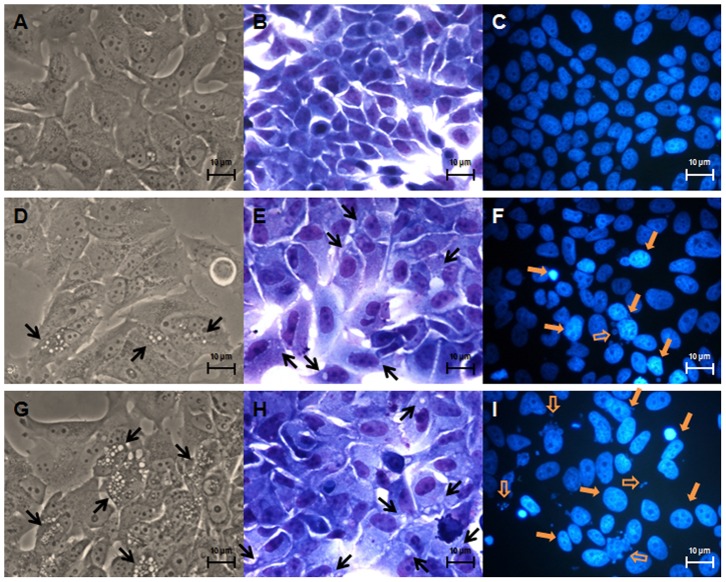
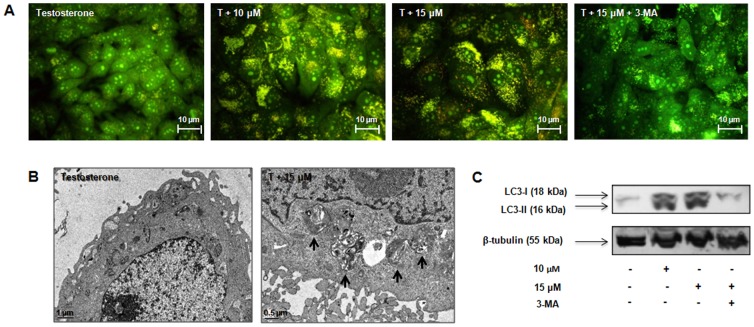
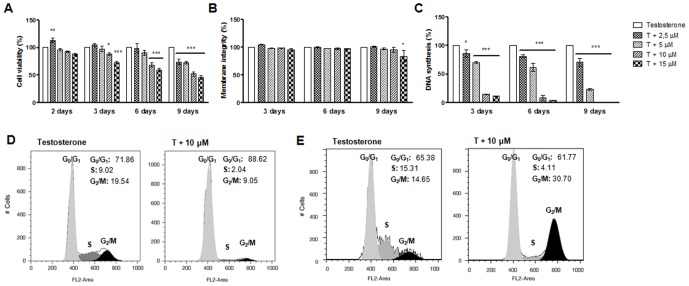
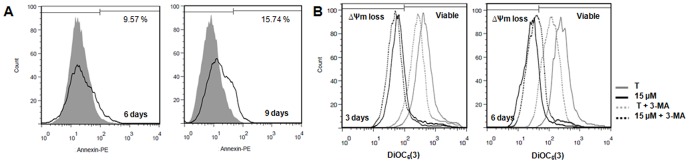
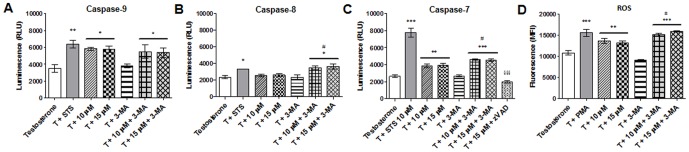
Aromatase inhibitors (AIs), which block the conversion of androgens to estrogens, are used for hormone-dependent breast cancer treatment. Exemestane, a steroidal that belongs to the third-generation of AIs, is a mechanism-based inhibitor that binds covalently and irreversibly, inactivating and destabilizing aromatase. Since the biological effects of exemestane in breast cancer cells are not totally understood, its effects on cell viability, cell proliferation and mechanisms of cell death were studied in an ER-positive aromatase-overexpressing breast cancer cell line (MCF-7aro). The effects of 3-methyladenine (3-MA), an inhibitor of autophagy and of ZVAD-FMK, an apoptotic inhibitor, in exemestane treated cells were also investigated. Our results indicate that exemestane induces a strong inhibition in MCF-7aro cell proliferation in a dose- and time-dependent manner, promoting a significant cell cycle arrest in G(0)/G1 or in G(2)/M phases after 3 and 6 days of treatment, respectively. This was accompanied by a decrease in cell viability due to activation of cell death by apoptosis, via mitochondrial pathway and the occurrence of autophagy. Inhibition of autophagy by the autophagic inhibitor, 3-MA, resulted in a reduction of cell viability and activation of caspases. All together the results obtained suggest that exemestane induced mitochondrial-mediated apoptosis and autophagy, which act as a pro-survival process regulating breast cancer cell apoptosis.
芳香酶抑制剂(AIs)可阻断雄激素向雌激素的转化,用于激素依赖性乳腺癌的治疗。依西美坦是一种甾体类第三代 AI,是一种基于机制的抑制剂,可通过共价和不可逆结合,使芳香酶失活和不稳定。由于依西美坦在乳腺癌细胞中的生物学效应尚未完全了解,因此研究了其在过表达芳香酶的 ER 阳性乳腺癌细胞系(MCF-7aro)中对细胞活力、细胞增殖和细胞死亡机制的影响。还研究了自噬抑制剂 3-甲基腺嘌呤(3-MA)和凋亡抑制剂 ZVAD-FMK 对依西美坦处理细胞的影响。我们的结果表明,依西美坦以剂量和时间依赖性方式强烈抑制 MCF-7aro 细胞的增殖,分别在 3 天和 6 天后处理导致细胞周期阻滞在 G0/G1 或 G2/M 期。这伴随着由于通过线粒体途径和自噬发生的细胞凋亡而导致的细胞活力下降。自噬抑制剂 3-MA 抑制自噬会导致细胞活力降低和半胱天冬酶的激活。总之,研究结果表明,依西美坦诱导了线粒体介导的凋亡和自噬,这作为调节乳腺癌细胞凋亡的存活过程。