Department of Biochemistry, Temple University School of Medicine, 3400 North Broad Street, Philadelphia, Pennsylvania 19140, USA.
Nat Rev Mol Cell Biol. 2012 Sep;13(9):549-65. doi: 10.1038/nrm3414.
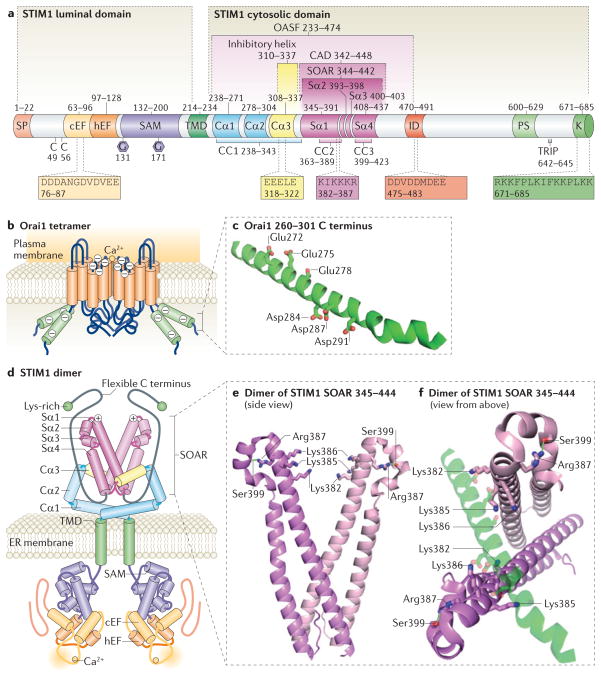
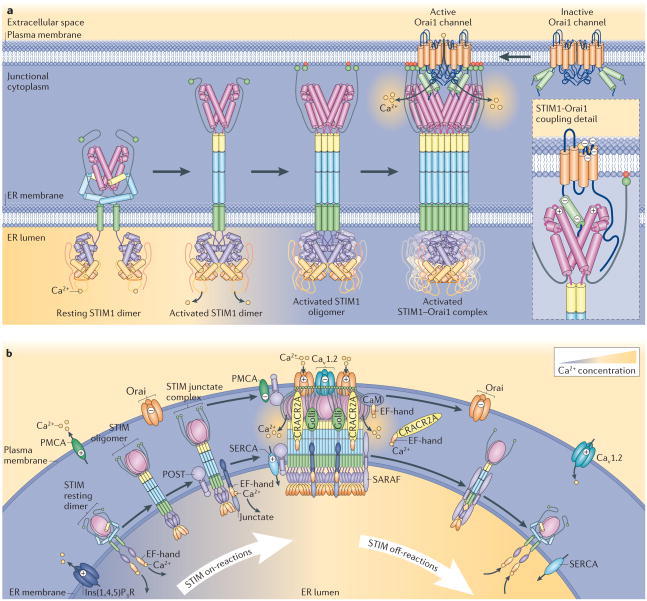
Stromal interaction molecule (STIM) proteins function in cells as dynamic coordinators of cellular calcium (Ca(2+)) signals. Spanning the endoplasmic reticulum (ER) membrane, they sense tiny changes in the levels of Ca(2+) stored within the ER lumen. As ER Ca(2+) is released to generate primary Ca(2+) signals, STIM proteins undergo an intricate activation reaction and rapidly translocate into junctions formed between the ER and the plasma membrane. There, STIM proteins tether and activate the highly Ca(2+)-selective Orai channels to mediate finely controlled Ca(2+) signals and to homeostatically balance cellular Ca(2+). Details are emerging on the remarkable organization within these STIM-induced junctional microdomains and the identification of new regulators and alternative target proteins for STIM.
基质相互作用分子(STIM)蛋白在细胞中作为细胞钙(Ca(2+))信号的动态协调蛋白发挥作用。它们横跨内质网(ER)膜,感知 ER 腔中储存的 Ca(2+)水平的微小变化。当 ER Ca(2+)释放以产生初级 Ca(2+)信号时,STIM 蛋白经历复杂的激活反应,并迅速易位到 ER 和质膜之间形成的连接点。在那里,STIM 蛋白固定并激活高度 Ca(2+)选择性的 Orai 通道,以介导精细控制的 Ca(2+)信号,并使细胞内 Ca(2+)平衡。这些 STIM 诱导的连接点微域内的惊人组织以及新的调节剂和 STIM 的替代靶蛋白的鉴定正在出现。