Department of Cardiovascular Surgery, Inselspital, Berne University Hospital and University of Berne, Berne, Switzerland.
PLoS One. 2012;7(8):e43642. doi: 10.1371/journal.pone.0043642. Epub 2012 Aug 21.
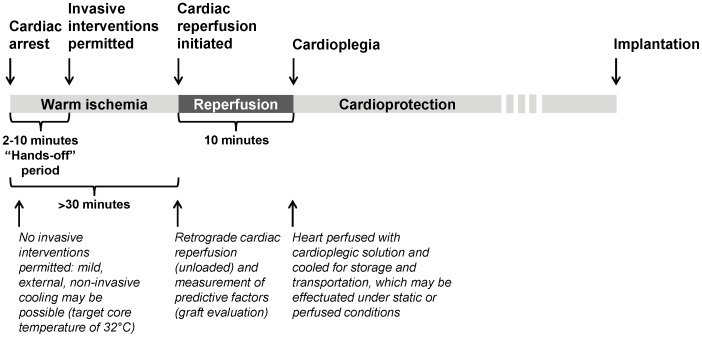
Cardiac grafts from non-heartbeating donors (NHBDs) could significantly increase organ availability and reduce waiting-list mortality. Reluctance to exploit hearts from NHBDs arises from obligatory delays in procurement leading to periods of warm ischemia and possible subsequent contractile dysfunction. Means for early prediction of graft suitability prior to transplantation are thus required for development of heart transplantation programs with NHBDs.
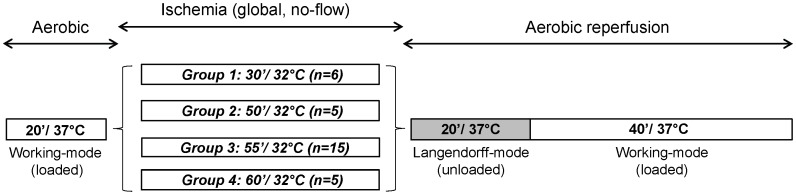
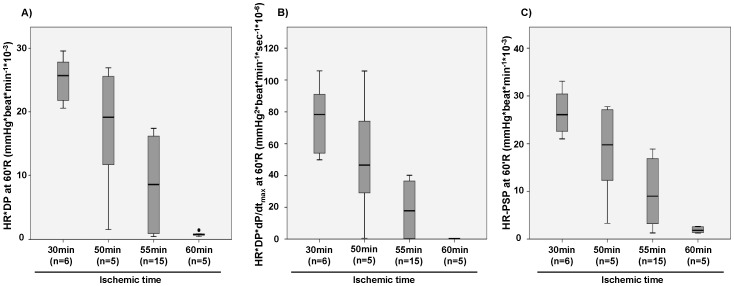
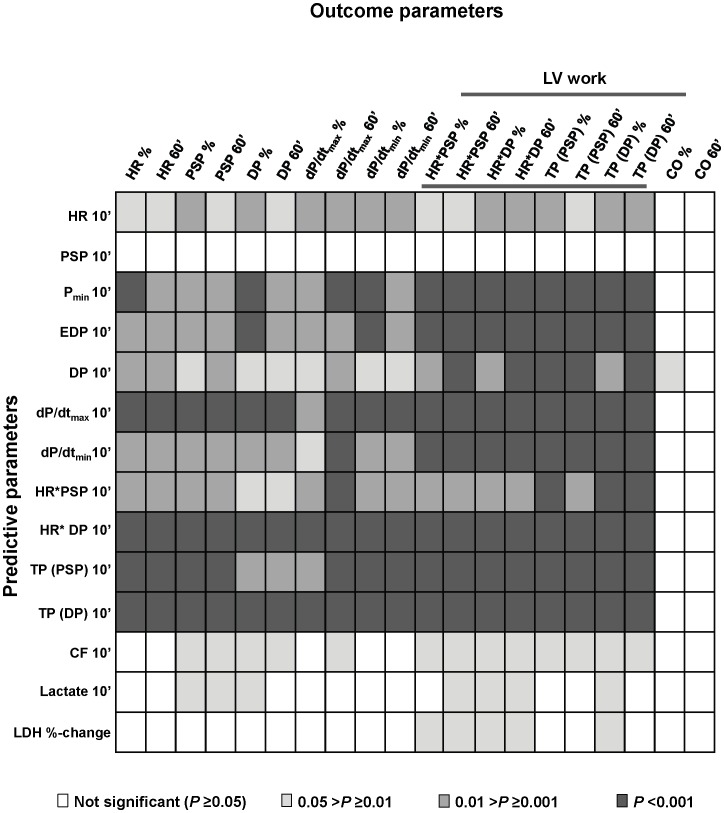
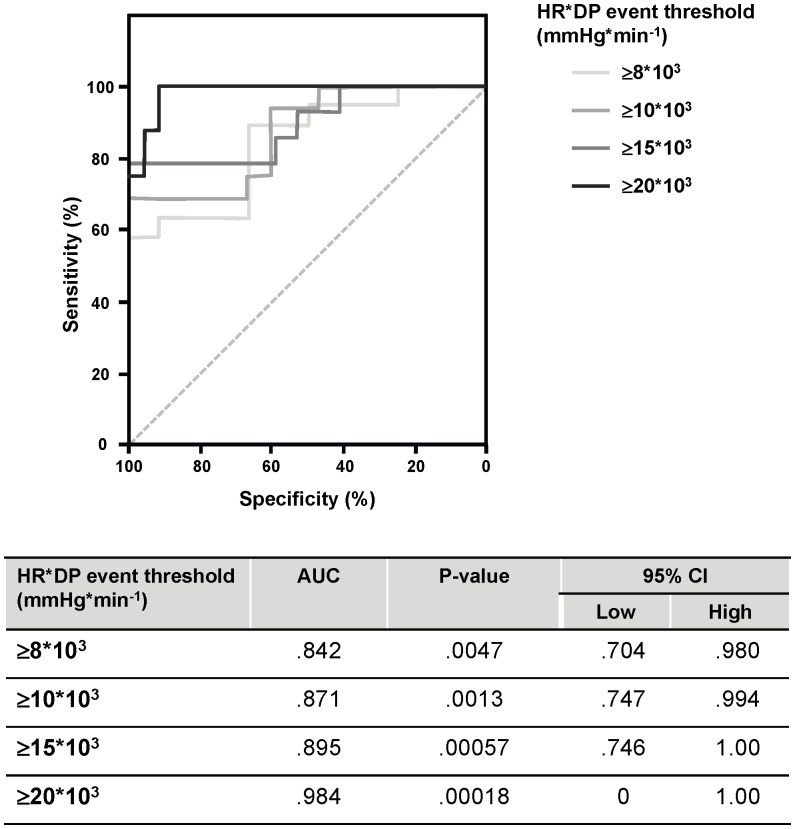
Hearts (n = 31) isolated from male Wistar rats were perfused with modified Krebs-Henseleit buffer aerobically for 20 min, followed by global, no-flow ischemia (32°C) for 30, 50, 55 or 60 min. Reperfusion was unloaded for 20 min, and then loaded, in working-mode, for 40 min. Left ventricular (LV) pressure was monitored using a micro-tip pressure catheter introduced via the mitral valve. Several hemodynamic parameters measured during early, unloaded reperfusion correlated significantly with LV work after 60 min reperfusion (p<0.001). Coronary flow and the production of lactate and lactate dehydrogenase (LDH) also correlated significantly with outcomes after 60 min reperfusion (p<0.05). Based on early reperfusion hemodynamic measures, a composite, weighted predictive parameter, incorporating heart rate (HR), developed pressure (DP) and end-diastolic pressure, was generated and evaluated against the HR-DP product after 60 min of reperfusion. Effective discriminating ability for this novel parameter was observed for four HRDP cut-off values, particularly for ≥20 10(3) mmHgbeatsmin(-1) (p<0.01).
Upon reperfusion of a NHBD heart, early evaluation, at the time of organ procurement, of cardiac hemodynamic parameters, as well as easily accessible markers of metabolism and necrosis seem to accurately predict subsequent contractile recovery and could thus potentially be of use in guiding the decision of accepting the ischemic heart for transplantation.
来自非心跳供体(NHBD)的心脏移植物可以显著增加器官的可用性并降低等待名单上的死亡率。由于在采集过程中必须延迟,导致出现热缺血期,并可能随后出现收缩功能障碍,因此人们对利用 NHBD 的心脏犹豫不决。因此,需要在开发具有 NHBD 的心脏移植计划之前,寻找用于预测移植物在移植前是否合适的早期预测方法。
用改良的 Krebs-Henseleit 缓冲液对雄性 Wistar 大鼠的心脏(n=31)进行有氧灌注 20 分钟,然后进行 30、50、55 或 60 分钟的全心脏无血流缺血。再灌注 20 分钟后,以工作模式加载 40 分钟。通过经二尖瓣引入的微尖端压力导管监测左心室(LV)压力。在早期无负载再灌注期间测量的几个血流动力学参数与 60 分钟再灌注后的 LV 做功显著相关(p<0.001)。冠脉流量和乳酸及乳酸脱氢酶(LDH)的产生也与 60 分钟再灌注后的结果显著相关(p<0.05)。基于早期再灌注血流动力学测量值,生成了一个包含心率(HR)、发展压(DP)和舒张末期压的综合加权预测参数,并将其与 60 分钟再灌注后的 HR-DP 乘积进行了评估。观察到该新型参数对于四个 HRDP 截断值具有有效的区分能力,特别是对于≥2010(3)mmHgbeatsmin(-1)(p<0.01)。
在 NHBD 心脏再灌注时,在器官采集时对心脏血流动力学参数进行早期评估,以及对易于获得的代谢和坏死标志物进行评估,似乎可以准确预测随后的收缩功能恢复,因此可能有助于指导接受缺血心脏进行移植的决策。