Department of Cell Biology, Neurobiology and Anatomy, Medical College of Wisconsin, 8701 Watertown Plank Rd, Milwaukee, WI 53226, USA.
BMC Genet. 2012 Aug 28;13:76. doi: 10.1186/1471-2156-13-76.
Waved with open eyelids 2 (woe2) is a novel autosomal recessive mouse mutation that arose spontaneously in our animal facility. Upon initial evaluation, mutant mice exhibited eyelids open at birth (EOB) and wavy fur phenotypes. The goals of this study were to phenotypically characterize the woe2 mice and to identify the gene harboring the mutation responsible for the woe2 phenotype.
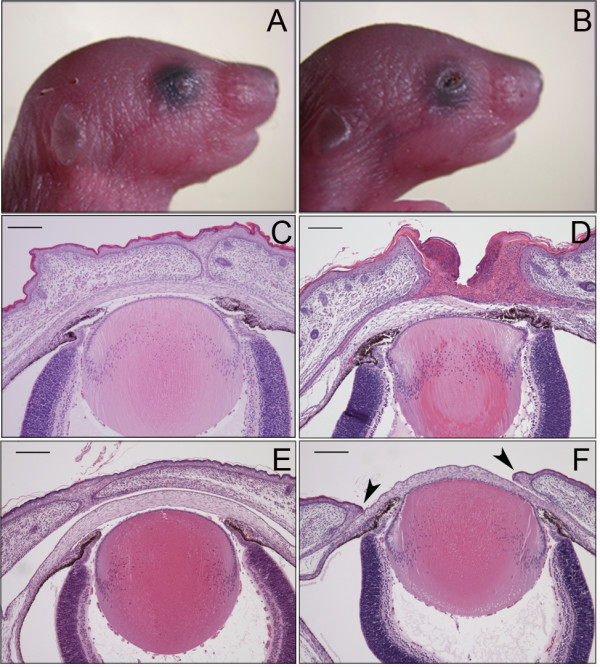
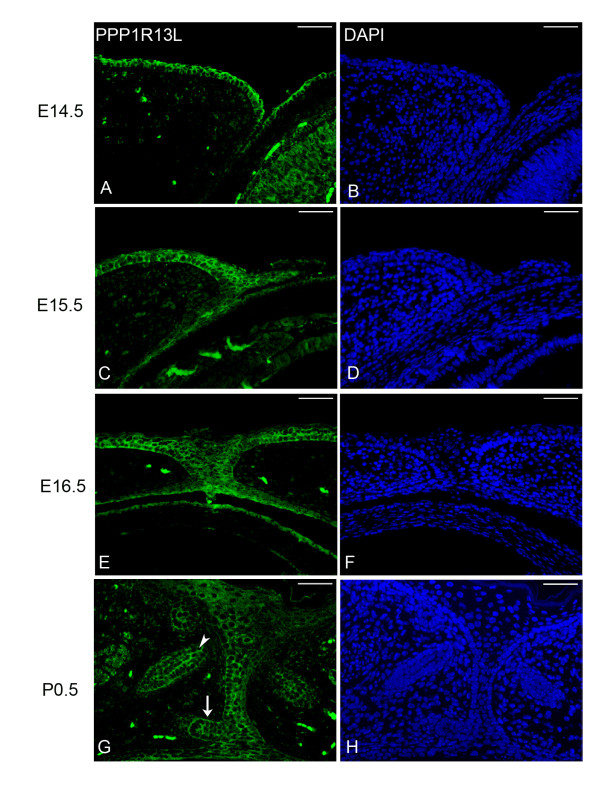
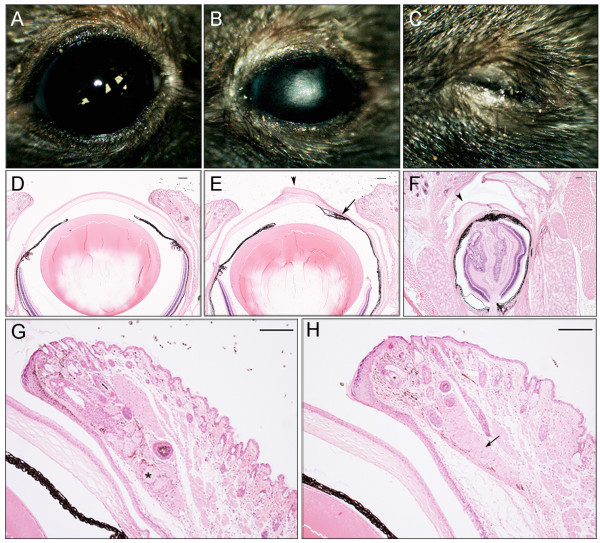
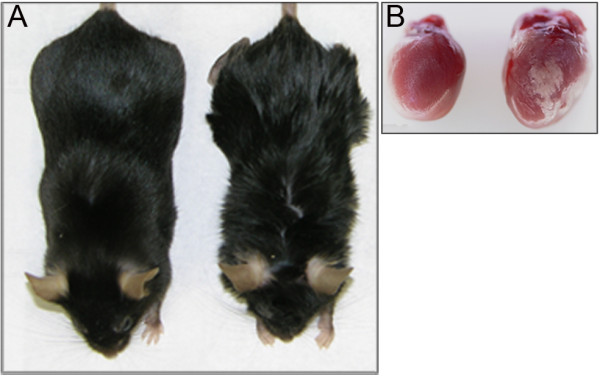
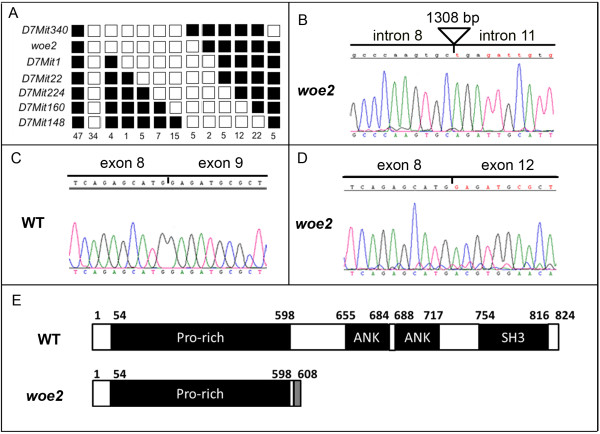
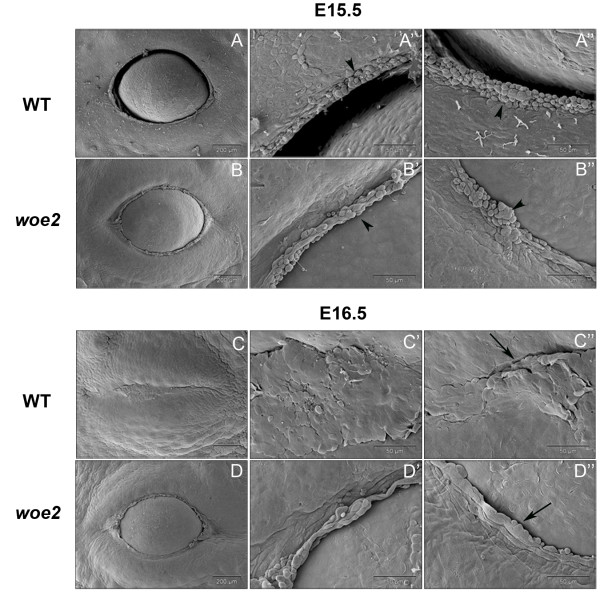
Histological analysis of woe2 embryos identified the failure of embryonic eyelid closure. Clinical and histological analysis of woe2 adult eyes identified severe corneal opacities, abnormalities of the anterior segment of the eye, and the absence of meibomian glands. Abnormalities in the fur texture and the absence of meibomian glands prompted us to evaluate other epidermal appendages: skin, teeth, and nails--as well as lacrimal, mammary, salivary, sebaceous and sweat glands. No obvious morphological differences between WT and woe2 mice were identified in these tissues. However, the analysis of woe2 identified cardiac abnormalities. Positional cloning of the woe2 locus identified a 1308 bp deletion in the Ppp1r13l gene. The deletion resulted in an aberrant Ppp1r13l(Δexon9-11) transcript that lacks exons 9, 10 and 11 resulting in a premature stop and a loss of 223 amino acids from the C-terminal end of the putative mutant PPP1R13L protein. Immunohistological analysis during eye development identified expression of PPP1R13L in the palpebral epidermis, palpebral and bulbar conjunctiva, corneal epithelium and meibomian glands.
The woe2 mouse harbors a novel deletion within the Ppp1r13l gene, likely resulting in a complete loss of PPP1R13L function. Results from this study provide evidence that PPP1R13L has an essential role in embryonic eyelid closure as well in development of meibomian glands and the anterior segment of the eye. The woe2 mice are a useful model for investigation of the role of PPP1R13L, especially during ocular and eyelid development.
眼睑波浪状张开 2(woe2)是一种新的常染色体隐性小鼠突变,自发出现在我们的动物设施中。在最初的评估中,突变小鼠表现出出生时眼睑张开(EOB)和波浪状皮毛表型。本研究的目的是对 woe2 小鼠进行表型特征分析,并鉴定导致 woe2 表型的突变基因。
woe2 胚胎的组织学分析确定了胚胎眼睑闭合失败。woe2 成年眼睛的临床和组织学分析确定了严重的角膜混浊、眼睛前段异常和缺乏睑板腺。皮毛质地异常和缺乏睑板腺促使我们评估其他表皮附属物:皮肤、牙齿和指甲以及泪腺、乳腺、唾液腺、皮脂腺和汗腺。在这些组织中,未发现 WT 和 woe2 小鼠之间有明显的形态差异。然而,woe2 的分析确定了心脏异常。woe2 基因座的定位克隆确定了 Ppp1r13l 基因中 1308bp 的缺失。缺失导致异常的 Ppp1r13l(Δexon9-11)转录本,该转录本缺失外显子 9、10 和 11,导致提前终止,并从推定突变 PPP1R13L 蛋白的 C 末端丢失 223 个氨基酸。在眼睛发育过程中的免疫组织化学分析确定了 PPP1R13L 在睑皮、睑结膜和球结膜、角膜上皮和睑板腺中的表达。
woe2 小鼠在 Ppp1r13l 基因内存在新的缺失,可能导致 PPP1R13L 功能完全丧失。本研究结果提供了证据,表明 PPP1R13L 在胚胎眼睑闭合以及睑板腺和眼睛前段发育中具有重要作用。woe2 小鼠是研究 PPP1R13L 作用的有用模型,特别是在眼部和眼睑发育过程中。