Central Research Institute for Dryland Agriculture, Hyderabad, India.
J Insect Sci. 2012;12:14. doi: 10.1673/031.012.1401.
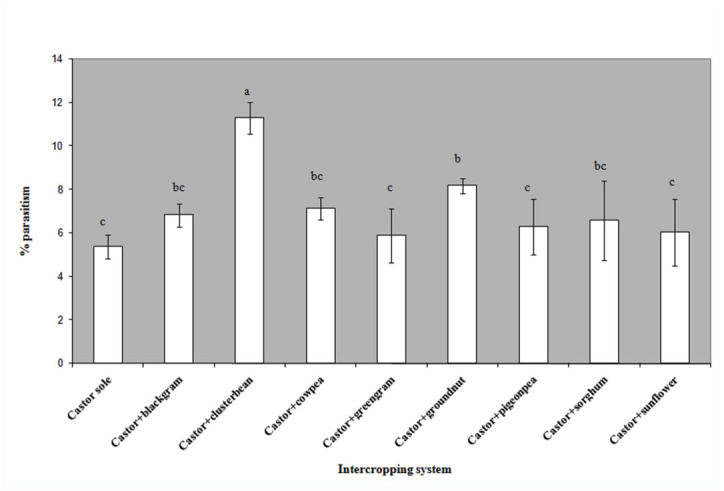
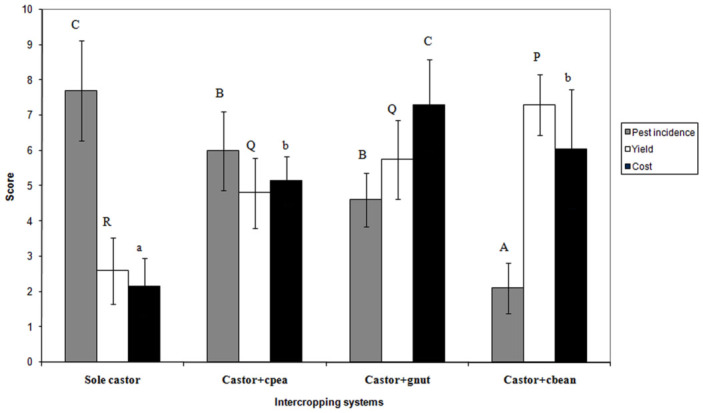
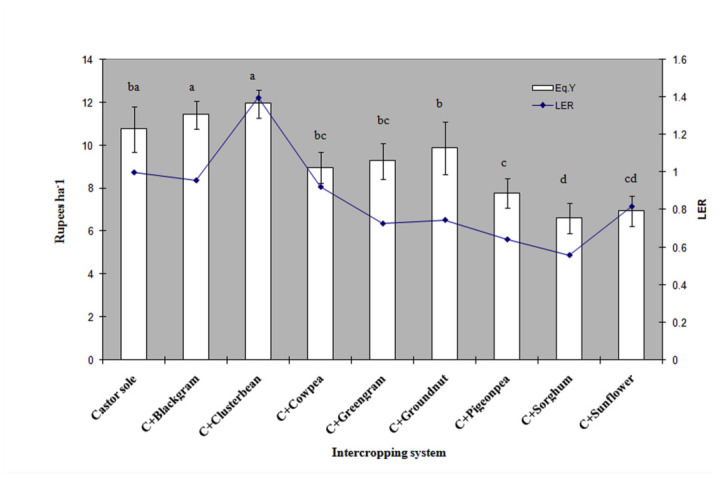
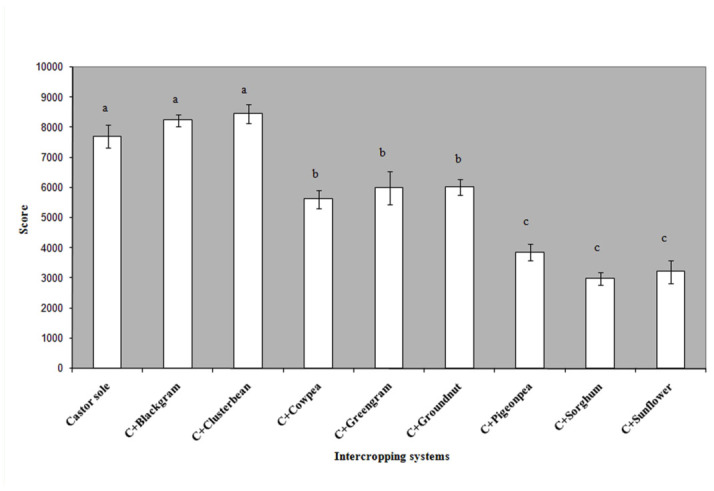
Intercropping is one of the important cultural practices in pest management and is based on the principle of reducing insect pests by increasing the diversity of an ecosystem. On-farm experiments were conducted in villages of semi-arid tropical (SAT) India to identify the appropriate combination of castor (Ricinus communis L.) (Malpighiales: Euphorbiaceae) and intercropping in relation to pest incidence. The diversity created by introducing cluster bean, cowpea, black gram, or groundnut as intercrops in castor (1:2 ratio proportions) resulted in reduction of incidence of insect pests, namely semilooper (Achaea janata L.), leaf hopper (Empoasca flavescens Fabricius), and shoot and capsule borer (Conogethes punctiferalis Guenee). A buildup of natural enemies (Microplitis, coccinellids, and spiders) of the major pests of castor was also observed in these intercropping systems and resulted in the reduction of insect pests. Further, these systems were more efficient agronomically and economically, and were thus more profitable than a castor monocrop.
间作是害虫管理的重要文化措施之一,其原理是通过增加生态系统的多样性来减少害虫。在印度半干旱热带地区(SAT)的村庄进行了田间试验,以确定蓖麻(Ricinus communis L.)(大戟目:大戟科)与间作的适当组合与害虫发生有关。通过引入三叶草、豇豆、黑豆或花生作为蓖麻的间作(1:2 的比例),创造了多样性,从而降低了鳞翅目夜蛾(Achaea janata L.)、叶蝉(Empoasca flavescens Fabricius)和梢和蒴果蛀虫(Conogethes punctiferalis Guenee)的发生率。在这些间作系统中,还观察到蓖麻主要害虫的天敌(小茧蜂、瓢虫和蜘蛛)的积累,这导致了害虫的减少。此外,这些系统在农业和经济上更有效,因此比蓖麻单作更有利可图。