Yamada Minoru, Tegoshi Tatsuya, Abe Niichiro, Urabe Misako
Department of Infectious Diseases, Kyoto Prefectural University of Medicine, Kyoto, Japan.
Korean J Parasitol. 2012 Sep;50(3):263-7. doi: 10.3347/kjp.2012.50.3.263. Epub 2012 Aug 13.
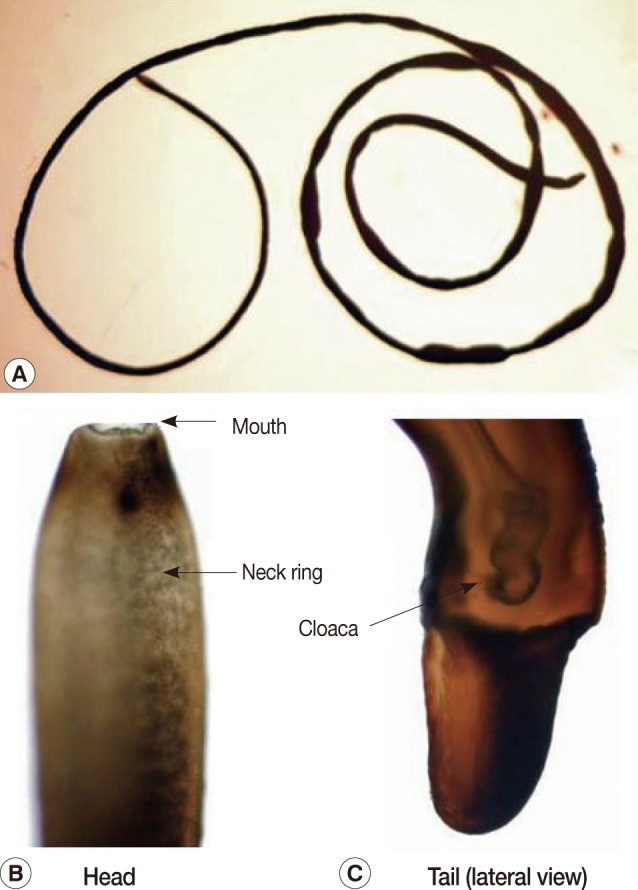
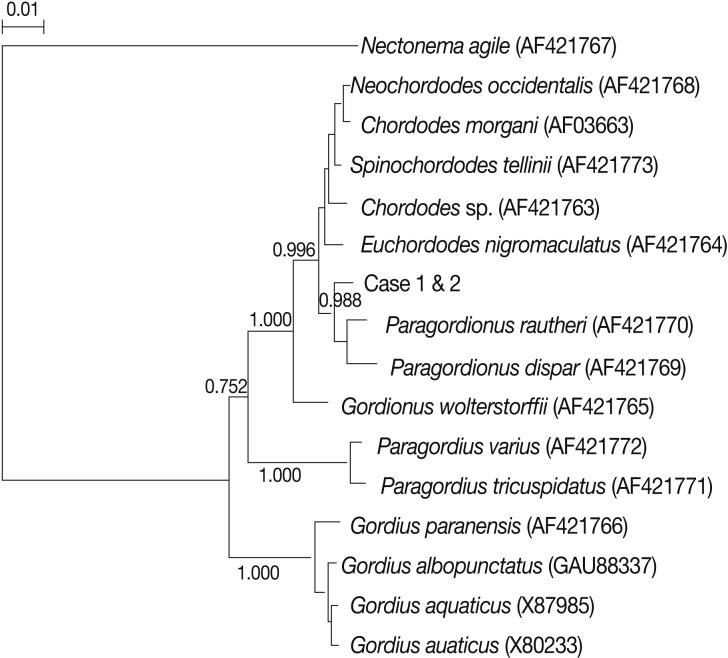
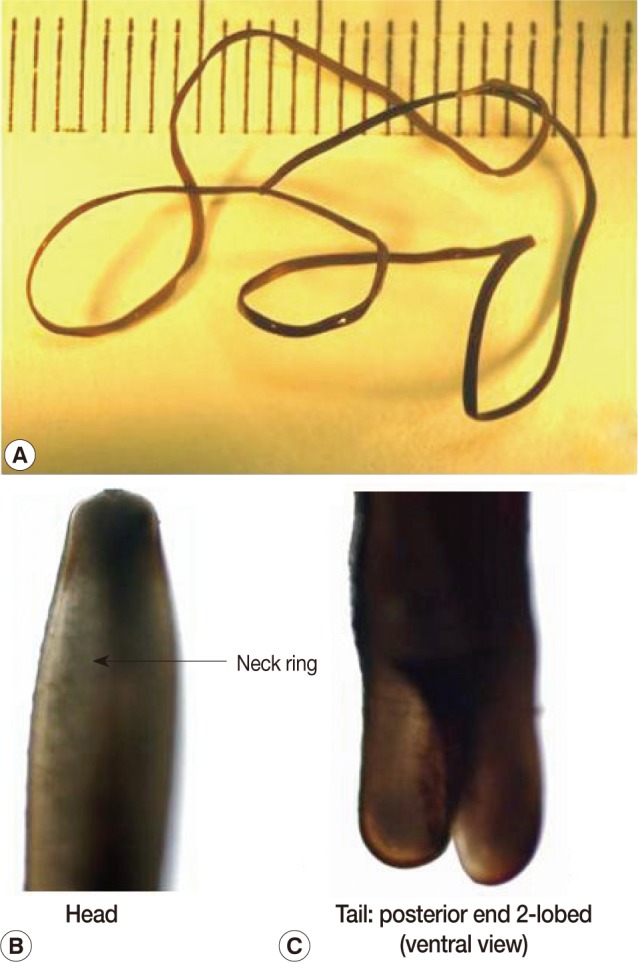
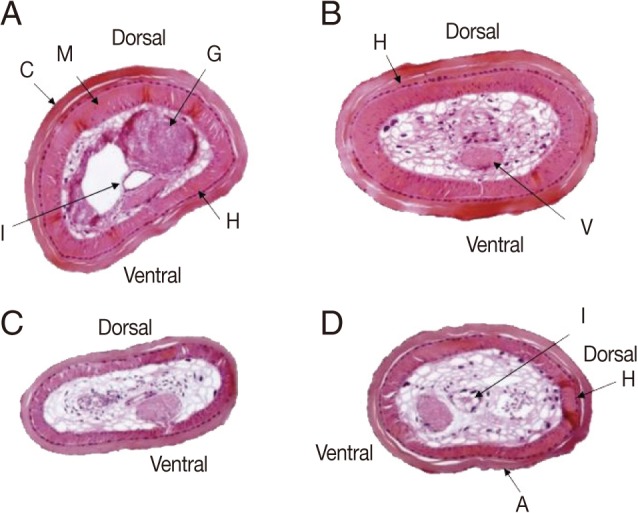
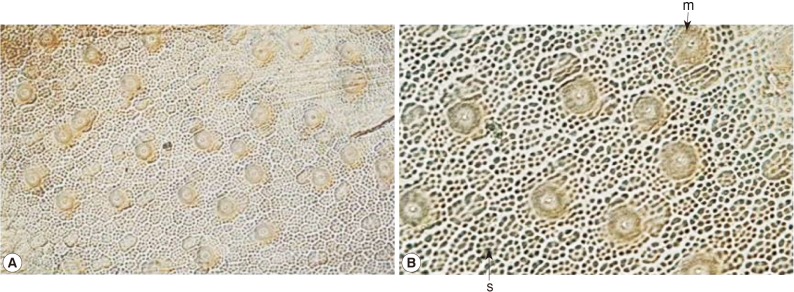
The present study was performed to describe 2 human cases infected by the horsehair worm, Parachordodes sp., in Japan. Two gordiid worms were collected in the vomit and excreta of an 80-year-old woman in November 2009 in Kyoto city, and in the mouth of 1-year-old boy in December 2009 in Nara city, Japan, respectively. Both worms were males having bifurcated posterior ends and male gonads in cross sectional specimens. They were identified as Parachordodes sp. (Nematomorpha: Chordodidae) based on the characteristic morphologies of cross sections and areoles in the cuticle. DNA analysis on 18S rRNA partial sequence arrangements was also carried out and both worms were assumed to be close to the genus Paragordionus based on tree analysis, and far from Gordius sp. which has already been reported in humans in Japan. DNA sequencing of the Parachordodes worm does not appear on the database; therefore, more information on the gene sequences of the genus Parachordodes from humans, animals, or intermediates is required.
本研究旨在描述日本两例感染马鬃虫(Parachordodes sp.)的人类病例。2009年11月,在日本京都市,从一名80岁女性的呕吐物和排泄物中采集到两条 Gordiid 线虫;2009年12月,在日本奈良市,从一名1岁男童的口腔中采集到两条线虫。在横截面标本中,这两条线虫均为后端分叉且具有雄性性腺的雄性个体。基于角质层横截面和小区的特征形态,它们被鉴定为 Parachordodes sp.(线虫纲:索线虫科)。还对18S rRNA 部分序列排列进行了 DNA 分析,根据树状分析,这两条线虫均被认为与 Paragordionus 属相近,且与日本已报道的人体感染的 Gordius sp. 相距较远。Parachordodes 线虫的 DNA 序列在数据库中未出现;因此,需要获取更多关于来自人类、动物或中间宿主的 Parachordodes 属基因序列的信息。