Departamento de Inmunología, Instituto de Investigaciones Biomédicas, Universidad Nacional Autónoma de México, México, México.
PLoS One. 2012;7(8):e44217. doi: 10.1371/journal.pone.0044217. Epub 2012 Aug 29.
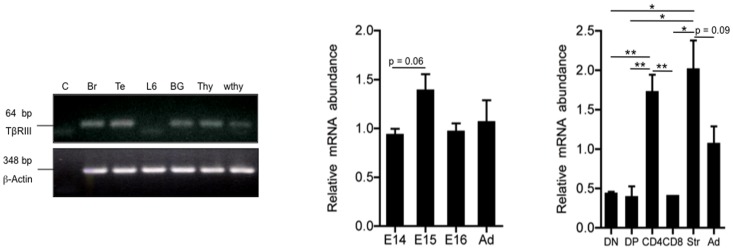
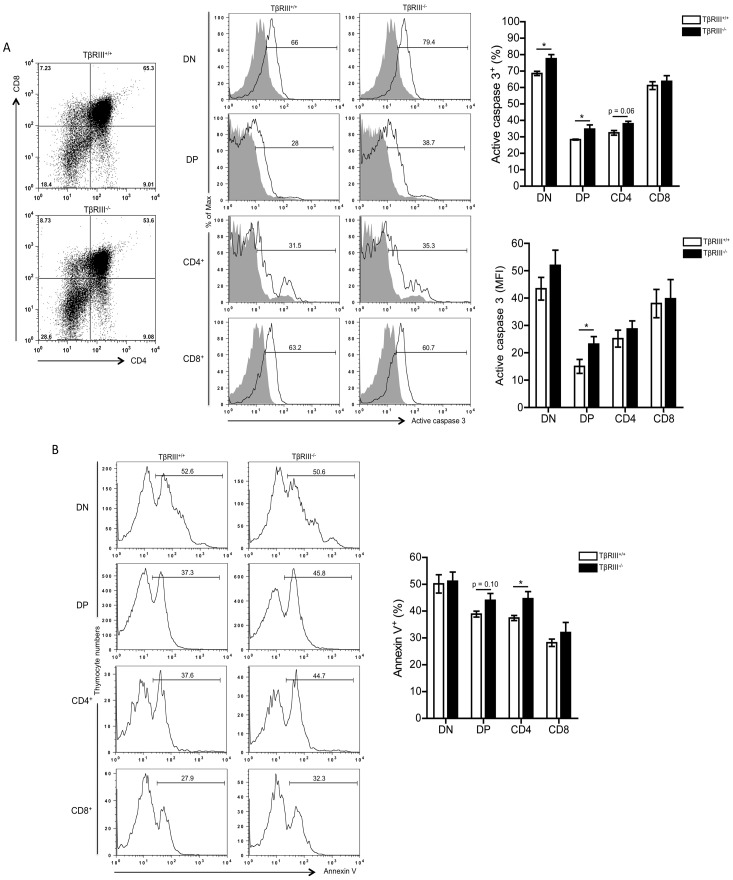
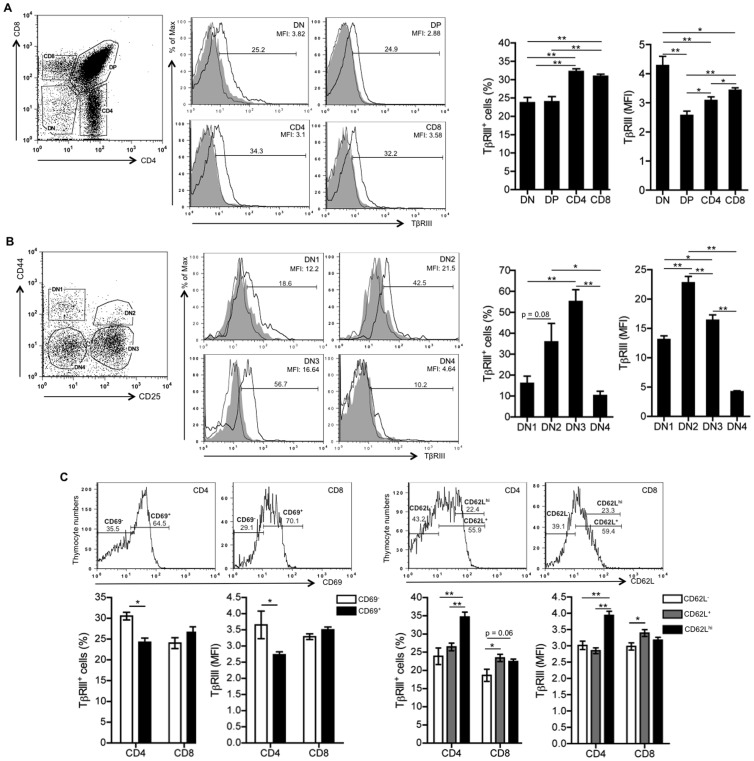
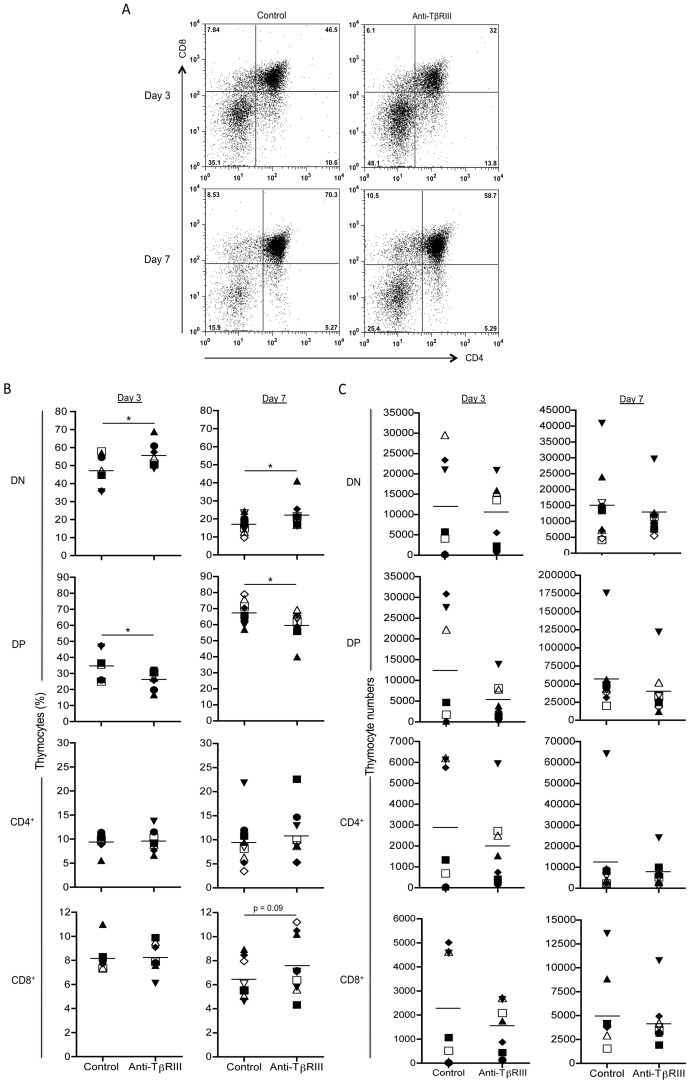
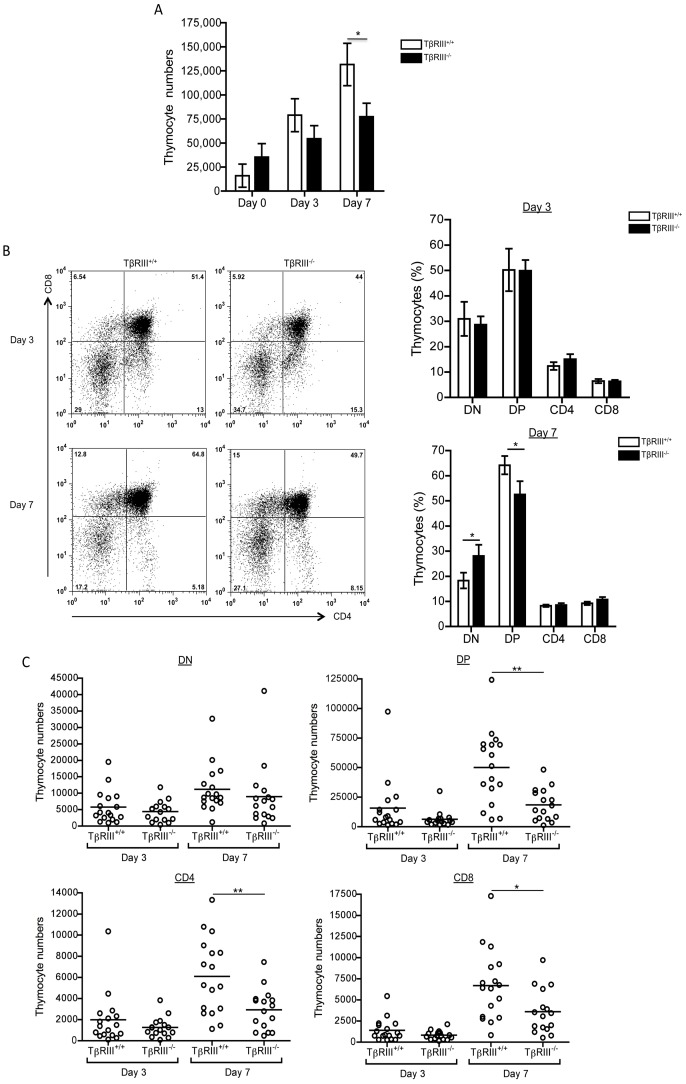
TGF-β type III receptor (TβRIII) is a coreceptor for TGFβ family members required for high-affinity binding of these ligands to their receptors, potentiating their cellular functions. TGF-β [1]-[3], bone morphogenetic proteins (BMP2/4) and inhibins regulate different checkpoints during T cell differentiation. Although TβRIII is expressed on hematopoietic cells, the role of this receptor in the immune system remains elusive. Here, we provide the first evidence that TβRIII is developmentally expressed during T cell ontogeny, and plays a crucial role in thymocyte differentiation. Blocking of endogenous TβRIII in fetal thymic organ cultures led to a delay in DN-DP transition. In addition, in vitro development of TβRIII(-/-) thymic lobes also showed a significant reduction in absolute thymocyte numbers, which correlated with increased thymocyte apoptosis, resembling the phenotype reported in Inhibin α (-/-) thymic lobes. These data suggest that Inhibins and TβRIII may function as a molecular pair regulating T cell development.
TGF-β 型 III 受体 (TβRIII) 是 TGFβ 家族成员的核心受体,对于这些配体与其受体的高亲和力结合以及增强其细胞功能是必需的。TGF-β [1]-[3]、骨形态发生蛋白 (BMP2/4) 和抑制素调节 T 细胞分化过程中的不同检查点。尽管 TβRIII 在造血细胞上表达,但该受体在免疫系统中的作用仍不清楚。在这里,我们提供了第一个证据,表明 TβRIII 在 T 细胞个体发生过程中是发育性表达的,并在胸腺细胞分化中发挥关键作用。在胎胸腺器官培养物中阻断内源性 TβRIII 会导致 DN-DP 过渡延迟。此外,TβRIII(-/-)胸腺小叶的体外发育也显示出绝对胸腺细胞数量的显著减少,这与胸腺细胞凋亡增加相关,类似于在抑制素 α(-/-)胸腺小叶中报道的表型。这些数据表明,抑制素和 TβRIII 可能作为一对分子调节 T 细胞发育。