Centro de Investigação em Biodiversidade e Recursos Genéticos, Vairão, Portugal.
PLoS One. 2012;7(8):e44251. doi: 10.1371/journal.pone.0044251. Epub 2012 Aug 27.
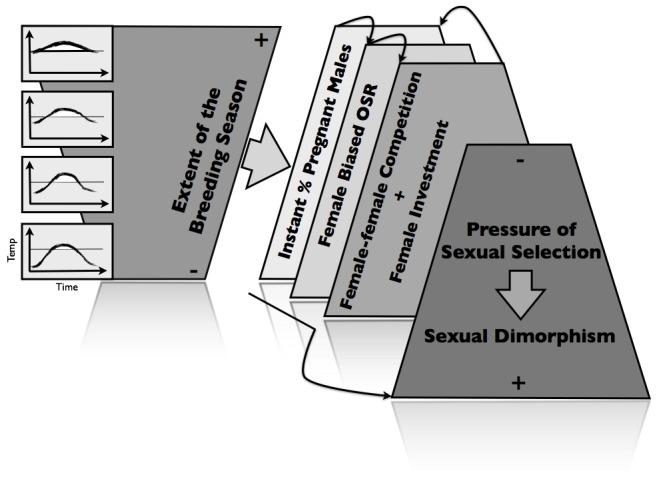
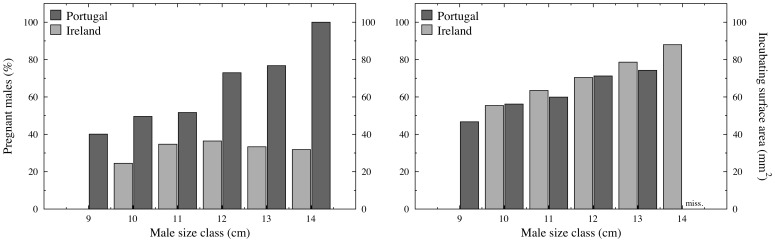
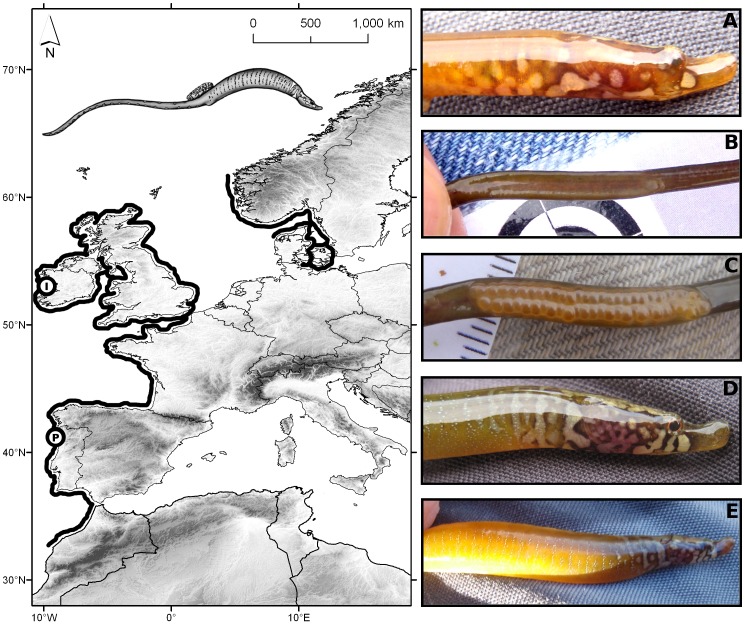
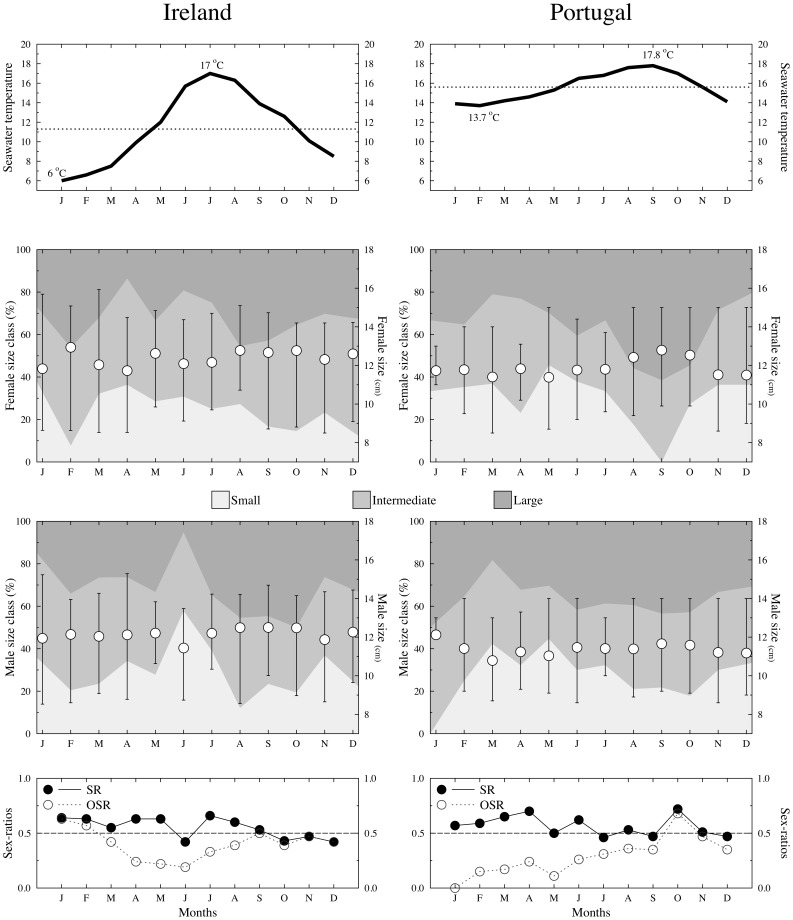
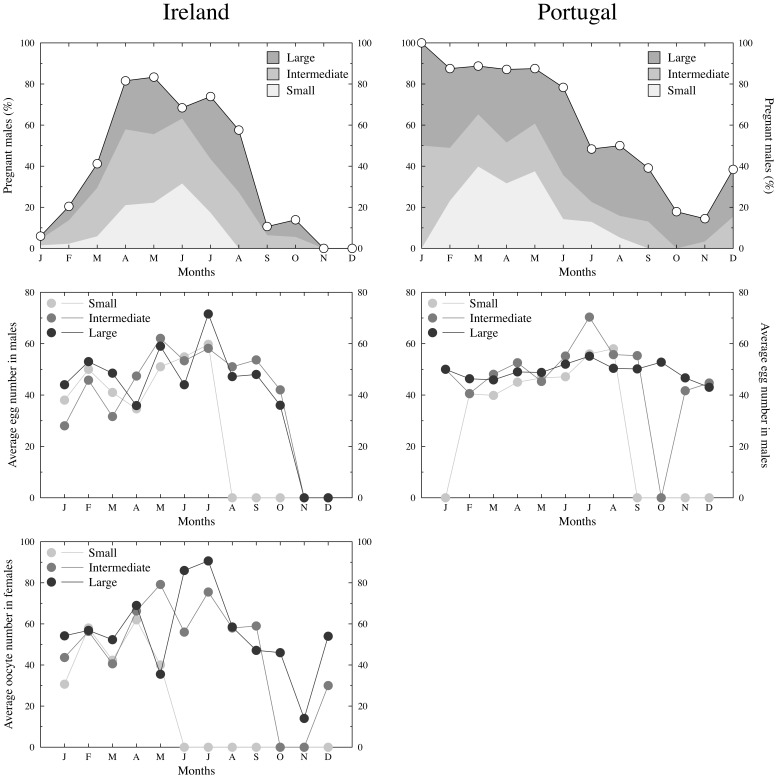
In order to answer broader questions about sexual selection, one needs to measure selection on a wide array of phenotypic traits, simultaneously through space and time. Nevertheless, studies that simultaneously address temporal and spatial variation in reproduction are scarce. Here, we aimed to investigate the reproductive dynamics of a cold-water pipefish simultaneously through time (encompassing variation within each breeding cycle and as individuals grow) and space (by contrasting populations experiencing distinct water temperature regimes) in order to test hypothesized differences in sexual selection. Even though the sampled populations inhabited locations with very different water temperature regimes, they exhibited considerable similarities in reproductive parameters. The most striking was the existence of a well-defined substructure in reproductive activity, where larger individuals reproduce for longer periods, which seemed dependent on a high temperature threshold for breeding rather than on the low temperatures that vary heavily according to latitude. Furthermore, the perceived disparities among populations, such as size at first reproduction, female reproductive investment, or degree of sexual size dimorphism, seemed dependent on the interplay between seawater temperature and the operational sex ratio (OSR). Contrary to our expectations of an enhanced opportunity for sexual selection in the north, we found the opposite: higher female reproductive investment coupled with increased sexual size dimorphism in warmer waters, implying that a prolonged breeding season does not necessarily translate into reduced sexual selection pressure. In fact, if the limited sex has the ability to reproduce either continuously or recurrently during the entire breeding season, an increased opportunity for sexual selection might arise from the need to compete for available partners under strongly biased OSRs across protracted breeding seasons. A more general discussion on the effects of climate change in the pressure of sexual selection is also presented.
为了回答关于性选择的更广泛问题,人们需要同时在空间和时间上测量广泛的表型特征上的选择。然而,同时解决繁殖的时空变化的研究很少。在这里,我们旨在同时通过时间(包括每个繁殖周期内和个体生长的变化)和空间(通过对比经历不同水温制度的种群)来研究冷水管鱼的繁殖动态,以检验性选择的假设差异。尽管采样的种群栖息在水温制度非常不同的地方,但它们在繁殖参数上表现出相当大的相似性。最引人注目的是生殖活动中存在明显的亚结构,其中较大的个体繁殖时间更长,这似乎取决于繁殖的高温阈值,而不是根据纬度变化很大的低温。此外,种群之间的差异,如初次繁殖的大小、雌性繁殖投资或性二态性的程度,似乎取决于海水温度和实际性别比例(OSR)之间的相互作用。与我们在北方对性选择机会增强的预期相反,我们发现了相反的情况:在较温暖的水域中,雌性繁殖投资增加伴随着性二态性增加,这意味着延长繁殖季节不一定会降低性选择压力。事实上,如果有限的性别有能力在整个繁殖季节中连续或反复繁殖,那么在延长的繁殖季节中,由于需要在强烈偏向于 OSR 的情况下争夺可用伴侣,性选择的机会可能会增加。还提出了关于气候变化对性选择压力影响的更一般性讨论。