Central Veterinary Institute of Wageningen UR, Lelystad, The Netherlands.
PLoS One. 2012;7(8):e44447. doi: 10.1371/journal.pone.0044447. Epub 2012 Aug 28.
Highly pathogenic avian influenza virus (HPAIV) causes a highly contagious often fatal disease in poultry, resulting in significant economic losses in the poultry industry. HPAIV H5N1 also poses a major public health threat as it can be transmitted directly from infected poultry to humans. One effective way to combat avian influenza with pandemic potential is through the vaccination of poultry. Several live vaccines based on attenuated Newcastle disease virus (NDV) that express influenza hemagglutinin (HA) have been developed to protect chickens or mammalian species against HPAIV. However, the zoonotic potential of NDV raises safety concerns regarding the use of live NDV recombinants, as the incorporation of a heterologous attachment protein may result in the generation of NDV with altered tropism and/or pathogenicity.
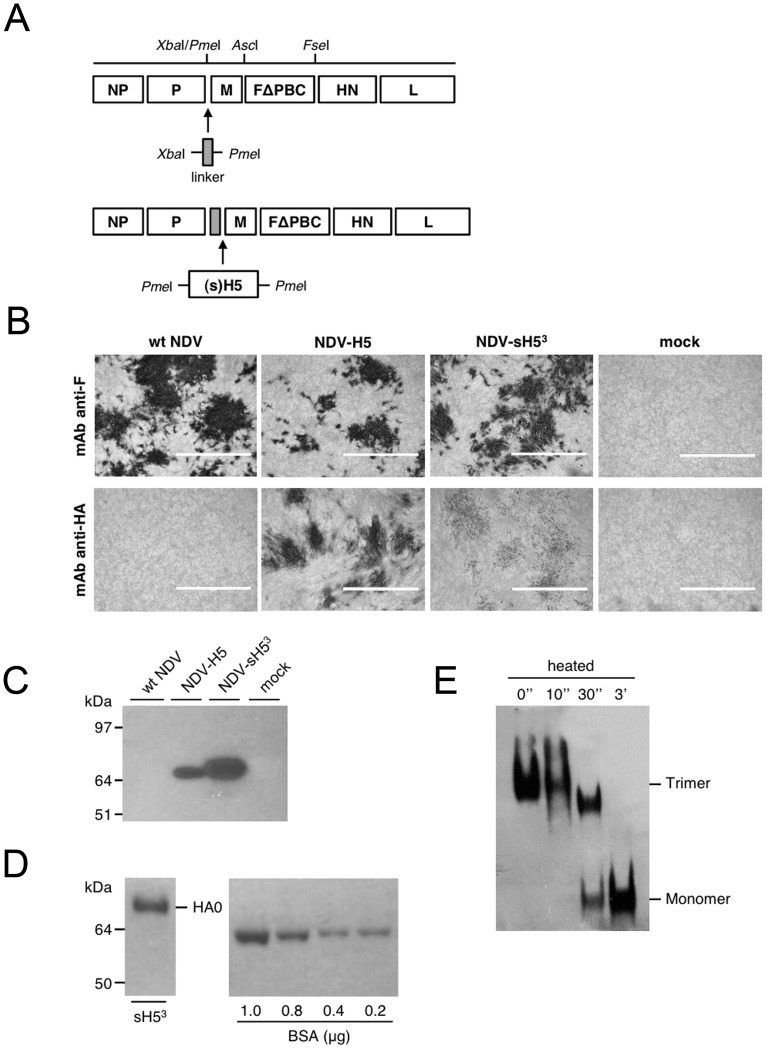
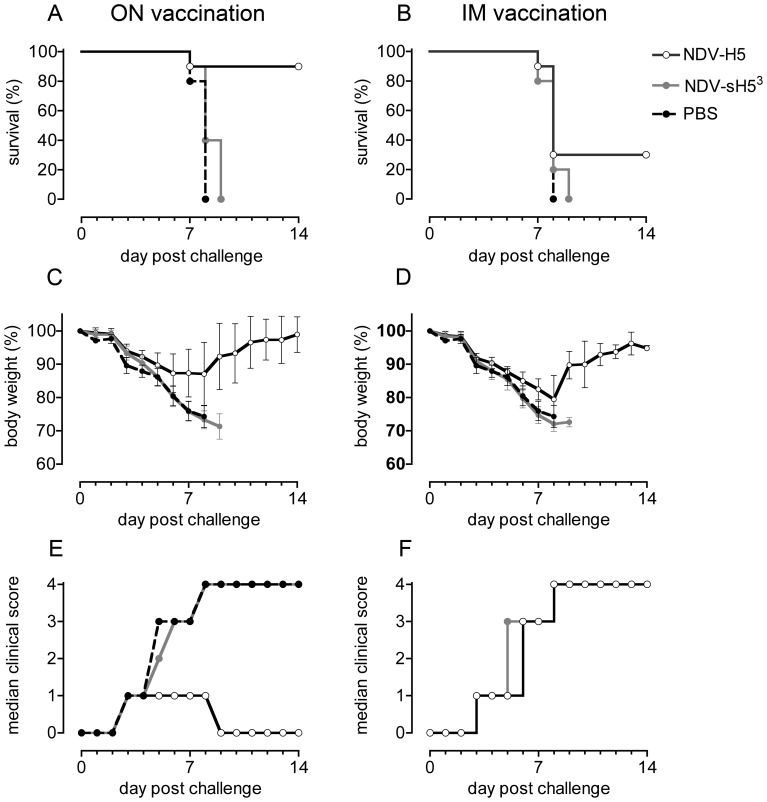
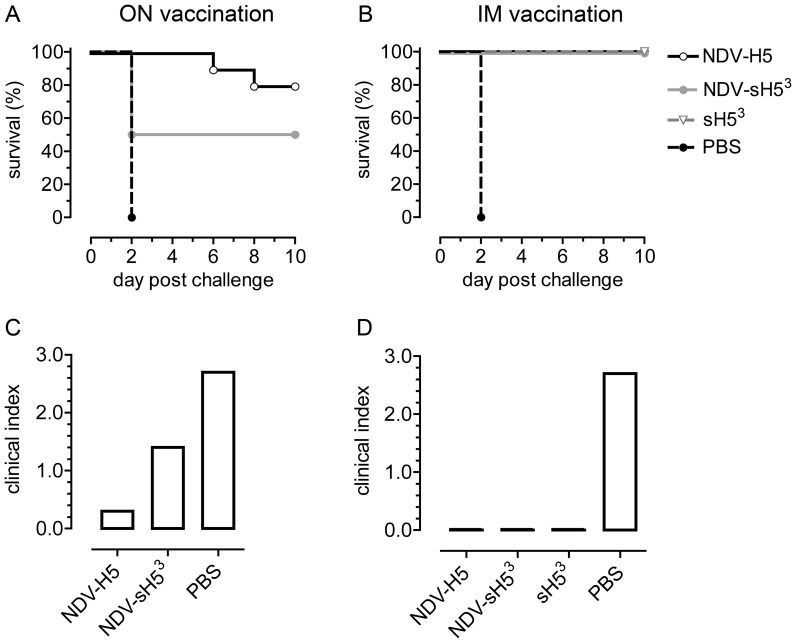
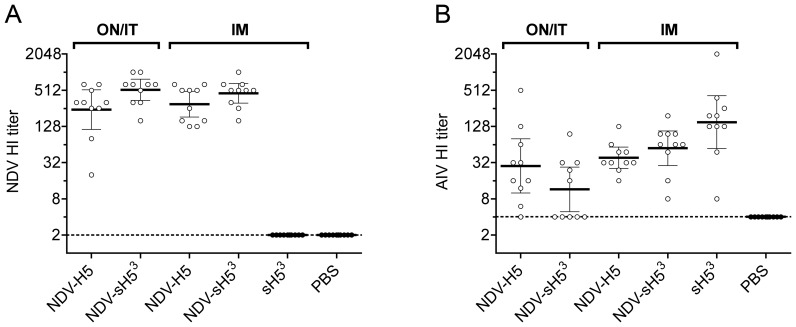
METHODOLOGY/PRINCIPAL FINDINGS: In the present study we generated recombinant NDVs expressing either full length, membrane-anchored HA of the H5 subtype (NDV-H5) or a soluble trimeric form thereof (NDV-sH5(3)). A single intramuscular immunization with NDV-sH5(3) or NDV-H5 fully protected chickens against disease after a lethal challenge with H5N1 and reduced levels of virus shedding in tracheal and cloacal swabs. NDV-sH5(3) was less protective than NDV-H5 (50% vs 80% protection) when administered via the respiratory tract. The NDV-sH5(3) was ineffective in mice, regardless of whether administered oculonasally or intramuscularly. In this species, NDV-H5 induced protective immunity against HPAIV H5N1, but only after oculonasal administration, despite the poor H5-specific serum antibody response it elicited.
CONCLUSIONS/SIGNIFICANCE: Although NDV expressing membrane anchored H5 in general provided better protection than its counterpart expressing soluble H5, chickens could be fully protected against a lethal challenge with H5N1 by using the latter NDV vector. This study thus provides proof of concept for the use of recombinant vector vaccines expressing a soluble form of a heterologous viral membrane protein. Such vectors may be advantageous as they preclude the incorporation of heterologous membrane proteins into the viral vector particles.
高致病性禽流感病毒(HPAIV)可引起家禽高度传染性且常常致命的疾病,给家禽业造成重大经济损失。HPAIV H5N1 还构成重大公共卫生威胁,因为它可以直接从受感染的家禽传播给人类。对抗具有大流行潜力的禽流感的一种有效方法是对家禽进行疫苗接种。已经开发了几种基于减毒新城疫病毒(NDV)的活疫苗,这些疫苗表达流感血凝素(HA),以保护鸡或哺乳动物免受 HPAIV 的侵害。然而,NDV 的人畜共患病潜力引起了对使用活 NDV 重组体的安全性的关注,因为异源附着蛋白的掺入可能导致具有改变的嗜性和/或致病性的 NDV 的产生。
方法/主要发现:在本研究中,我们生成了表达 H5 亚型全长膜锚定 HA(NDV-H5)或其可溶性三聚体形式(NDV-sH5(3))的重组 NDV。单次肌肉内免疫接种 NDV-sH5(3)或 NDV-H5 可完全保护鸡免受 H5N1 的致死性攻击,并减少气管和泄殖腔拭子中的病毒脱落水平。通过呼吸道给予 NDV-sH5(3)的保护作用不如 NDV-H5(50%对 80%的保护)。无论通过眼鼻途径还是肌肉内途径给予,NDV-sH5(3)在小鼠中均无效。在该物种中,NDV-H5 诱导了针对 HPAIV H5N1 的保护性免疫,但仅在眼鼻途径给予后才诱导,尽管它引起了较差的 H5 特异性血清抗体反应。
结论/意义:尽管表达膜锚定 H5 的 NDV 通常比表达可溶性 H5 的 NDV 提供更好的保护,但使用后者的 NDV 载体可以完全保护鸡免受 H5N1 的致死性攻击。因此,本研究为使用表达异源病毒膜蛋白可溶性形式的重组载体疫苗提供了概念验证。此类载体可能具有优势,因为它们可以防止异源膜蛋白掺入病毒载体颗粒中。