Department of Bioengineering, University of California San Diego, La Jolla, California, United States of America.
PLoS One. 2012;7(8):e40686. doi: 10.1371/journal.pone.0040686. Epub 2012 Aug 16.
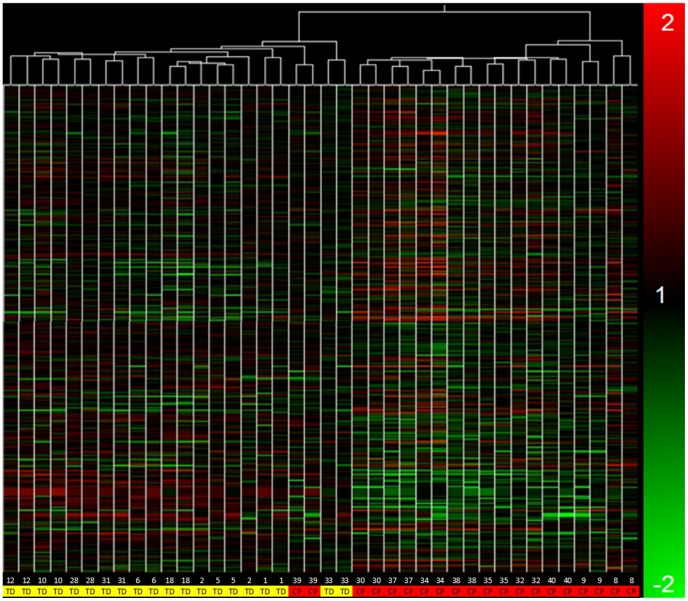
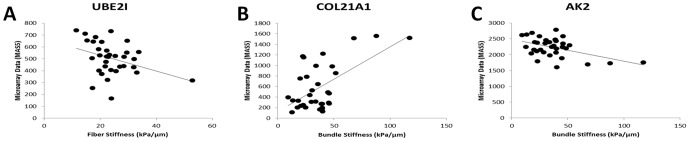
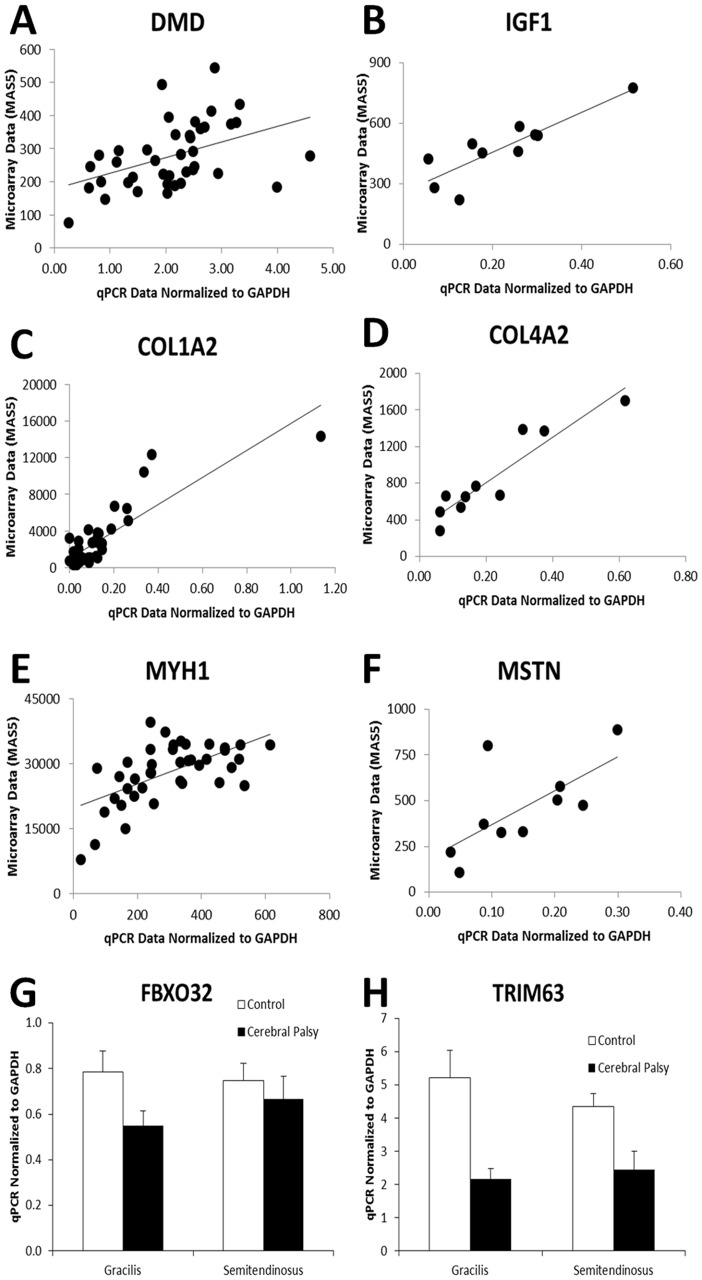
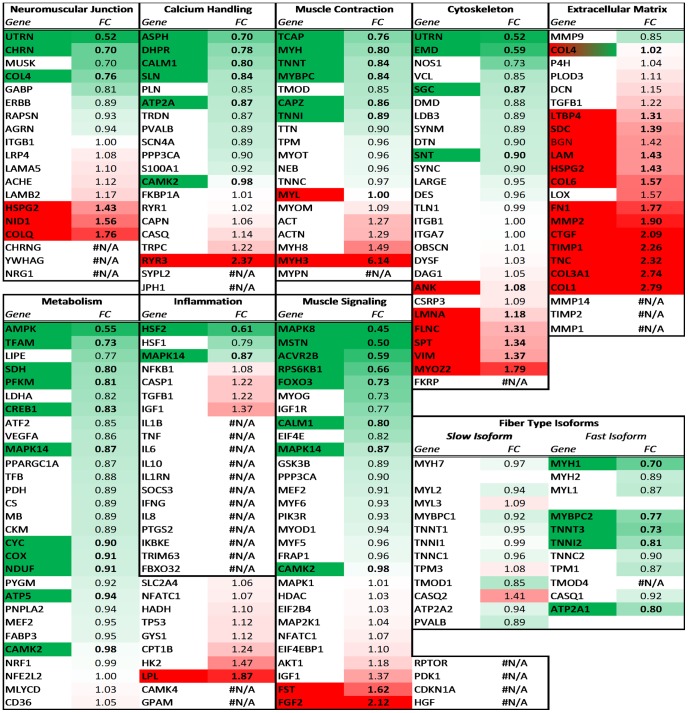
Cerebral palsy (CP) is an upper motor neuron disease that results in a spectrum of movement disorders. Secondary to the neurological lesion, muscles from patients with CP are often spastic and form debilitating contractures that limit range of motion and joint function. With no genetic component, the pathology of skeletal muscle in CP is a response to aberrant complex neurological input in ways that are not fully understood. This study was designed to gain further understanding of the skeletal muscle response in CP using transcriptional profiling correlated with functional measures to broadly investigate muscle adaptations leading to mechanical deficits.Biopsies were obtained from both the gracilis and semitendinosus muscles from a cohort of patients with CP (n = 10) and typically developing patients (n = 10) undergoing surgery. Biopsies were obtained to define the unique expression profile of the contractures and passive mechanical testing was conducted to determine stiffness values in previously published work. Affymetrix HG-U133A 2.0 chips (n = 40) generated expression data, which was validated for selected transcripts using quantitative real-time PCR. Chips were clustered based on their expression and those from patients with CP clustered separately. Significant genes were determined conservatively based on the overlap of three summarization algorithms (n = 1,398). Significantly altered genes were analyzed for over-representation among gene ontologies and muscle specific networks.The majority of altered transcripts were related to increased extracellular matrix expression in CP and a decrease in metabolism and ubiquitin ligase activity. The increase in extracellular matrix products was correlated with mechanical measures demonstrating the importance in disability. These data lay a framework for further studies and development of novel therapies.
脑性瘫痪(CP)是一种上运动神经元疾病,导致一系列运动障碍。由于神经损伤,CP 患者的肌肉通常会出现痉挛,并形成使人衰弱的挛缩,限制运动范围和关节功能。由于没有遗传成分,CP 骨骼肌的病理学是对异常复杂的神经输入的一种反应,其方式尚未完全理解。本研究旨在通过与功能测量相关的转录谱分析,进一步了解 CP 中的骨骼肌反应,广泛研究导致机械缺陷的肌肉适应。从接受手术的 CP 患者(n=10)和正常发育患者(n=10)的股薄肌和半腱肌中获取活检。获取活检以定义挛缩的独特表达谱,并进行被动机械测试以确定先前发表的工作中的刚度值。Affymetrix HG-U133A 2.0 芯片(n=40)生成表达数据,使用定量实时 PCR 对选定的转录物进行验证。根据其表达对芯片进行聚类,CP 患者的芯片聚类分开。基于三个汇总算法的重叠(n=1,398)保守地确定了显著基因。对显著改变的基因进行了基因本体论和肌肉特异性网络的过度表达分析。大多数改变的转录物与 CP 中细胞外基质表达增加以及代谢和泛素连接酶活性降低有关。细胞外基质产物的增加与机械测量相关,表明其与残疾的重要性。这些数据为进一步的研究和新型治疗方法的开发奠定了框架。