Department of Immunology and Infectious Diseases, Harvard School of Public Health, Boston, Massachusetts, United States of America.
PLoS One. 2012;7(9):e44664. doi: 10.1371/journal.pone.0044664. Epub 2012 Sep 5.
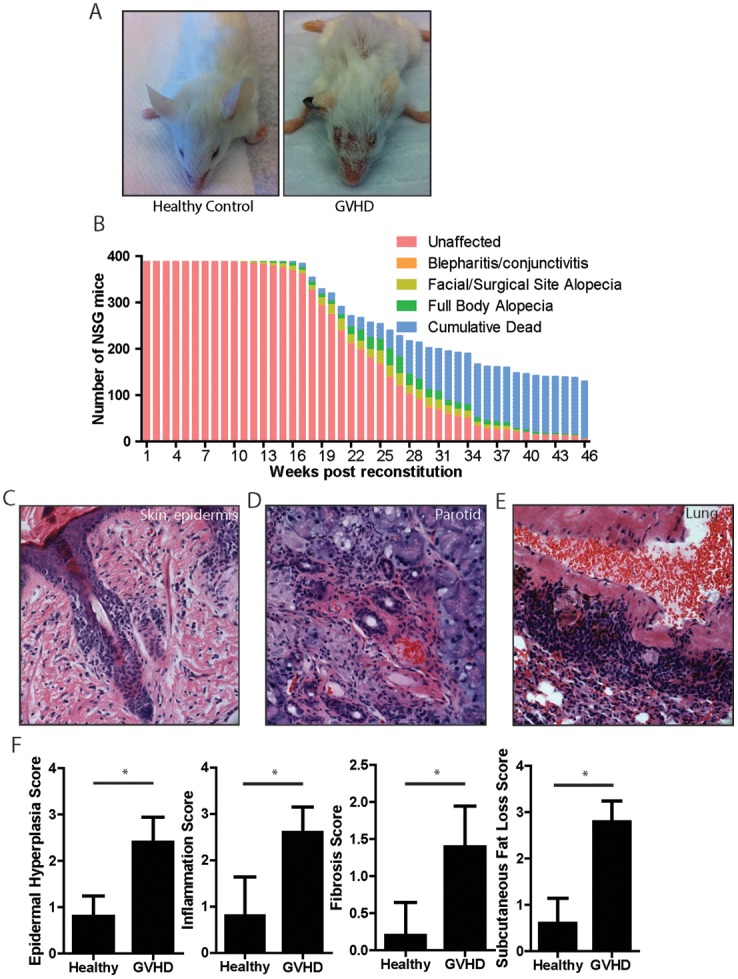
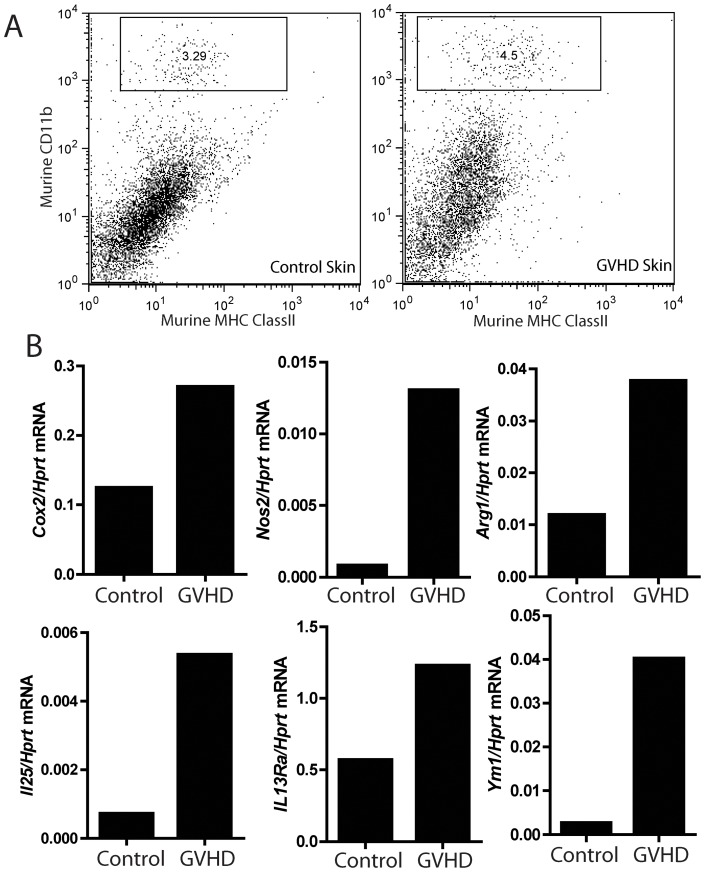
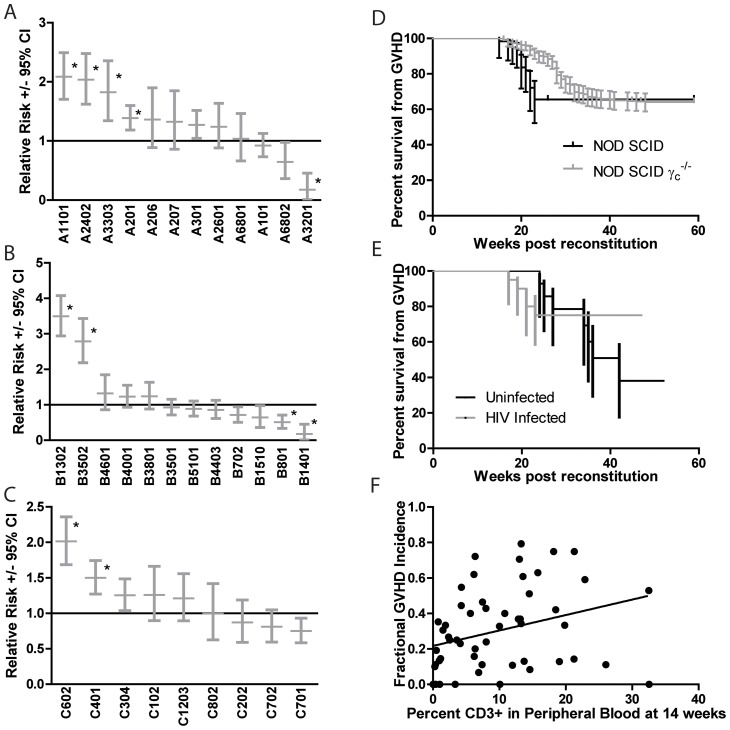
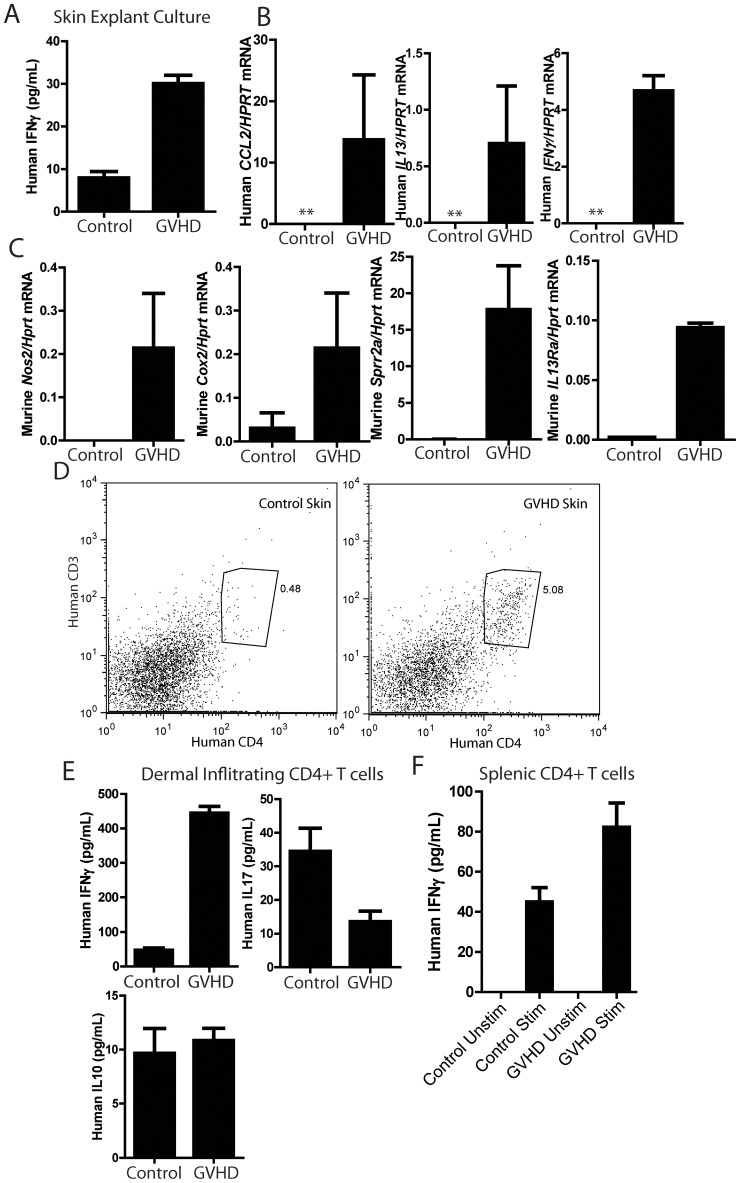
Mice bearing a "humanized" immune system are valuable tools to experimentally manipulate human cells in vivo and facilitate disease models not normally possible in laboratory animals. Here we describe a form of GVHD that develops in NOD/SCID mice reconstituted with human fetal bone marrow, liver and thymus (NS BLT mice). The skin, lungs, gastrointestinal tract and parotid glands are affected with progressive inflammation and sclerosis. Although all mice showed involvement of at least one organ site, the incidence of overt clinical disease was approximately 35% by 22 weeks after reconstitution. The use of hosts lacking the IL2 common gamma chain (NOD/SCID/γc(-/-)) delayed the onset of disease, but ultimately did not affect incidence. Genetic analysis revealed that particular donor HLA class I alleles influenced the risk for the development of GVHD. At a cellular level, GVHD is associated with the infiltration of human CD4+ T cells into the skin and a shift towards Th1 cytokine production. GVHD also induced a mixed M1/M2 polarization phenotype in a dermal murine CD11b+, MHC class II+ macrophage population. The presence of xenogenic GVHD in BLT mice both presents a major obstacle in the use of humanized mice and an opportunity to conduct preclinical studies on GVHD in a humanized model.
携带“人源化”免疫系统的小鼠是在体内实验性操作人类细胞以及建立通常在实验动物中无法建立的疾病模型的有用工具。在此,我们描述了一种在 NOD/SCID 小鼠中重建的人胎骨髓、肝和胸腺(NS BLT 小鼠)中发展的移植物抗宿主病(GVHD)。皮肤、肺、胃肠道和腮腺受到进行性炎症和硬化的影响。尽管所有小鼠均至少有一个器官受累,但在重建后 22 周时,显性临床疾病的发生率约为 35%。使用缺乏白细胞介素 2 共同γ链(NOD/SCID/γc(-/-))的宿主会延迟疾病的发作,但最终不会影响发生率。遗传分析表明,特定供体 HLA Ⅰ类等位基因影响 GVHD 的发展风险。在细胞水平上,GVHD与人类 CD4+T 细胞浸润皮肤以及向 Th1 细胞因子产生的转变有关。GVHD 还诱导了真皮 CD11b+、MHC Ⅱ类+巨噬细胞群中的混合 M1/M2 极化表型。BLT 小鼠中的异种 GVHD 既为使用人源化小鼠带来了主要障碍,也为在人源化模型中进行 GVHD 的临床前研究提供了机会。