Center for Microbial Pathogenesis, The Research Institute at Nationwide Children's Hospital, Columbus, OH, USA.
Trends Microbiol. 2012 Nov;20(11):517-22. doi: 10.1016/j.tim.2012.08.008. Epub 2012 Sep 5.
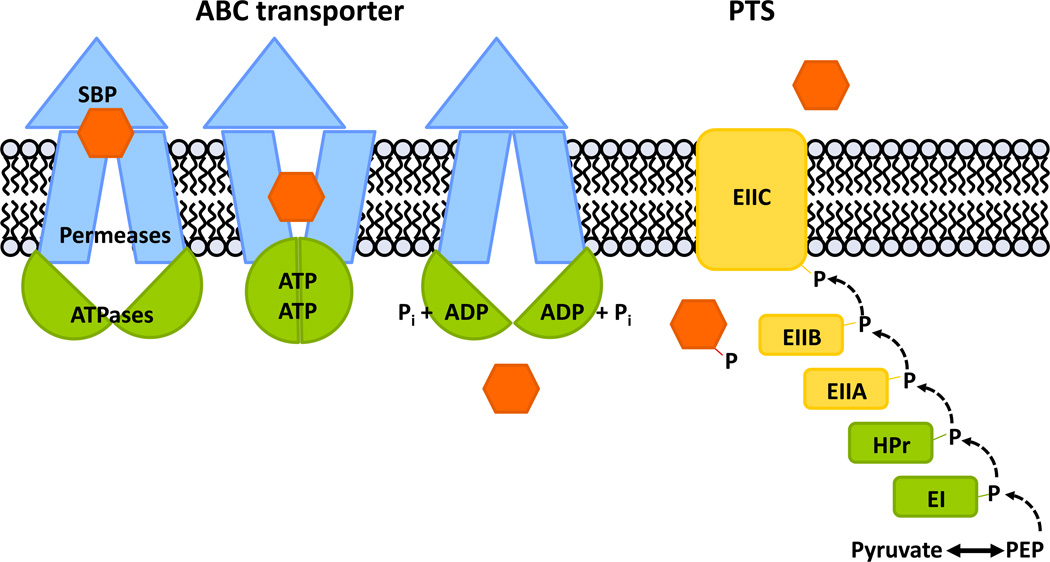
Streptococcus pneumoniae relies exclusively on carbohydrates as a carbon source and devotes 30% of all transport mechanisms to carbohydrate import. Pneumococci utilize at least 32 carbohydrates in vitro. However, some proposed substrates are not human-derived, so it is unclear where they are encountered in the host niche, and other substrates remain unidentified. The majority of transporter loci are conserved, arguing against redundancy and instead for distinct roles during pathogenesis. Despite this, expression and regulation of carbohydrate transporters in vivo remain ill defined. Recent work has also demonstrated that multiple ABC transporters share an ATPase; whether this evolved for genome minimization or for transporter regulation remains unknown. Continued efforts to understand carbohydrate import may reveal novel vaccine and therapeutic targets and increase our understanding of pneumococcal pathogenesis.
肺炎链球菌完全依赖碳水化合物作为碳源,将所有运输机制的 30%用于碳水化合物的输入。肺炎球菌在体外至少利用 32 种碳水化合物。然而,一些提议的底物不是人类来源的,因此尚不清楚它们在宿主生态位中何处被遇到,其他底物仍未被识别。大多数转运体基因座是保守的,这表明它们在发病机制中具有独特的作用,而不是冗余的。尽管如此,碳水化合物转运体在体内的表达和调节仍不清楚。最近的研究还表明,多种 ABC 转运体共享一个 ATP 酶;这种进化是为了基因组最小化还是为了转运体的调节尚不清楚。继续努力了解碳水化合物的输入可能会揭示新的疫苗和治疗靶点,并增加我们对肺炎链球菌发病机制的理解。