State Key Laboratory of Plant Physiology and Biochemistry (SKLPPB), National Plant Gene Research Centre (Beijing), College of Biological Sciences, China Agricultural University, #2 West Yuan Ming Yuan Rd, Beijing 100193, China.
BMC Plant Biol. 2012 Sep 10;12:161. doi: 10.1186/1471-2229-12-161.
Potassium (K+) is an important nutrient ion in plant cells and plays crucial roles in many plant physiological and developmental processes. In the natural environment, K+ deficiency is a common abiotic stress that inhibits plant growth and reduces crop productivity. Several microarray studies have been conducted on genome-wide gene expression profiles of rice during its responses to various stresses. However, little is known about the transcriptional changes in rice genes under low-K+ conditions.
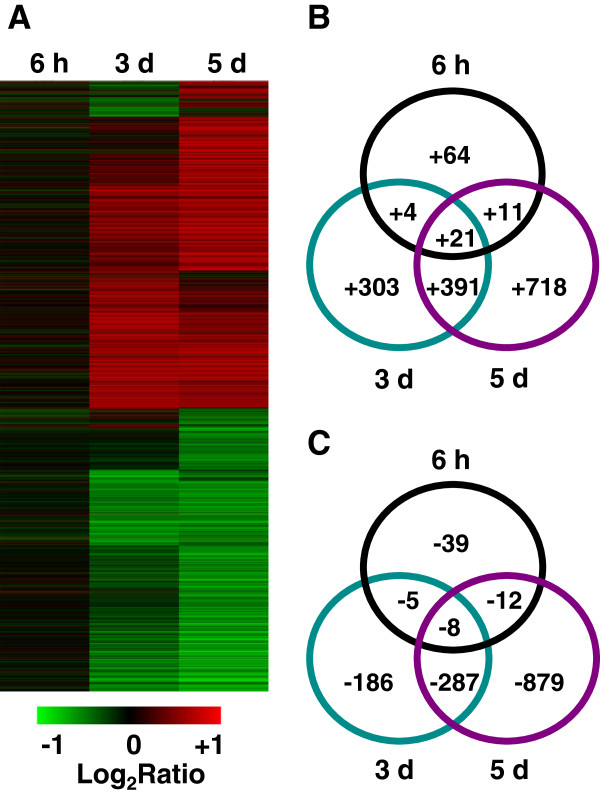
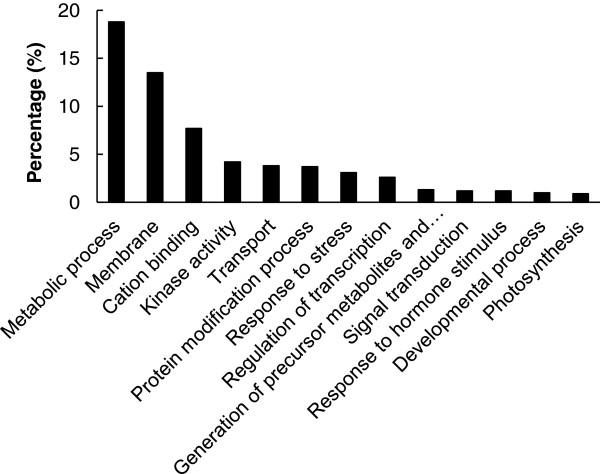
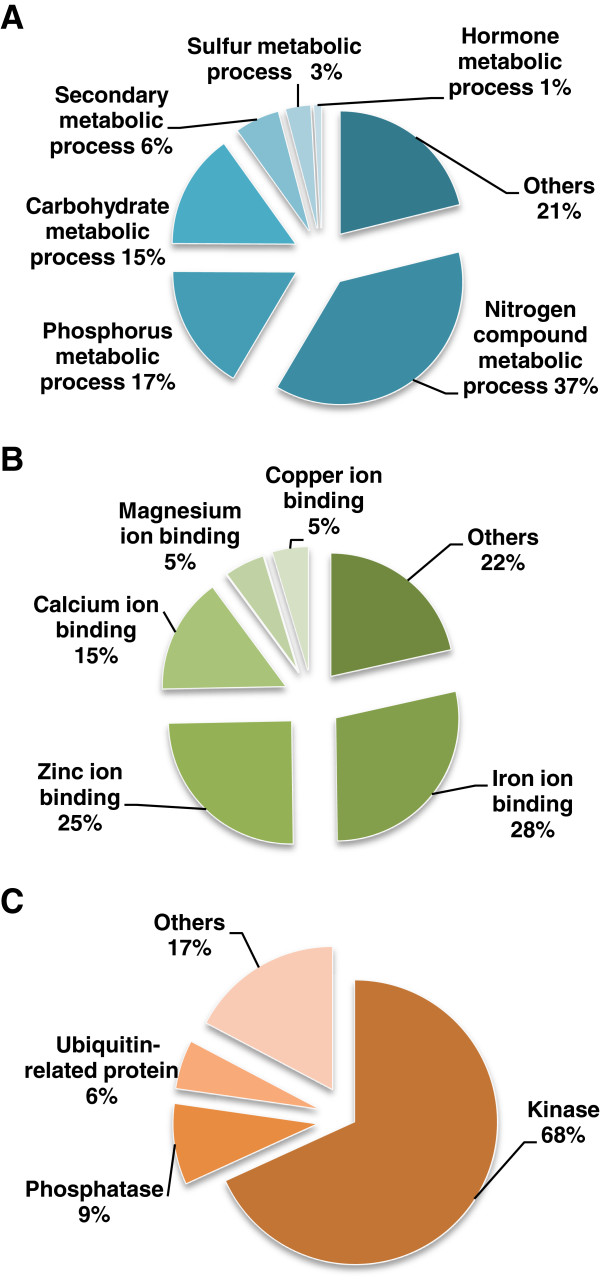
We analyzed the transcriptomic profiles of rice roots in response to low-K+ stress. The roots of rice seedlings with or without low-K+ treatment were harvested after 6 h, and 3 and 5 d, and used for microarray analysis. The microarray data showed that many genes (2,896) were up-regulated or down-regulated more than 1.2-fold during low-K+ treatment. GO analysis indicated that the genes showing transcriptional changes were mainly in the following categories: metabolic process, membrane, cation binding, kinase activity, transport, and so on. We conducted a comparative analysis of transcriptomic changes between Arabidopsis and rice under low-K+ stress. Generally, the genes showing changes in transcription in rice and Arabidopsis in response to low-K+ stress displayed similar GO distribution patterns. However, there were more genes related to stress responses and development in Arabidopsis than in rice. Many auxin-related genes responded to K+ deficiency in rice, whereas jasmonic acid-related enzymes may play more important roles in K+ nutrient signaling in Arabidopsis.
According to the microarray data, fewer rice genes showed transcriptional changes in response to K+ deficiency than to phosphorus (P) or nitrogen (N) deficiency. Thus, transcriptional regulation is probably more important in responses to low-P and -N stress than to low-K+ stress. However, many genes in some categories (protein kinase and ion transporter families) were markedly up-regulated, suggesting that they play important roles during K+ deficiency. Comparative analysis of transcriptomic changes between Arabidopsis and rice showed that monocots and dicots share many similar mechanisms in response to K+ deficiency, despite some differences. Further research is required to clarify the differences in transcriptional regulation between monocots and dicots.
钾(K+)是植物细胞中的一种重要营养离子,在许多植物生理和发育过程中起着至关重要的作用。在自然环境中,K+缺乏是一种常见的非生物胁迫,它会抑制植物生长,降低作物产量。已有几项微阵列研究对水稻在应对各种胁迫时的全基因组基因表达谱进行了研究。然而,对于水稻在低钾条件下的基因转录变化知之甚少。
我们分析了水稻根系对低钾胁迫的转录组谱。在低钾处理或无低钾处理的水稻幼苗根收获后 6 h、3 d 和 5 d 进行微阵列分析。微阵列数据分析表明,在低钾处理过程中,有 2896 个基因上调或下调超过 1.2 倍。GO 分析表明,转录变化的基因主要在以下类别:代谢过程、膜、阳离子结合、激酶活性、运输等。我们对低钾胁迫下拟南芥和水稻的转录组变化进行了比较分析。一般来说,在低钾胁迫下,水稻和拟南芥转录变化的基因显示出相似的 GO 分布模式。然而,拟南芥中与应激反应和发育相关的基因比水稻中多。许多生长素相关基因对 K+缺乏有反应,而茉莉酸相关酶可能在拟南芥的 K+营养信号转导中发挥更重要的作用。
根据微阵列数据,与磷(P)或氮(N)缺乏相比,水稻中响应 K+缺乏的基因转录变化较少。因此,转录调控在响应低 P 和低 N 胁迫中可能比低 K+胁迫更重要。然而,一些类别(蛋白激酶和离子转运家族)的许多基因明显上调,表明它们在 K+缺乏时发挥重要作用。拟南芥和水稻转录组变化的比较分析表明,尽管存在一些差异,但单子叶植物和双子叶植物在响应 K+缺乏方面有许多相似的机制。需要进一步研究来阐明单子叶植物和双子叶植物之间转录调控的差异。