School of Life Sciences, University of Warwick, Coventry, United Kingdom.
PLoS One. 2012;7(9):e43623. doi: 10.1371/journal.pone.0043623. Epub 2012 Sep 7.
The key factors which support re-expansion of beta cell numbers after injury are largely unknown. Insulin-like growth factor II (IGF-II) plays a critical role in supporting cell division and differentiation during ontogeny but its role in the adult is not known. In this study we investigated the effect of IGF-II on beta cell regeneration.
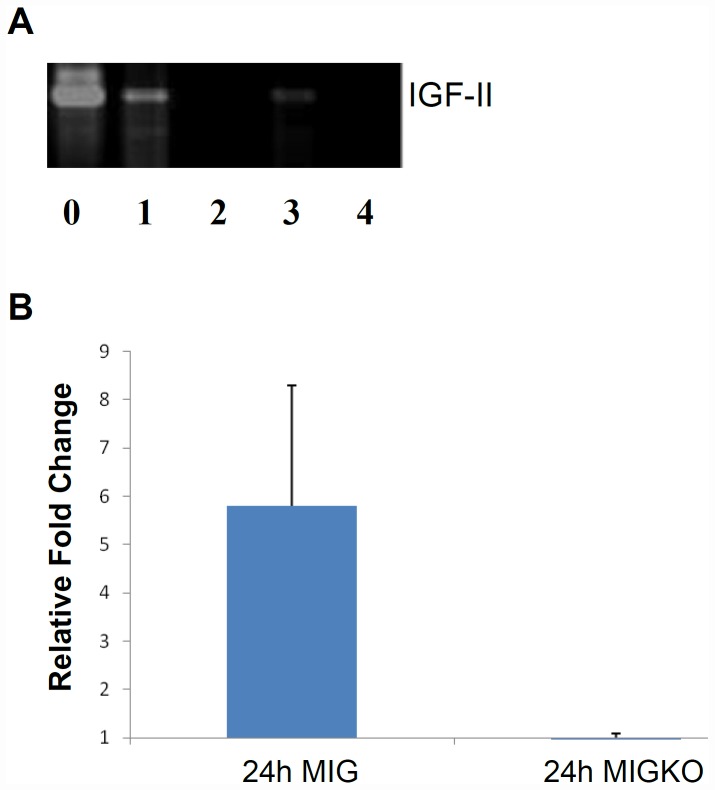
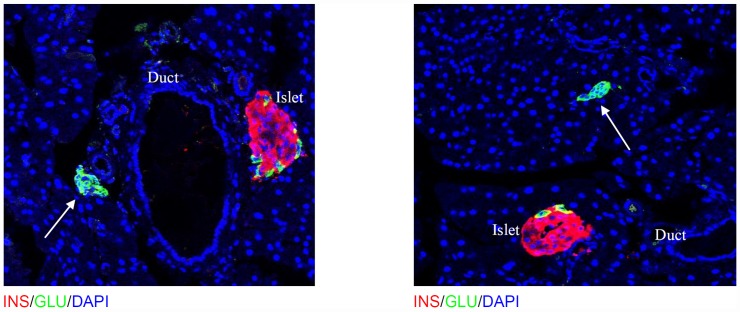
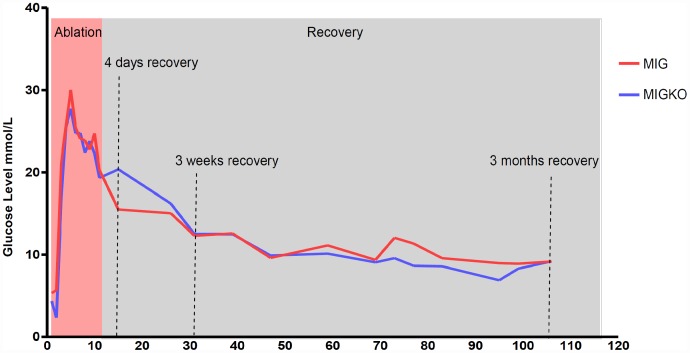
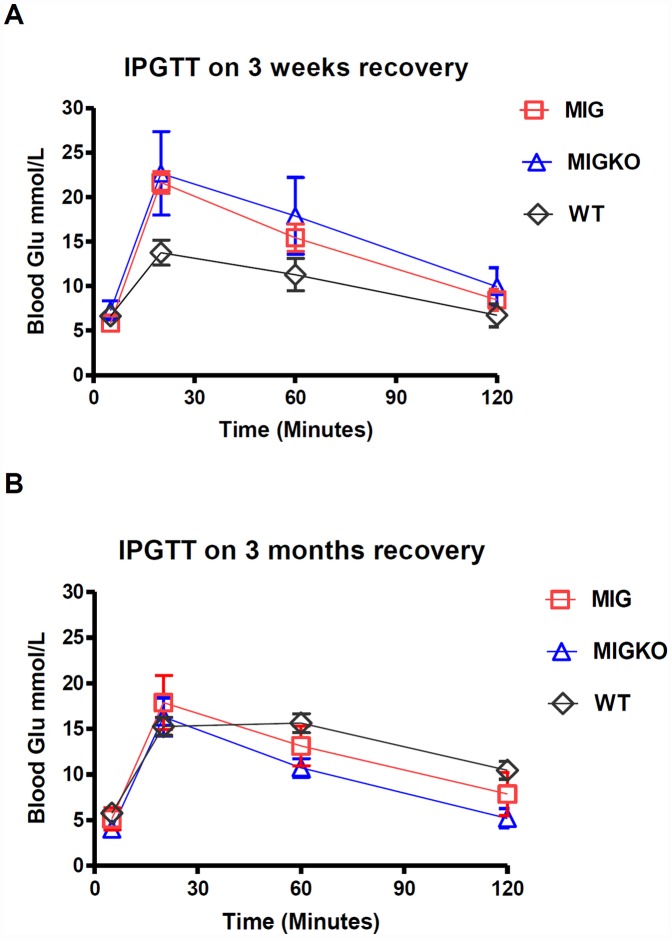
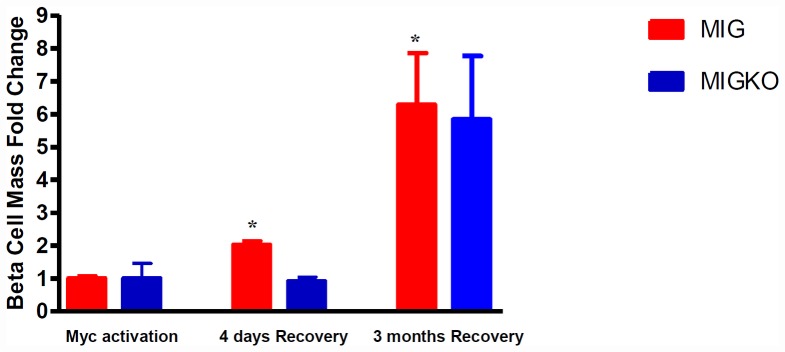
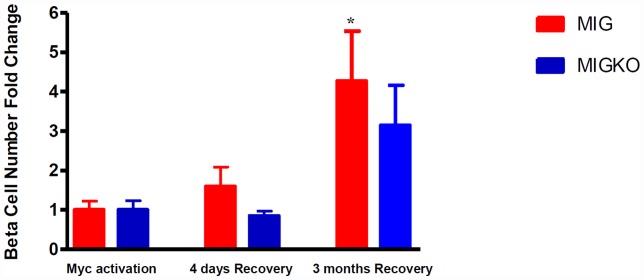
METHODOLOGY/PRINCIPAL FINDINGS: We employed an in vivo model of 'switchable' c-Myc-induced beta cell ablation, pIns-c-MycER(TAM), in which 90% of beta cells are lost following 11 days of c-Myc (Myc) activation in vivo. Importantly, such ablation is normally followed by beta cell regeneration once Myc is deactivated, enabling functional studies of beta cell regeneration in vivo. IGF-II was shown to be re-expressed in the adult pancreas of pIns-c-MycER(TAM)/IGF-II(+/+) (MIG) mice, following beta cell injury. As expected in the presence of IGF-II beta cell mass and numbers recover rapidly after ablation. In contrast, in pIns-c-MycER(TAM)/IGF-II(+/-) (MIGKO) mice, which express no IGF-II, recovery of beta cell mass and numbers were delayed and impaired. Despite failure of beta cell number increase, MIGKO mice recovered from hyperglycaemia, although this was delayed.
CONCLUSIONS/SIGNIFICANCE: Our results demonstrate that beta cell regeneration in adult mice depends on re-expression of IGF-II, and supports the utility of using such ablation-recovery models for identifying other potential factors critical for underpinning successful beta cell regeneration in vivo. The potential therapeutic benefits of manipulating the IGF-II signaling systems merit further exploration.
支持β细胞数量在损伤后再扩张的关键因素在很大程度上尚不清楚。胰岛素样生长因子 II(IGF-II)在支持个体发生过程中的细胞分裂和分化中起着关键作用,但它在成人中的作用尚不清楚。在这项研究中,我们研究了 IGF-II 对β细胞再生的影响。
方法/主要发现:我们采用了“可切换”c-Myc 诱导的β细胞消融的体内模型,pIns-c-MycER(TAM),其中 90%的β细胞在体内 c-Myc(Myc)激活 11 天后丢失。重要的是,一旦 Myc 失活,通常会随之发生β细胞再生,从而能够在体内进行β细胞再生的功能研究。IGF-II 在 pIns-c-MycER(TAM)/IGF-II(+/+)(MIG)小鼠的成年胰腺中被重新表达,在β细胞损伤后。正如预期的那样,在存在 IGF-II 的情况下,消融后β细胞质量和数量迅速恢复。相比之下,在 pIns-c-MycER(TAM)/IGF-II(+/-)(MIGKO)小鼠中,由于没有 IGF-II 的表达,β细胞质量和数量的恢复被延迟和受损。尽管β细胞数量增加失败,但 MIGKO 小鼠仍从高血糖中恢复,尽管这被延迟了。
结论/意义:我们的结果表明,成年小鼠的β细胞再生依赖于 IGF-II 的重新表达,并支持使用这种消融-恢复模型来鉴定其他潜在因素对体内成功β细胞再生的重要性。操纵 IGF-II 信号系统的潜在治疗益处值得进一步探索。