Yang Yanfei, Honaramooz Ali
Department of Veterinary Biomedical Sciences, Western College of Veterinary Medicine, University of Saskatchewan, 52 Campus Drive, Saskatoon, SK, Canada S7N 5B4.
Anat Res Int. 2012;2012:820120. doi: 10.1155/2012/820120. Epub 2012 Aug 30.
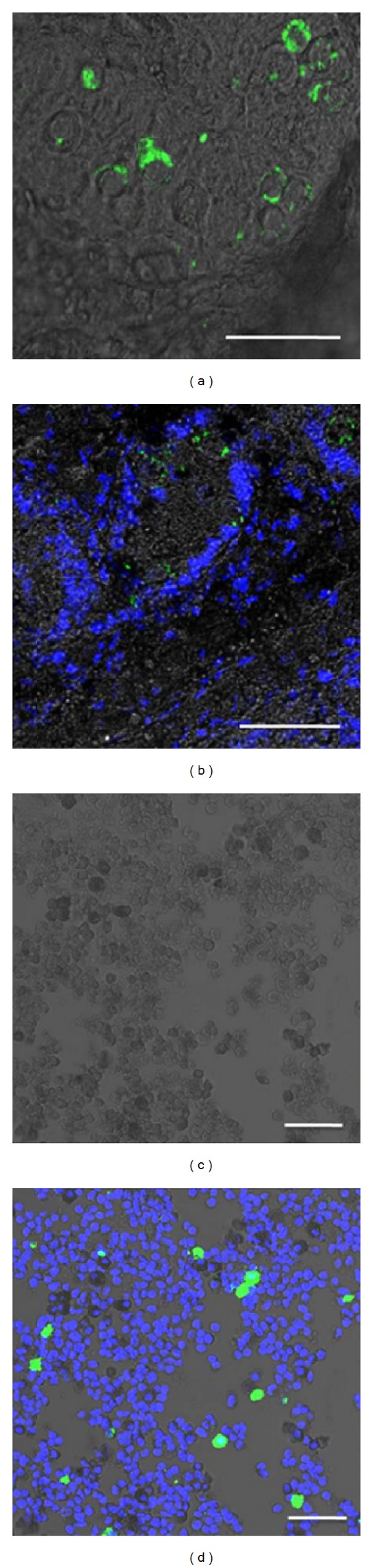
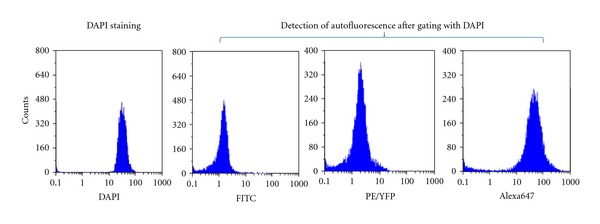
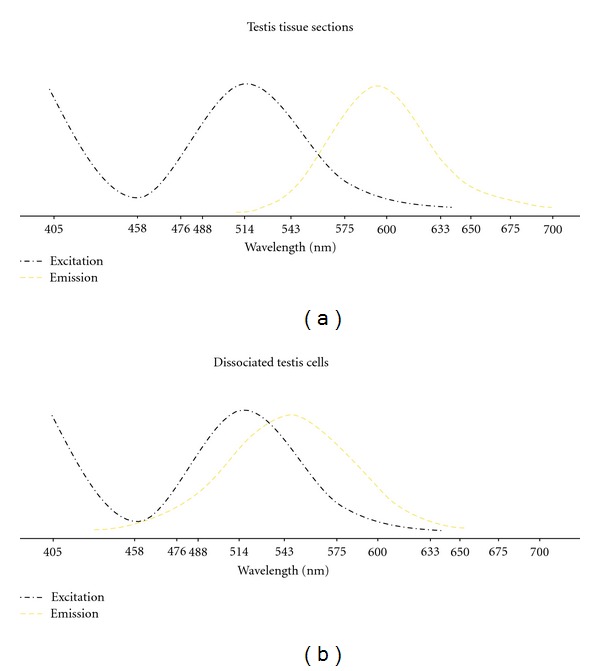
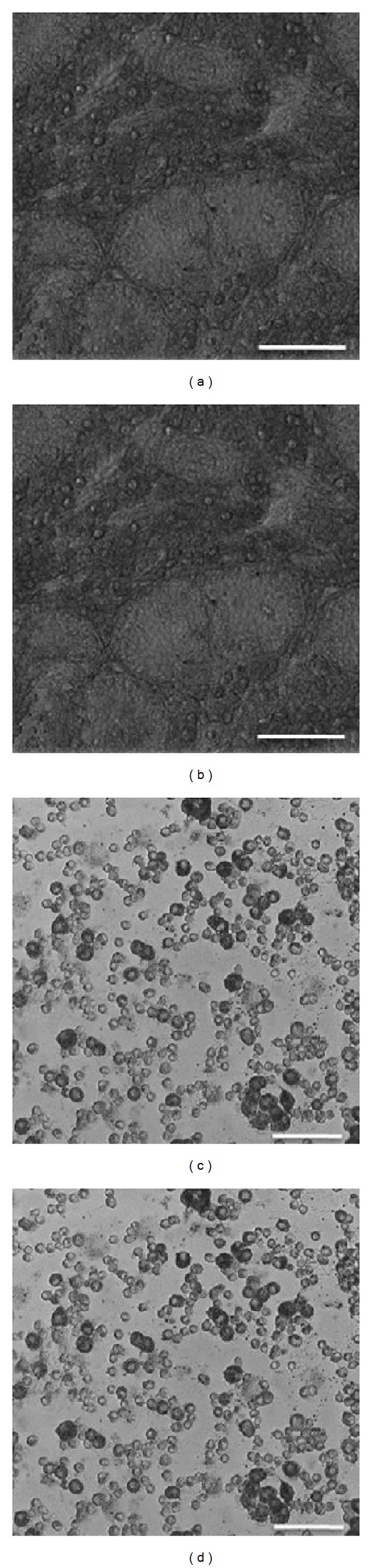
Significant intrinsic fluorescence in tissues and in disassociated cells can interfere with fluorescence identification of target cells. The objectives of the present study were (1) to examine an intrinsic fluorescence we observed in both the piglet testis tissue and cells and (2) to test an effective method to block the autofluorescence. We observed that a number of granules within the testis interstitial cells were inherently fluorescent, detectable using epifluorescence microscopy, confocal laser scanning microscopy, and flow cytometry. The emission wavelength of the autofluorescent substance ranged from 425 to 700 nm, a range sufficiently broad that could potentially interfere with fluorescence techniques. When we treated the samples with Sudan Black B for different incubation times, the intrinsic fluorescence was completely masked after treatment for 10-15 min of the testis tissue sections or for 8 min of the testis cells, without compromising specific fluorescence labeling of gonocytes with lectin Dolichos biflorus agglutinin (DBA). We speculate that the lipofuscin or lipofuscin-like pigments within Leydig cell granules were mainly responsible for the observed intrinsic fluorescence in piglet testes. The method described in the present study can facilitate the identification and characterization of piglet gonocytes using fluorescence microscopy.
组织和分离细胞中显著的固有荧光会干扰靶细胞的荧光识别。本研究的目的是:(1)检测我们在仔猪睾丸组织和细胞中观察到的固有荧光;(2)测试一种阻断自发荧光的有效方法。我们观察到睾丸间质细胞内的许多颗粒具有固有荧光,可通过落射荧光显微镜、共聚焦激光扫描显微镜和流式细胞术检测到。自发荧光物质的发射波长范围为425至700nm,该范围足够宽,可能会干扰荧光技术。当我们用苏丹黑B处理样品不同孵育时间时,睾丸组织切片处理10 - 15分钟或睾丸细胞处理8分钟后,固有荧光被完全掩盖,但不影响用双花扁豆凝集素(DBA)对生殖细胞进行特异性荧光标记。我们推测,睾丸间质细胞颗粒内的脂褐素或类脂褐素色素是仔猪睾丸中观察到的固有荧光的主要原因。本研究中描述的方法可促进使用荧光显微镜对仔猪生殖细胞进行识别和表征。