The Department of Pediatrics, The Medical College of Wisconsin, Milwaukee, WI 53226, USA.
Genes Immun. 2012 Dec;13(8):593-604. doi: 10.1038/gene.2012.41. Epub 2012 Sep 13.
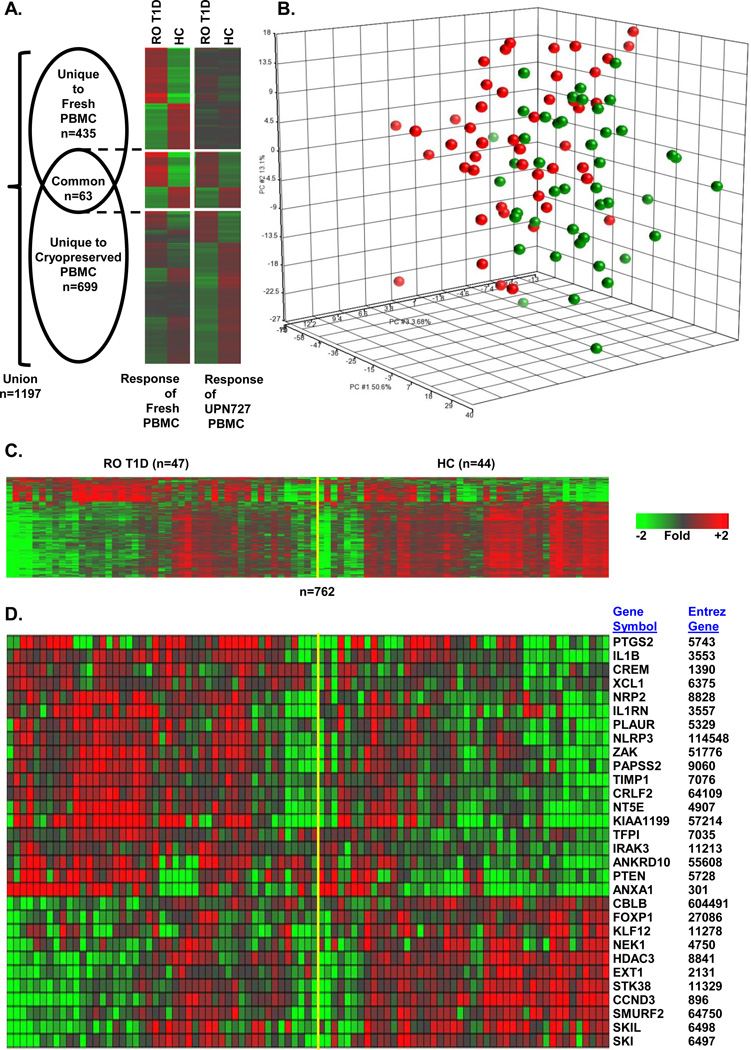
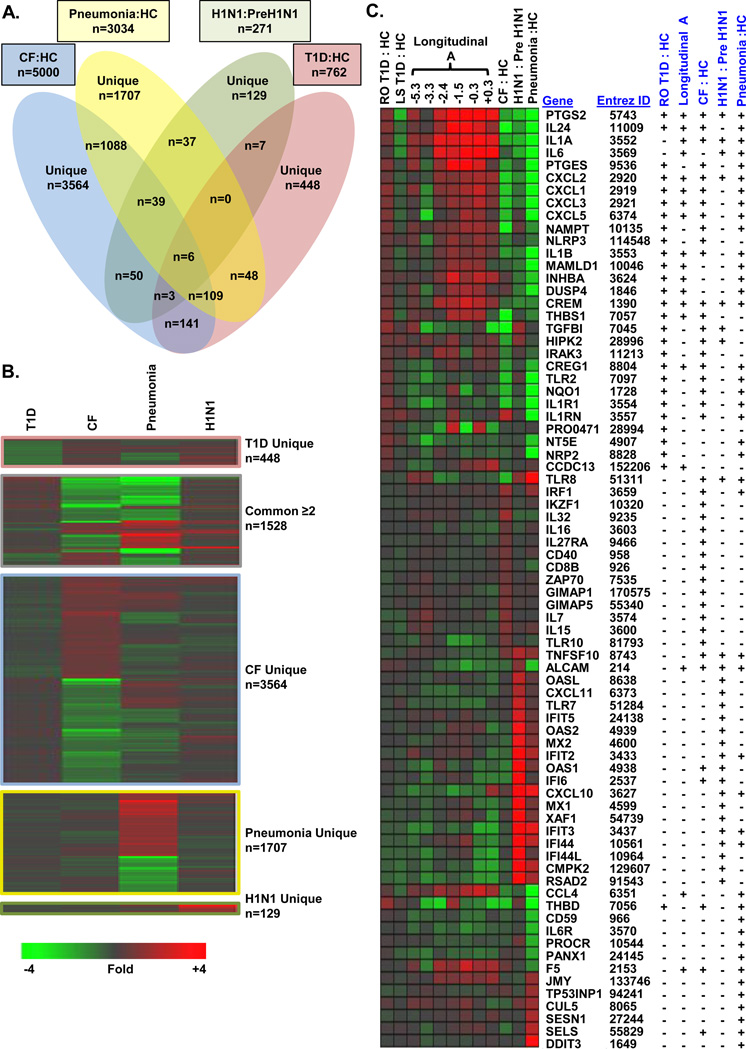
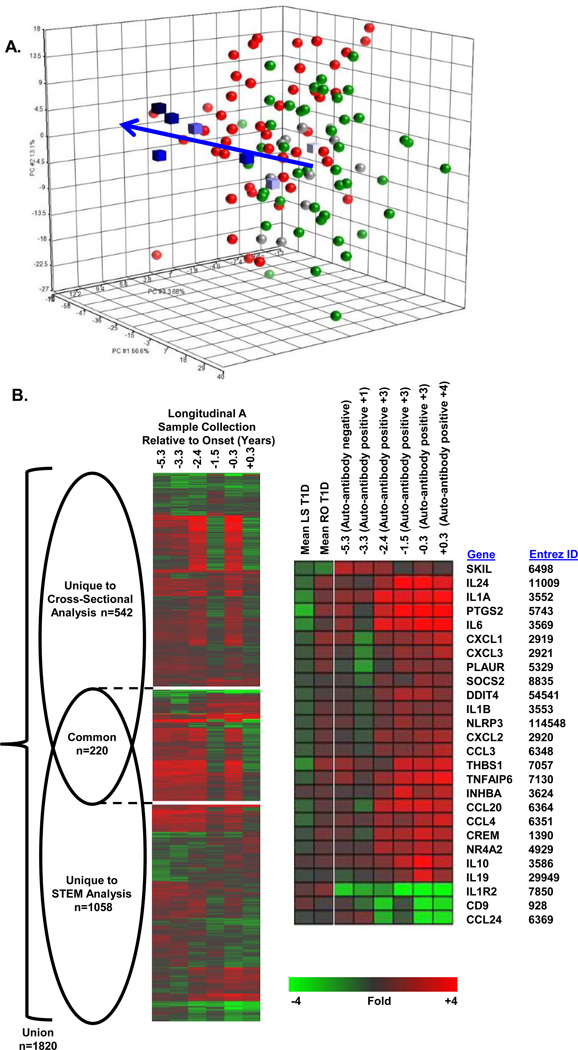
The complex milieu of inflammatory mediators associated with many diseases is often too dilute to directly measure in the periphery, necessitating development of more sensitive measurements suitable for mechanistic studies, earlier diagnosis, guiding therapeutic decisions and monitoring interventions. We previously demonstrated that plasma samples from recent-onset type 1 diabetes (RO T1D) patients induce a proinflammatory transcriptional signature in freshly drawn peripheral blood mononuclear cells (PBMCs) relative to that of unrelated healthy controls (HC). Here, using cryopreserved PBMC, we analyzed larger RO T1D and HC cohorts, examined T1D progression in pre-onset samples, and compared the RO T1D signature to those associated with three disorders characterized by airway infection and inflammation. The RO T1D signature, consisting of interleukin-1 cytokine family members, chemokines involved in immunocyte chemotaxis, immune receptors and signaling molecules, was detected during early pre-diabetes and found to resolve post-onset. The signatures associated with cystic fibrosis patients chronically infected with Pseudomonas aeruginosa, patients with confirmed bacterial pneumonia, and subjects with H1N1 influenza all reflected immunological activation, yet each were distinct from one another and negatively correlated with that of T1D. This study highlights the remarkable capacity of cells to serve as biosensors capable of sensitively and comprehensively differentiating immunological states.
与许多疾病相关的炎症介质的复杂环境通常过于稀释,无法在周围环境中直接测量,因此需要开发更敏感的测量方法,以适用于机制研究、早期诊断、指导治疗决策和监测干预。我们之前证明,与无关的健康对照者(HC)相比,新发 1 型糖尿病(RO T1D)患者的血浆样本会诱导新提取的外周血单核细胞(PBMC)中促炎转录特征。在这里,我们使用冷冻保存的 PBMC 分析了更大的 RO T1D 和 HC 队列,检查了发病前样本中的 T1D 进展,并将 RO T1D 特征与三种以气道感染和炎症为特征的疾病相关特征进行了比较。RO T1D 特征由白细胞介素-1 细胞因子家族成员、参与免疫细胞趋化的趋化因子、免疫受体和信号分子组成,在早期糖尿病前期即可检测到,并在发病后得到解决。与慢性感染铜绿假单胞菌的囊性纤维化患者、确诊细菌性肺炎患者和 H1N1 流感患者相关的特征均反映了免疫激活,但彼此不同,且与 T1D 的特征呈负相关。本研究强调了细胞作为生物传感器的巨大能力,能够敏感而全面地区分免疫状态。