Leung Ki En-Ling, Lau James Y W
Department of Medicine and Therapeutics, The Chinese University of Hong Kong, Hong Kong, China.
Clin Endosc. 2012 Sep;45(3):224-9. doi: 10.5946/ce.2012.45.3.224. Epub 2012 Aug 22.
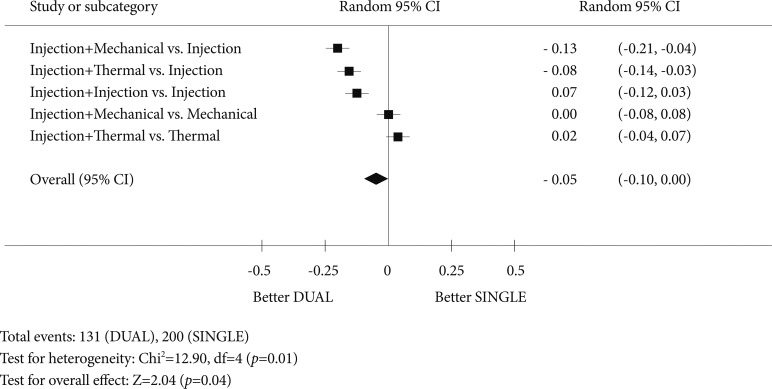
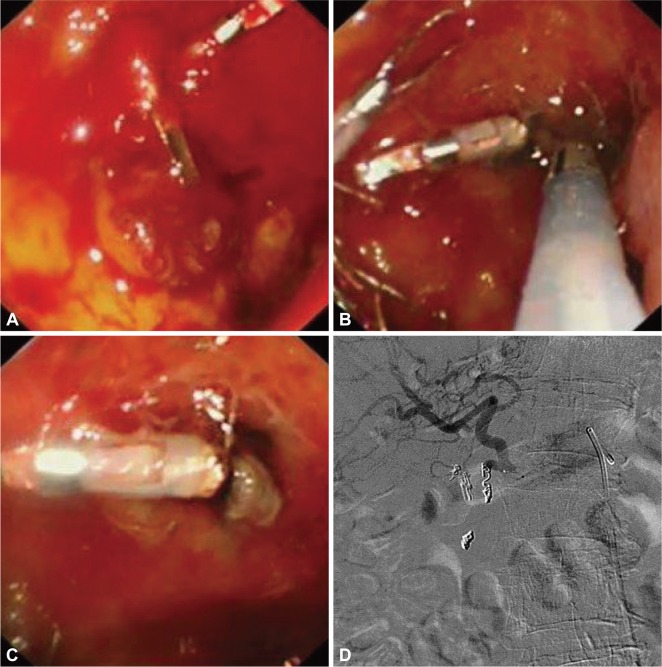
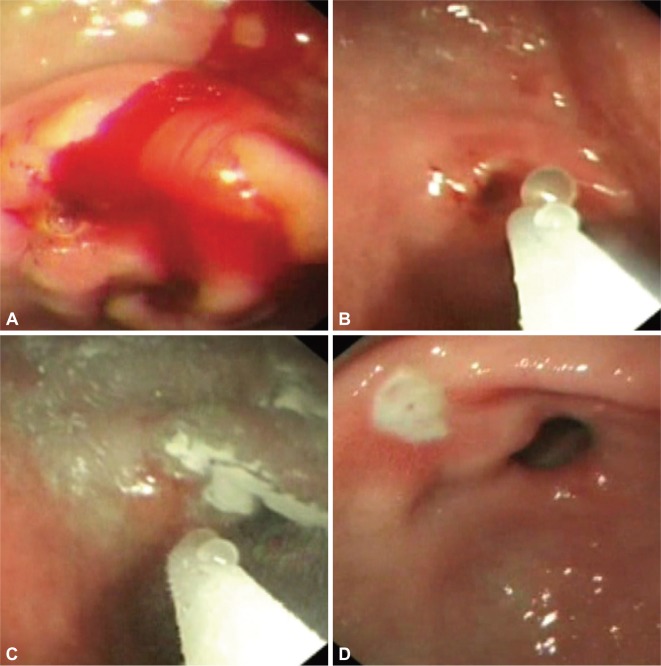
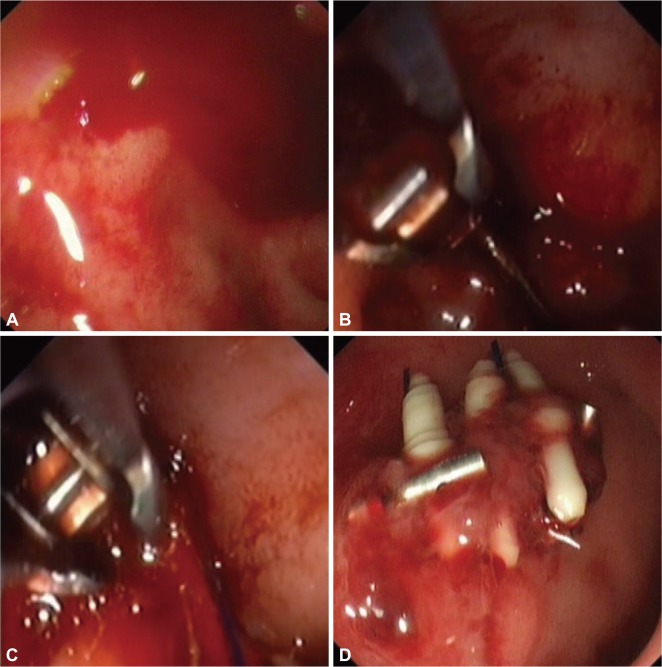
Endoscopic treatment for non-variceal upper gastrointestinal bleeding has evolved over decades. Injection with diluted epinephrine is considered as a less than adequate treatment, and the current standard therapy should include second modality if epinephrine injection is used initially. Definitive hemostasis rate following mono-therapy with either thermo-coagulation or hemo-clipping compares favorably with dual therapies. The use of adsorptive powder (Hemo-spray) is a promising treatment although it needs comparative studies between hemospray and other modalities. Stronger hemo-clips with better torque control and wider span are now available. Over-the-scope clips capture a large amount of tissue and may prove useful in refractory bleeding. Experimental treatments include an endoscopic stitch device to over-sew the bleeding lesion and targeted therapy to the sub-serosal bleeding artery as guided by echo-endoscopy. Angiographic embolization of bleeding artery should be considered in chronic ulcers that fail endoscopic treatment especially in elderly patients with a major bleed manifested in hypotension.
非静脉曲张性上消化道出血的内镜治疗已发展了数十年。注射稀释肾上腺素被认为是一种不太充分的治疗方法,如果最初使用肾上腺素注射,当前的标准治疗应包括第二种治疗方式。单纯热凝或止血夹治疗后的确定性止血率与联合治疗相比具有优势。吸附性粉末(Hemospry)的使用是一种有前景的治疗方法,尽管它需要与其他治疗方式进行比较研究。现在有了扭矩控制更好、跨度更宽的更强力止血夹。套扎器能夹住大量组织,可能对难治性出血有用。实验性治疗包括用于缝合出血病变的内镜缝合装置以及在超声内镜引导下针对浆膜下出血动脉的靶向治疗。对于内镜治疗失败的慢性溃疡,尤其是出现低血压等大出血表现的老年患者,应考虑对出血动脉进行血管造影栓塞治疗。