The Second Hospital of Jilin University, Changchun, China.
Nutr Metab (Lond). 2012 Sep 15;9(1):84. doi: 10.1186/1743-7075-9-84.
Oxidative stress plays an important role in diabetes-induced vascular inflammation and pathogenesis. Nuclear factor E2-related factor-2 (Nrf2) is a transcription factor orchestrating antioxidant and cyto-protective responses to oxidative stress. In the present study, we tested whether sulforaphane (SFN) can protect the aorta from diabetes and, if so, whether the aortic protection is associated with up-regulation of Nrf2 and its down-stream antioxidants.
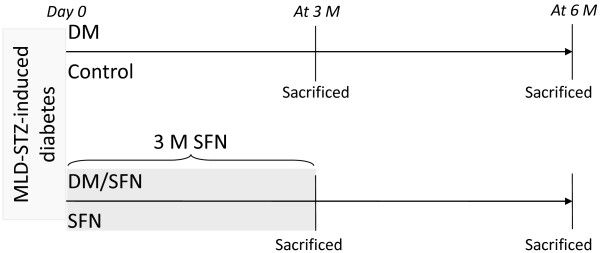
Type 1 diabetes was induced in FVB mice by multiple low-dose streptozotocin. Diabetic and age-matched control mice were treated with or without SFN at 0.5 mg/kg daily in five days of each week for three months. At the end of 3 months treatment of SFN one set of mice were sacrificed to perform the experimental measurements. The second set of both diabetic and control mice were aged for additional 3 months without further SFN treatment and then sacrificed to perform the experimental measurements. Aortas from these mice were assessed for fibrosis, inflammation, oxidative damage, and Nrf2 expression and transcription by immunohistochemical staining and real-time PCR method, respectively.
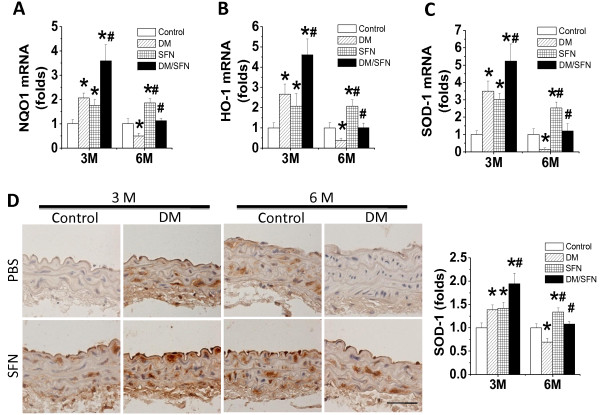
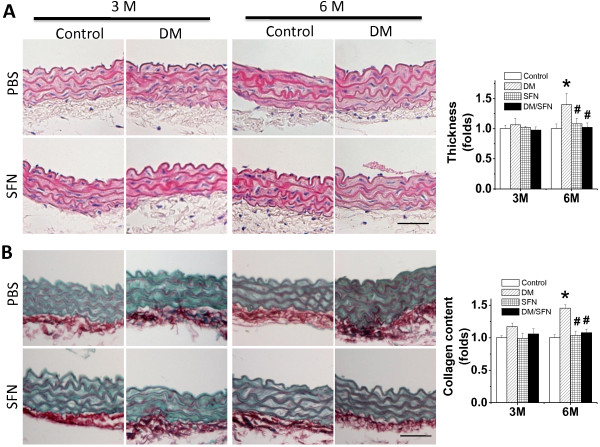
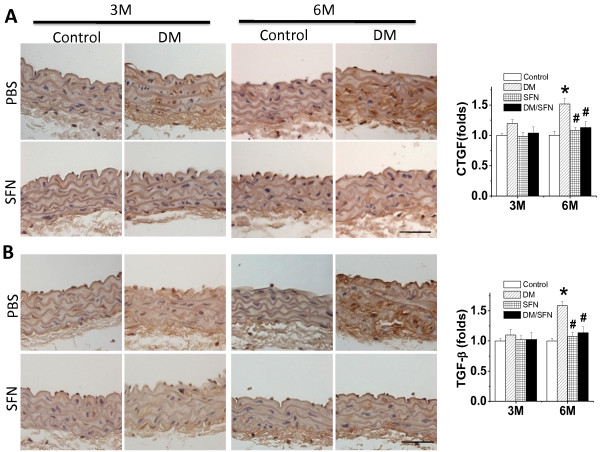
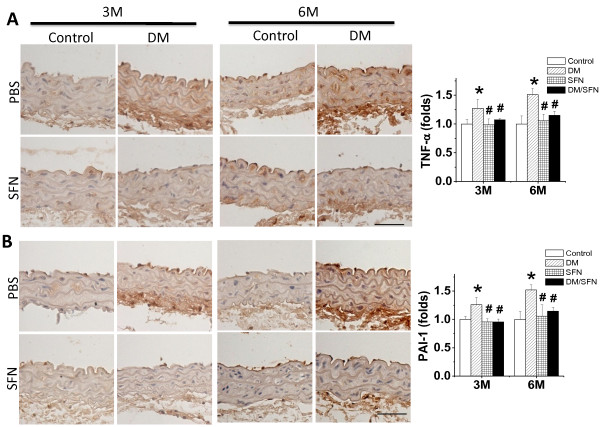
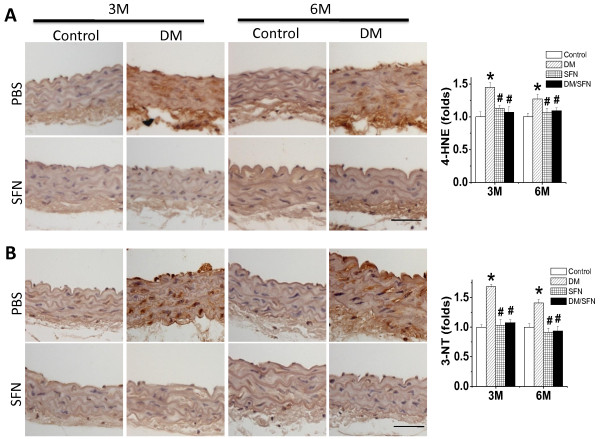
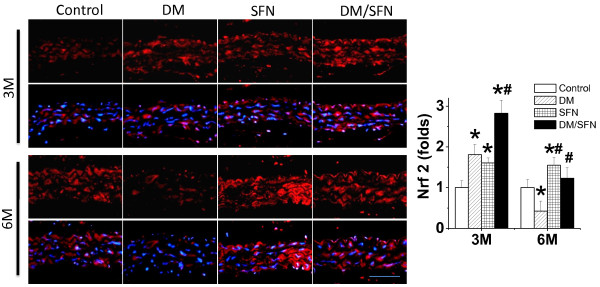
Diabetes induced significant increases in oxidative stress and inflammation in the aorta at both 3 and 6 months, and fibrotic response at 6 months. SFN completely prevented these diabetic pathogenic changes and also significantly up-regulated the expression of Nrf2 and its down-stream antioxidants.
These results suggest that diabetes-induced aortic fibrosis, inflammation, and oxidative damage can be prevented by SFN. The aortic protection from diabetes by SFN was associated with the up-regulation of Nrf2 and its downstream antioxidants.
氧化应激在糖尿病引起的血管炎症和发病机制中起着重要作用。核因子 E2 相关因子 2(Nrf2)是一种转录因子,协调抗氧化和细胞保护反应以应对氧化应激。在本研究中,我们测试了萝卜硫素(SFN)是否可以保护主动脉免受糖尿病的影响,如果是这样,主动脉的保护是否与 Nrf2 及其下游抗氧化剂的上调有关。
通过多次低剂量链脲佐菌素诱导 FVB 小鼠发生 1 型糖尿病。糖尿病和年龄匹配的对照小鼠每周接受或不接受 SFN 治疗,剂量为 0.5mg/kg,每天一次,连续 5 天,共治疗 3 个月。在 SFN 治疗 3 个月结束时,一组小鼠被处死以进行实验测量。另一组糖尿病和对照小鼠再继续未经 SFN 治疗的 3 个月,然后处死以进行实验测量。通过免疫组织化学染色和实时 PCR 方法分别评估这些小鼠的主动脉纤维化、炎症、氧化损伤以及 Nrf2 表达和转录。
糖尿病在 3 个月和 6 个月时均导致主动脉氧化应激和炎症显著增加,6 个月时还导致纤维化反应。SFN 完全阻止了这些糖尿病的致病变化,还显著上调了 Nrf2 及其下游抗氧化剂的表达。
这些结果表明,SFN 可预防糖尿病引起的主动脉纤维化、炎症和氧化损伤。SFN 对糖尿病引起的主动脉保护与 Nrf2 及其下游抗氧化剂的上调有关。