Park Shin-Hyung, Kim Jae-Chul, Lee Jeong-Eun, Park In-Kyu
Department of Radiation Oncology, Kyungpook National University School of Medicine, Daegu, Korea.
Radiat Oncol J. 2011 Dec;29(4):269-76. doi: 10.3857/roj.2011.29.4.269. Epub 2011 Dec 28.
To determine the incidence, risk factors, and clinical characteristics of pelvic insufficiency fracture (PIF) in patients with cervical cancer.
Between July 2004 and August 2009, 235 patients with non-metastatic cervical cancer were treated with definitive chemoradiation or postoperative radiotherapy. Among 235 patients, 117 (49.8%) underwent the first positron emission tomography/computed tomography (PET/CT) within 1 year after radiotherapy. The median radiation dose was 55 Gy (range, 45 to 60 Gy). Medical charts and imaging studies, including PET/CT, magnetic resonance imaging (MRI), CT, bone scintigraphy were reviewed to evaluate the patients with PIF.
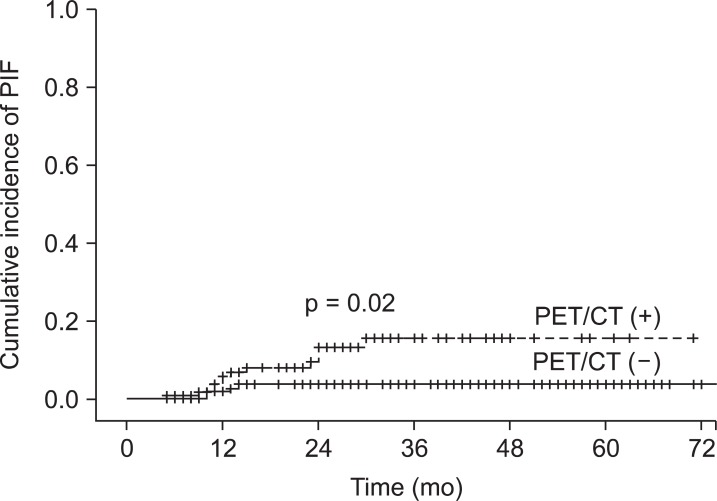
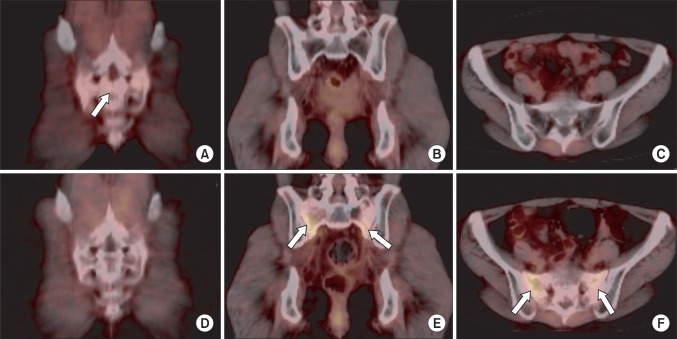
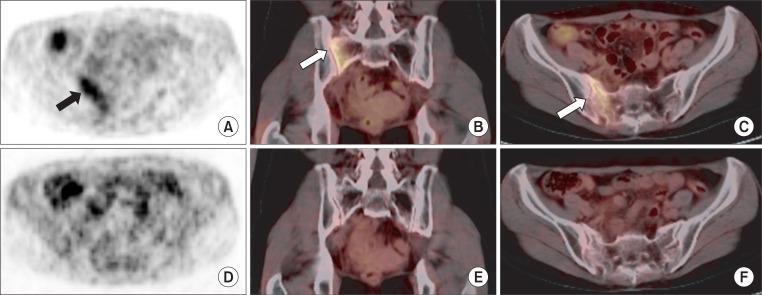
Among 235 patients, 16 developed PIF. The 5-year detection rate of PIF was 9.5%. The 5-year detection rate of PIF in patients who underwent the first PET/CT within a year was 15.6%. The median time to development of PIF was 12.5 months (range, 5 to 30 months). The sites of fracture included 12 sacroiliac joints, 3 pubic rami, 3 iliac bones, and 1 femoral neck. Eleven of 16 patients having PIF complained of hip pain requiring medications. One patient required hospitalization for pain control. The significant risk factors of PIF were old age, body mass index less than 23, bone mineral density less than -3.5 SD, and the first PET/CT within a year after radiotherapy. Radiation dose and concurrent chemotherapy had no impact on PIF rate.
PIFs were not rare after pelvic radiotherapy in cervical cancer patients in the era of PET/CT. Timely diagnosis and management of PIF can improve quality of life in patients with cervical cancer, in addition to reducing unnecessary medical expenses.
确定宫颈癌患者盆腔应力性骨折(PIF)的发生率、危险因素及临床特征。
2004年7月至2009年8月期间,235例非转移性宫颈癌患者接受了根治性放化疗或术后放疗。在这235例患者中,117例(49.8%)在放疗后1年内接受了首次正电子发射断层扫描/计算机断层扫描(PET/CT)。中位放疗剂量为55 Gy(范围45至60 Gy)。回顾病历及影像学检查,包括PET/CT、磁共振成像(MRI)、CT、骨闪烁显像,以评估PIF患者。
235例患者中,16例发生PIF。PIF的5年检出率为9.5%。放疗后1年内接受首次PET/CT检查的患者中,PIF的5年检出率为15.6%。PIF发生的中位时间为12.5个月(范围5至30个月)。骨折部位包括12个骶髂关节、3个耻骨支、3块髂骨和1个股骨颈。16例PIF患者中有11例主诉髋部疼痛,需要药物治疗。1例患者因疼痛控制需要住院治疗。PIF的显著危险因素为年龄较大、体重指数小于23、骨密度小于-3.5标准差以及放疗后1年内接受首次PET/CT检查。放疗剂量和同步化疗对PIF发生率无影响。
在PET/CT时代,宫颈癌患者盆腔放疗后PIF并不罕见。及时诊断和处理PIF除可降低不必要的医疗费用外,还可改善宫颈癌患者的生活质量。