Quinet E M, Agellon L B, Kroon P A, Marcel Y L, Lee Y C, Whitlock M E, Tall A R
Department of Medicine, Columbia University College of Physicians and Surgeons, New York, New York 10032.
J Clin Invest. 1990 Feb;85(2):357-63. doi: 10.1172/JCI114446.
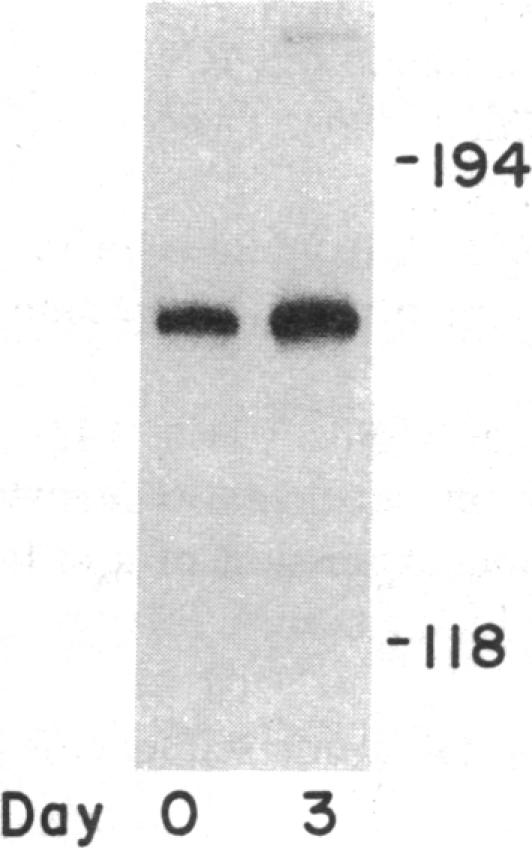
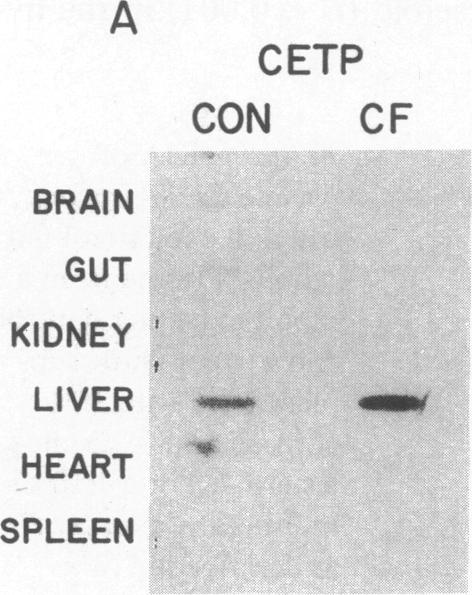
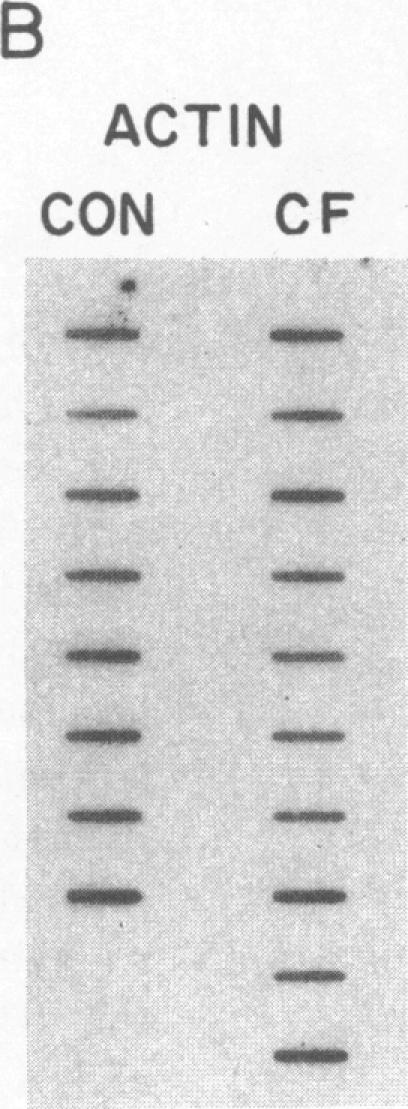
Cholesteryl ester transfer activity is increased in plasma of cholesterol-fed rabbits. To investigate the mechanisms leading to changes in activity, we measured cholesteryl ester transfer protein (CETP) mass by RIA and CETP mRNA abundance by Northern and slot blot analysis using a human CETP cDNA probe in control (n = 8) and cholesterol-fed rabbits (n = 10). Cholesterol feeding (chow plus 0.5% cholesterol, 10% corn oil) for 30 d increased CETP mass in plasma 3.2-fold in the cholesterol-fed rabbits (12.45 +/- 0.82 micrograms/ml) compared with controls (3.86 +/- 0.38 micrograms/ml). In the hypercholesterolemic rabbit, liver CETP mRNA levels were increased 2.8 times control mRNA levels. Actin, apo E, lecithin-cholesterol acyltransferase, and albumin mRNA abundances were unchanged. In contrast to the widespread tissue distribution in humans, CETP mRNA was not detected in extrahepatic tissues of either control or cholesterol-fed animals. Using a sensitive RNase protection assay, the increase in liver CETP mRNA was detectable within 3 d of beginning the high cholesterol diet. Thus, in response to the atherogenic diet there is an early increase in liver CETP mRNA, probably causing increased CETP synthesis and secretion, and increased plasma CETP. The results indicate that the CETP gene may be regulated by diet-induced changes in lipid metabolism.
在喂食胆固醇的兔子血浆中,胆固醇酯转运活性增加。为了研究导致活性变化的机制,我们通过放射免疫分析法(RIA)测量了胆固醇酯转运蛋白(CETP)的质量,并使用人CETP cDNA探针,通过Northern印迹和狭缝印迹分析,测量了对照(n = 8)和喂食胆固醇的兔子(n = 10)中CETP mRNA的丰度。喂食胆固醇(普通饲料加0.5%胆固醇、10%玉米油)30天,与对照组(3.86±0.38微克/毫升)相比,喂食胆固醇的兔子血浆中CETP质量增加了3.2倍(12.45±0.82微克/毫升)。在高胆固醇血症兔子中,肝脏CETP mRNA水平比对照mRNA水平增加了2.8倍。肌动蛋白、载脂蛋白E、卵磷脂胆固醇酰基转移酶和白蛋白mRNA丰度没有变化。与人类广泛的组织分布不同,在对照动物或喂食胆固醇的动物的肝外组织中均未检测到CETP mRNA。使用灵敏的核糖核酸酶保护分析,在开始高胆固醇饮食3天内即可检测到肝脏CETP mRNA的增加。因此,对致动脉粥样化饮食的反应是肝脏CETP mRNA早期增加,这可能导致CETP合成和分泌增加以及血浆CETP增加。结果表明,CETP基因可能受饮食诱导的脂质代谢变化调控。