Department of Physiology, University of Toronto, Toronto, Ontario, Canada.
Cell Rep. 2012 Sep 27;2(3):488-96. doi: 10.1016/j.celrep.2012.08.022. Epub 2012 Sep 20.
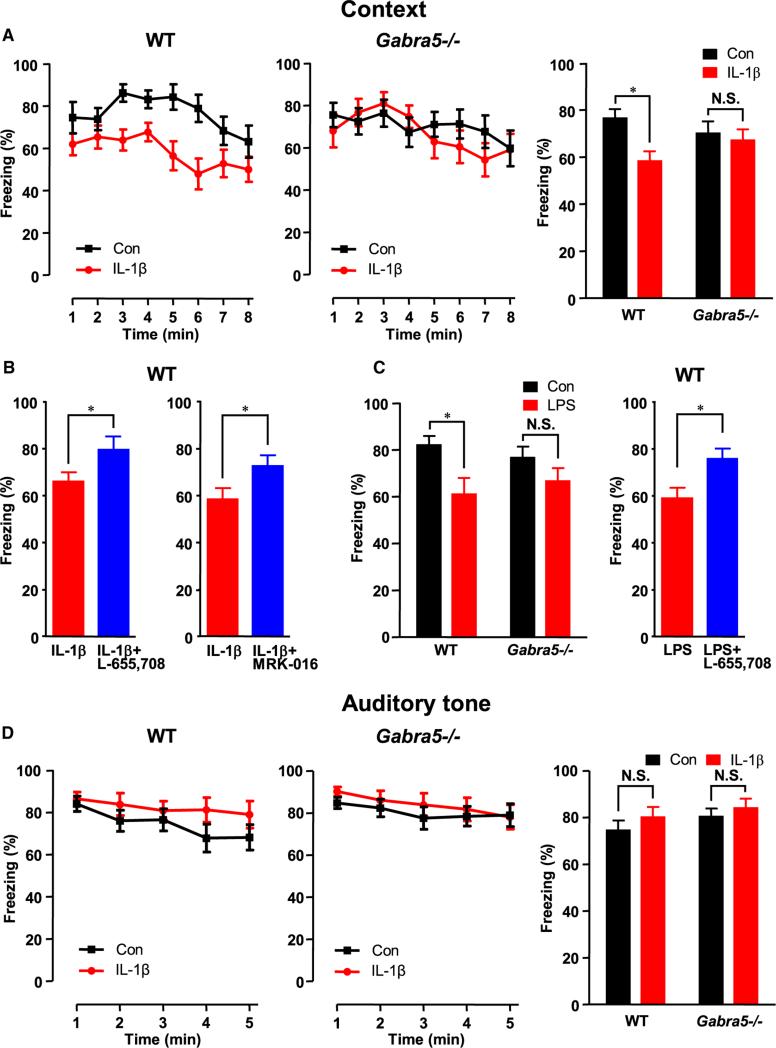
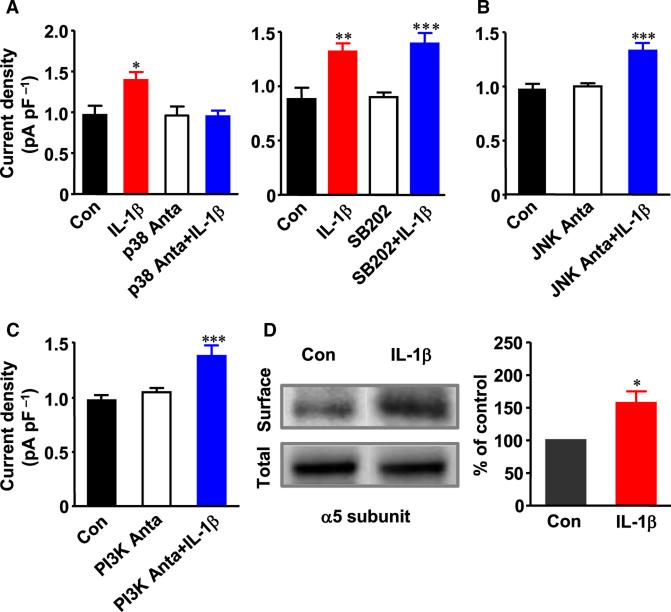
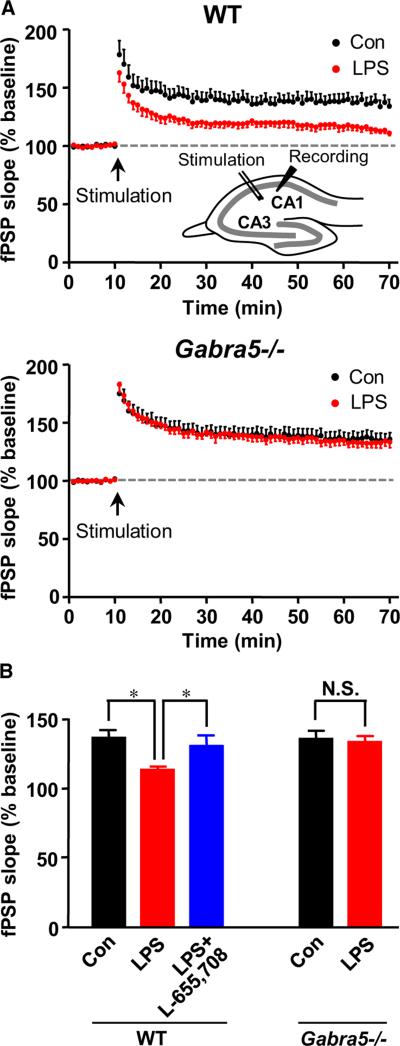
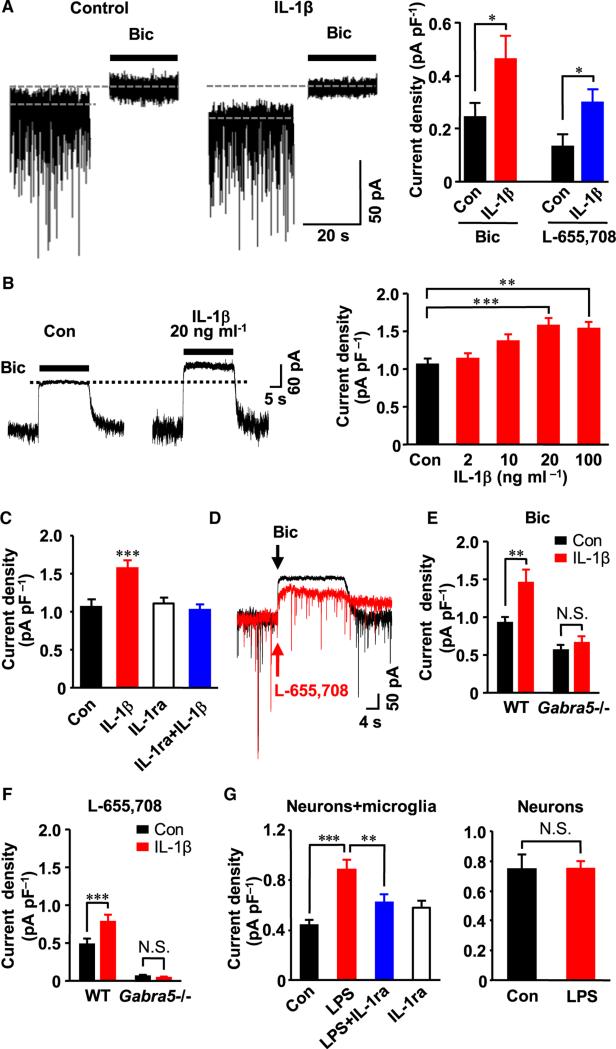
Systemic inflammation causes learning and memory deficits through mechanisms that remain poorly understood. Here, we studied the pathogenesis of memory loss associated with inflammation and found that we could reverse memory deficits by pharmacologically inhibiting α5-subunit-containing γ-aminobutyric acid type A (α5GABA(A)) receptors and deleting the gene associated with the α5 subunit. Acute inflammation reduces long-term potentiation, a synaptic correlate of memory, in hippocampal slices from wild-type mice, and this reduction was reversed by inhibition of α5GABA(A) receptor function. A tonic inhibitory current generated by α5GABA(A) receptors in hippocampal neurons was increased by the key proinflammatory cytokine interleukin-1β through a p38 mitogen-activated protein kinase signaling pathway. Interleukin-1β also increased the surface expression of α5GABA(A) receptors in the hippocampus. Collectively, these results show that α5GABA(A) receptor activity increases during inflammation and that this increase is critical for inflammation-induced memory deficits.
系统性炎症通过机制导致学习和记忆缺陷,但这些机制仍未得到充分理解。在这里,我们研究了与炎症相关的记忆丧失的发病机制,发现通过药理学抑制含有α5 亚单位的γ-氨基丁酸 A 型 (α5GABA(A)) 受体和删除与 α5 亚单位相关的基因,可以逆转记忆缺陷。急性炎症会降低野生型小鼠海马切片中的长时程增强,这是记忆的突触相关物,而这种降低可以通过抑制 α5GABA(A) 受体功能来逆转。α5GABA(A) 受体在海马神经元中产生的紧张性抑制电流通过 p38 丝裂原活化蛋白激酶信号通路被关键促炎细胞因子白细胞介素-1β 增加。白细胞介素-1β 还增加了海马中 α5GABA(A) 受体的表面表达。总的来说,这些结果表明,α5GABA(A) 受体活性在炎症期间增加,而这种增加对于炎症引起的记忆缺陷至关重要。