School of Materials Science and Engineering, Nanyang Technological University, Singapore 639798, Singapore ; TUM CREATE Research Centre @ NTU, Nanyang Technological University, Singapore 637459, Singapore.
Beilstein J Nanotechnol. 2012;3:513-23. doi: 10.3762/bjnano.3.59. Epub 2012 Jul 17.
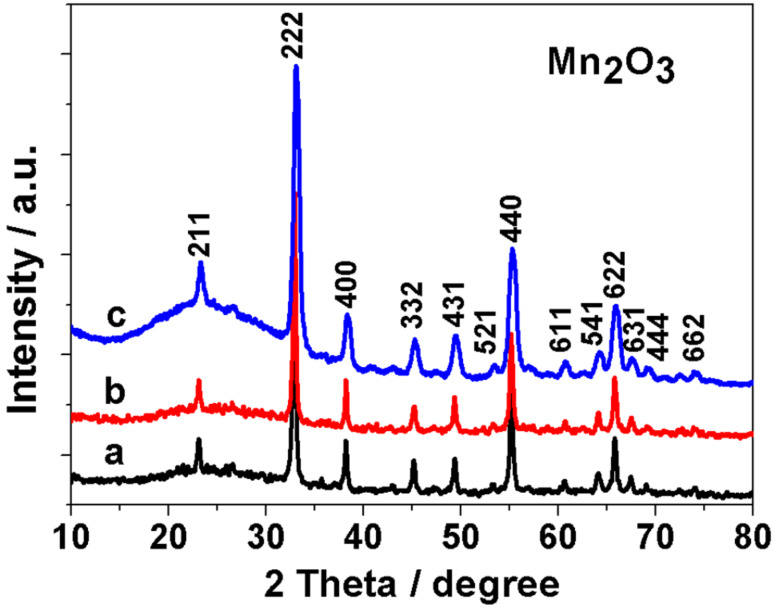
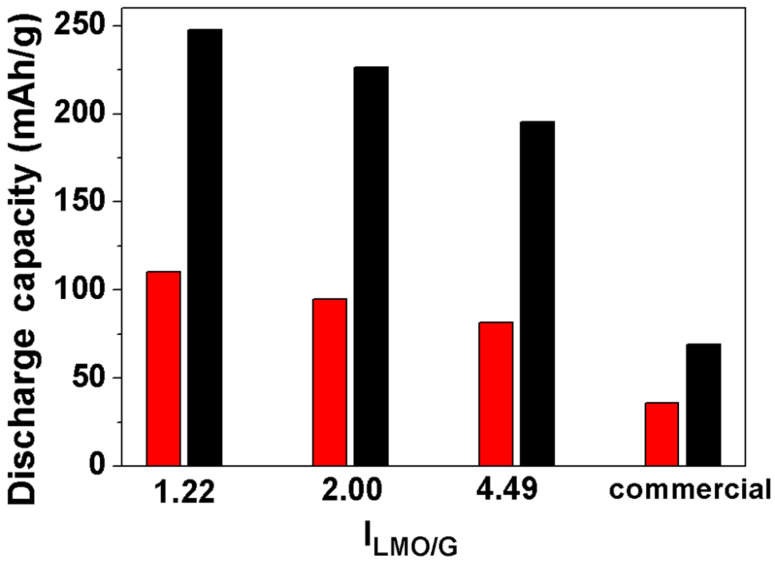
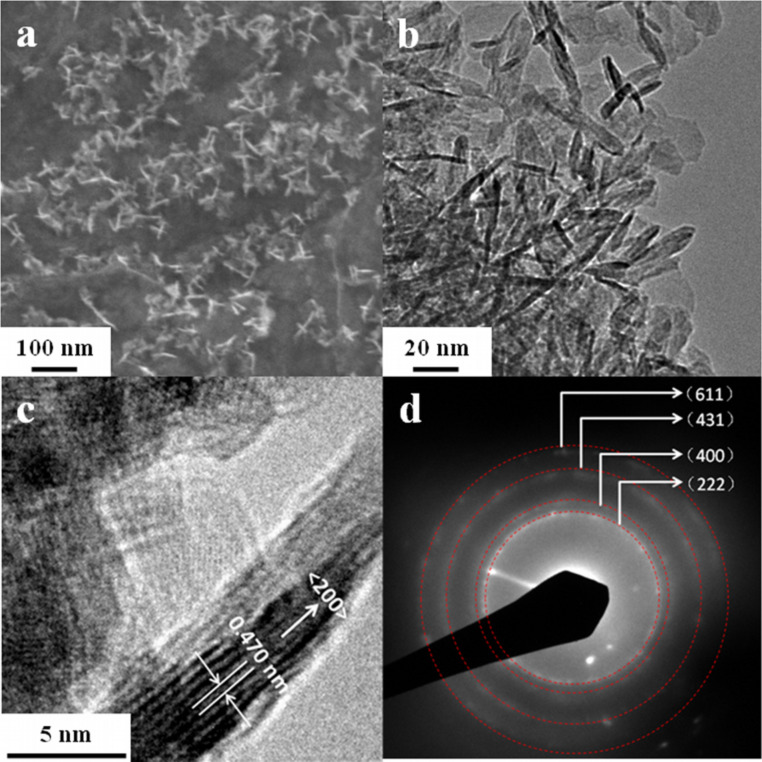
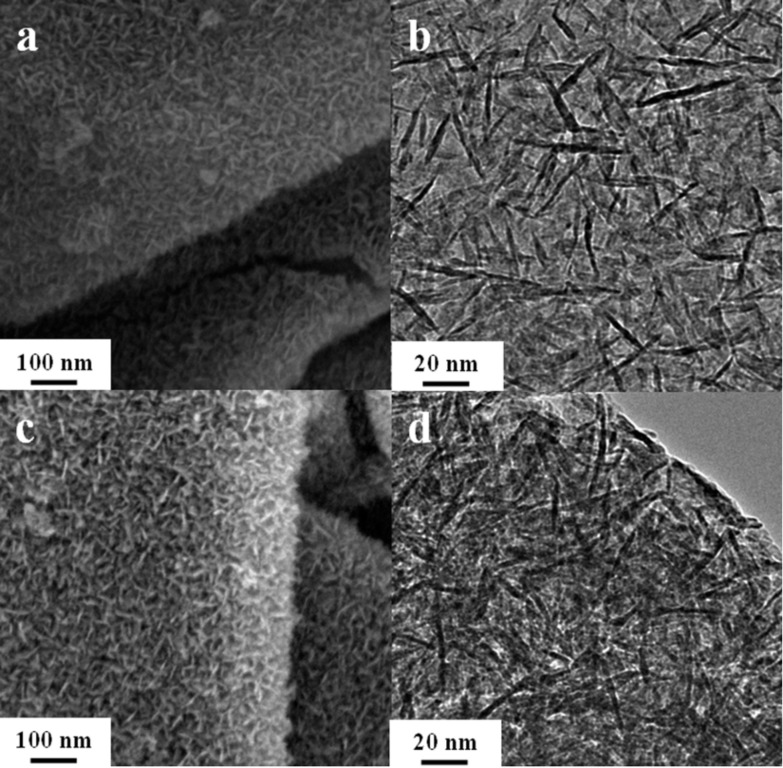
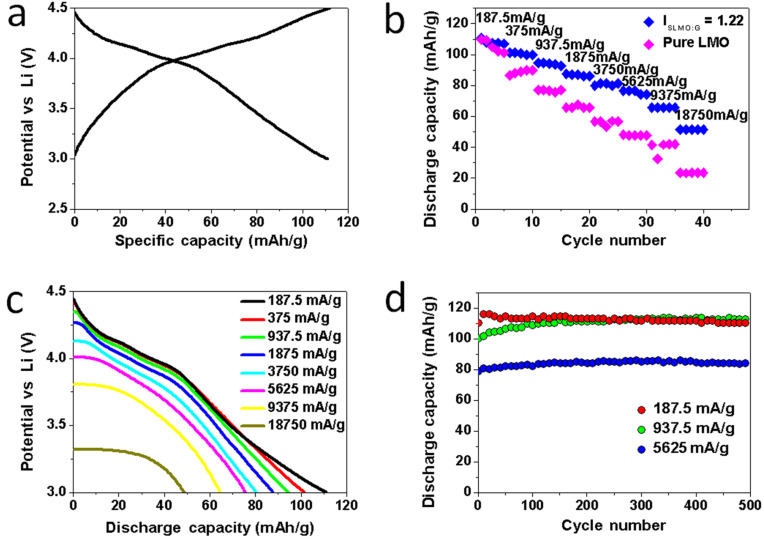
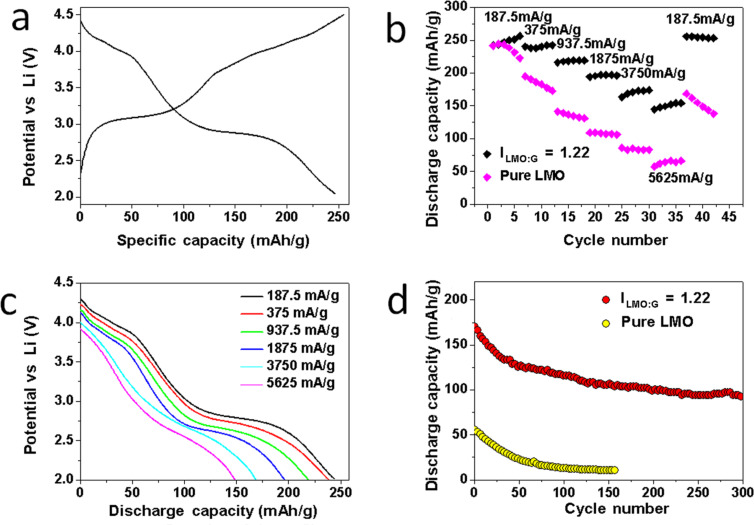
We report a facile method to prepare a nanoarchitectured lithium manganate/graphene (LMO/G) hybrid as a positive electrode for Li-ion batteries. The Mn(2)O(3)/graphene hybrid is synthesized by exfoliation of graphene sheets and deposition of Mn(2)O(3) in a one-step electrochemical process, which is followed by lithiation in a molten salt reaction. There are several advantages of using the LMO/G as cathodes in Li-ion batteries: (1) the LMO/G electrode shows high specific capacities at high gravimetric current densities with excellent cycling stability, e.g., 84 mAh·g(-1) during the 500th cycle at a discharge current density of 5625 mA·g(-1) (38.01 C capacity rating) in the voltage window of 3-4.5 V; (2) the LMO/G hybrid can buffer the Jahn-Teller effect, which depicts excellent Li storage properties at high current densities within a wider voltage window of 2-4.5 V, e.g., 93 mAh·g(-1) during the 300th cycle at a discharge current density of 5625 mA·g(-1) (38.01 C). The wider operation voltage window can lead to increased theoretical capacity, e.g., 148 mAh·g(-1) between 3 and 4.5 V and 296 mAh·g(-1) between 2 and 4.5 V; (3) more importantly, it is found that the attachment of LMO onto graphene can help to reduce the dissolution of Mn(2+) into the electrolyte, as indicated by the inductively coupled plasma (ICP) measurements, and which is mainly attributed to the large specific surface area of the graphene sheets.
我们报道了一种简便的方法来制备纳米结构的锂锰氧化物/石墨烯(LMO/G)杂化材料作为锂离子电池的正极。Mn(2)O(3)/石墨烯杂化材料是通过在一步电化学过程中剥离石墨烯片并沉积 Mn(2)O(3)来合成的,然后在熔融盐反应中进行锂化。使用 LMO/G 作为锂离子电池的阴极有几个优点:(1) LMO/G 电极在高重量电流密度下显示出高比容量和优异的循环稳定性,例如在 3-4.5 V 的电压窗口内以 5625 mA·g(-1) 的放电电流密度(38.01 C 的容量倍率)进行 500 次循环时,其比容量为 84 mAh·g(-1);(2) LMO/G 杂化材料可以缓冲 Jahn-Teller 效应,在 2-4.5 V 的更宽电压窗口内,以高电流密度显示出优异的锂离子存储性能,例如在 5625 mA·g(-1) 的放电电流密度下进行 300 次循环时,其比容量为 93 mAh·g(-1)(38.01 C);(3) 更重要的是,发现 LMO 附着在石墨烯上有助于减少 Mn(2+)溶解到电解液中,这可以通过电感耦合等离子体(ICP)测量来证明,这主要归因于石墨烯片的大比表面积。