Nuffield Department of Clinical Medicine, Oxford Centre for Diabetes, Endocrinology and Metabolism, University of Oxford, Oxford, United Kingdom.
PLoS One. 2012;7(9):e45217. doi: 10.1371/journal.pone.0045217. Epub 2012 Sep 14.
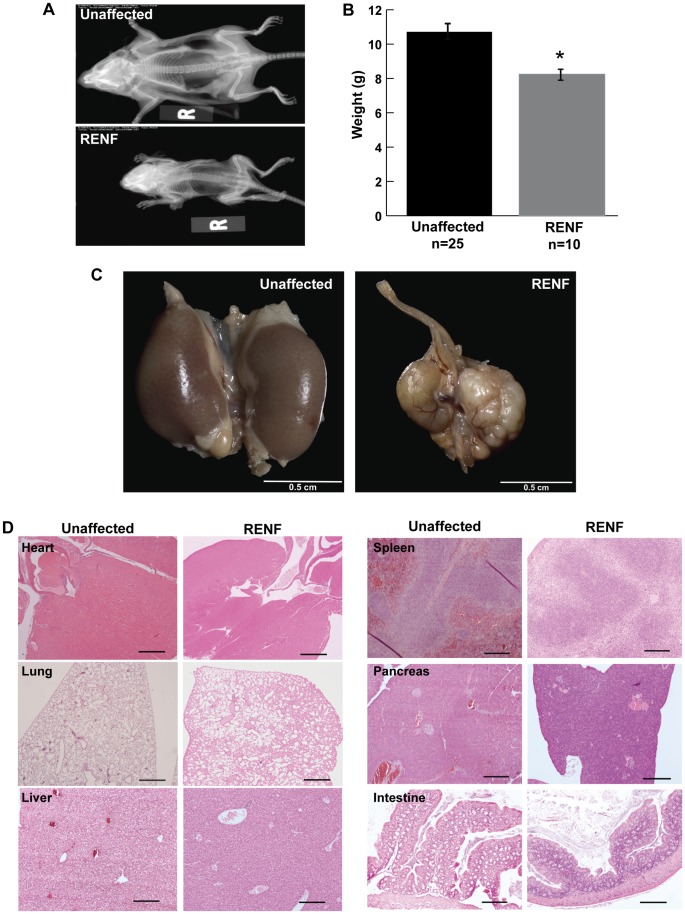
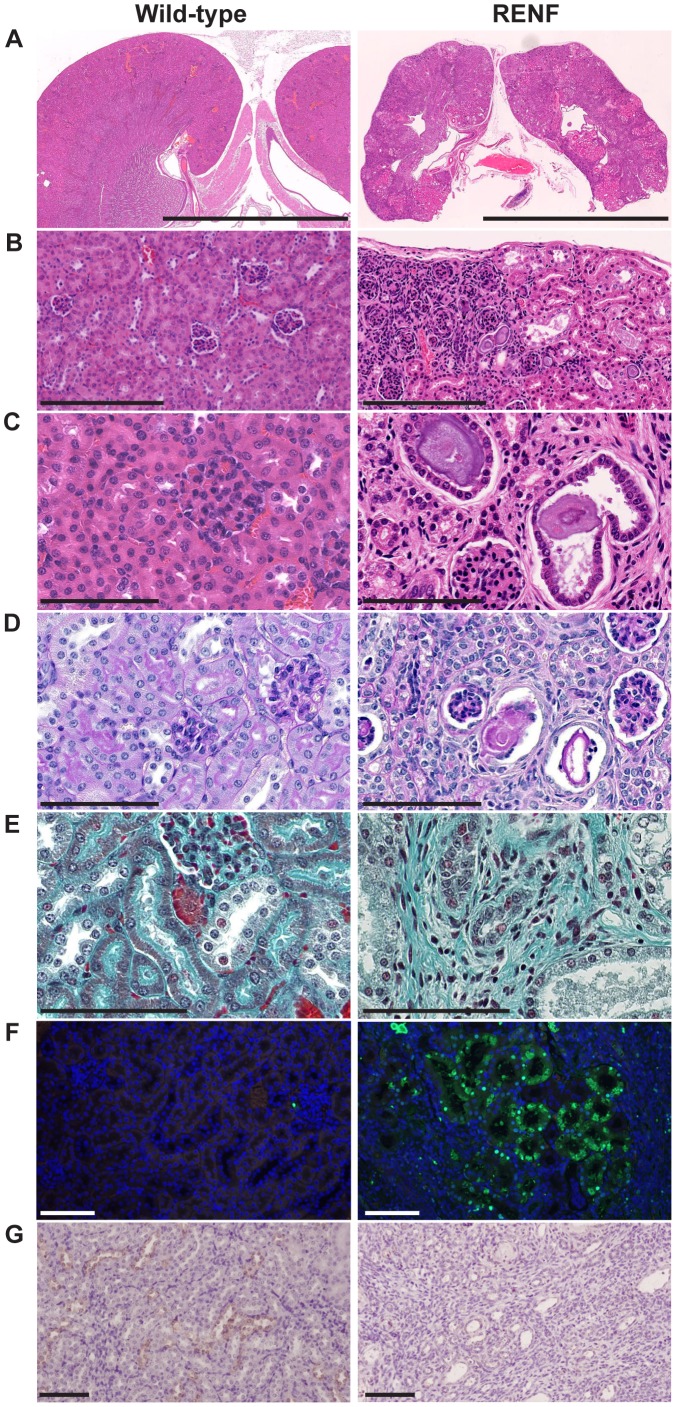
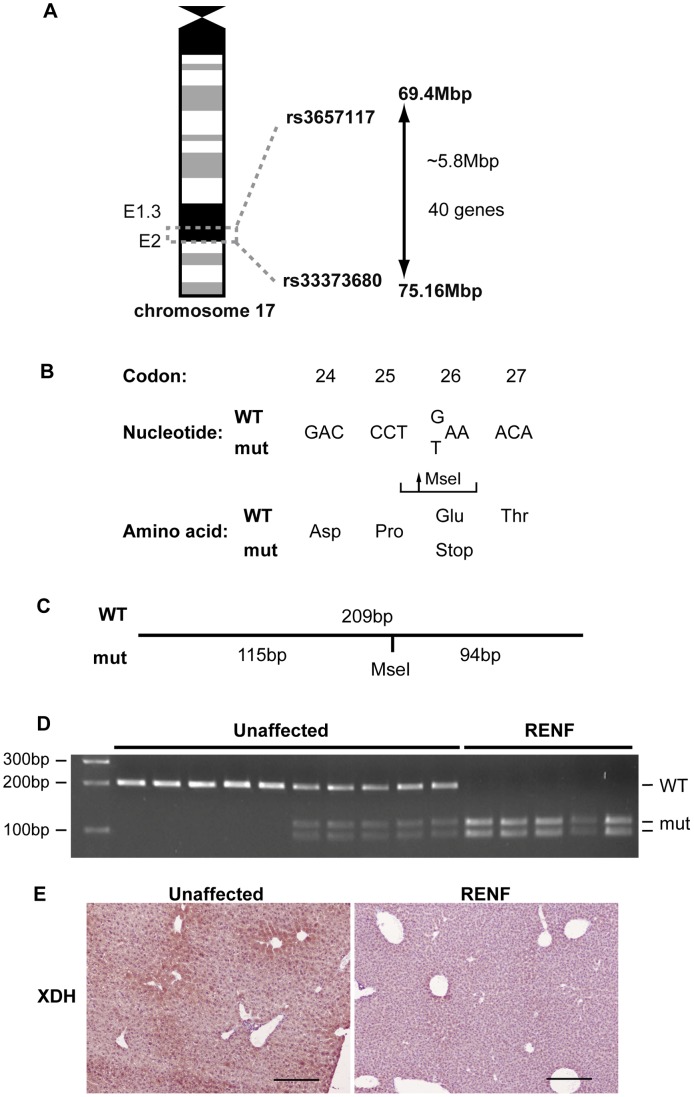
Chronic kidney disease (CKD) is characterized by renal fibrosis that can lead to end-stage renal failure, and studies have supported a strong genetic influence on the risk of developing CKD. However, investigations of the underlying molecular mechanisms are hampered by the lack of suitable hereditary models in animals. We therefore sought to establish hereditary mouse models for CKD and renal fibrosis by investigating mice treated with the chemical mutagen N-ethyl-N-nitrosourea, and identified a mouse with autosomal recessive renal failure, designated RENF. Three-week old RENF mice were smaller than their littermates, whereas at birth they had been of similar size. RENF mice, at 4-weeks of age, had elevated concentrations of plasma urea and creatinine, indicating renal failure, which was associated with small and irregularly shaped kidneys. Genetic studies using DNA from 10 affected mice and 91 single nucleotide polymorphisms mapped the Renf locus to a 5.8 Mbp region on chromosome 17E1.3. DNA sequencing of the xanthine dehydrogenase (Xdh) gene revealed a nonsense mutation at codon 26 that co-segregated with affected RENF mice. The Xdh mutation resulted in loss of hepatic XDH and renal Cyclooxygenase-2 (COX-2) expression. XDH mutations in man cause xanthinuria with undetectable plasma uric acid levels and three RENF mice had plasma uric acid levels below the limit of detection. Histological analysis of RENF kidney sections revealed abnormal arrangement of glomeruli, intratubular casts, cellular infiltration in the interstitial space, and interstitial fibrosis. TUNEL analysis of RENF kidney sections showed extensive apoptosis predominantly affecting the tubules. Thus, we have established a mouse model for autosomal recessive early-onset renal failure due to a nonsense mutation in Xdh that is a model for xanthinuria in man. This mouse model could help to increase our understanding of the molecular mechanisms associated with renal fibrosis and the specific roles of XDH and uric acid.
慢性肾脏病(CKD)的特征是肾纤维化,可导致终末期肾衰竭,研究支持遗传因素对 CKD 发病风险有很强的影响。然而,由于缺乏合适的动物遗传性模型,对潜在分子机制的研究受到阻碍。因此,我们通过研究用化学诱变剂 N-乙基-N-亚硝基脲处理的小鼠,试图建立 CKD 和肾纤维化的遗传性小鼠模型,并鉴定出一种具有常染色体隐性肾衰竭的小鼠,命名为 RENF。3 周龄的 RENF 小鼠比同窝仔鼠小,而出生时它们的体型相似。4 周龄的 RENF 小鼠血浆尿素和肌酐浓度升高,表明发生了肾衰竭,这与肾脏小而不规则的形状有关。使用 10 只受影响的小鼠和 91 个单核苷酸多态性的 DNA 进行的遗传研究将 Renf 基因座定位到染色体 17E1.3 上的 5.8 Mbp 区域。对黄嘌呤脱氢酶(Xdh)基因的 DNA 测序显示,在密码子 26 处发生了无义突变,与受影响的 RENF 小鼠共分离。Xdh 突变导致肝 XDH 和肾环氧化酶-2(COX-2)表达缺失。人体内的 XDH 突变导致黄嘌呤尿,血浆尿酸水平无法检测到,而 3 只 RENF 小鼠的血浆尿酸水平低于检测限。RENF 肾切片的组织学分析显示肾小球排列异常、管腔内铸型、间质空间细胞浸润和间质纤维化。RENF 肾切片的 TUNEL 分析显示广泛的凋亡,主要影响肾小管。因此,我们建立了一种由于 Xdh 中的无义突变导致的常染色体隐性早发性肾衰竭的小鼠模型,该模型是人类黄嘌呤尿的模型。这种小鼠模型可以帮助我们更好地了解与肾纤维化相关的分子机制以及 XDH 和尿酸的具体作用。