Anjum Shabana, Krishna Amitabh, Sridaran Rajagopala, Tsutsui Kazuyoshi
Department of Zoology, Banaras Hindu University, Varanasi, Uttar Pradesh, India.
J Exp Zool A Ecol Genet Physiol. 2012 Dec;317(10):630-44. doi: 10.1002/jez.1765. Epub 2012 Oct 1.
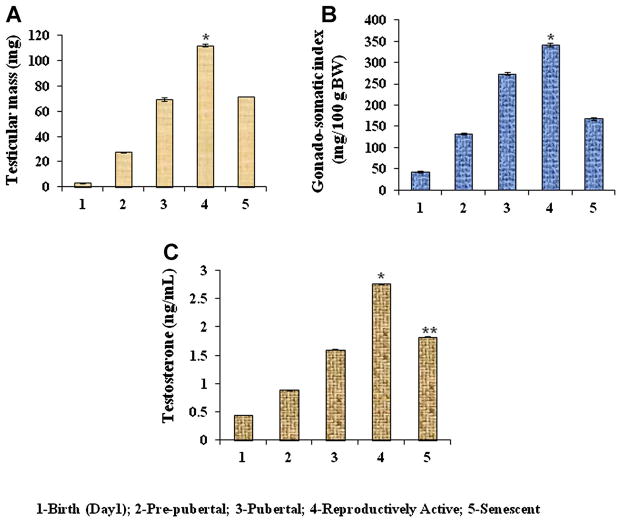
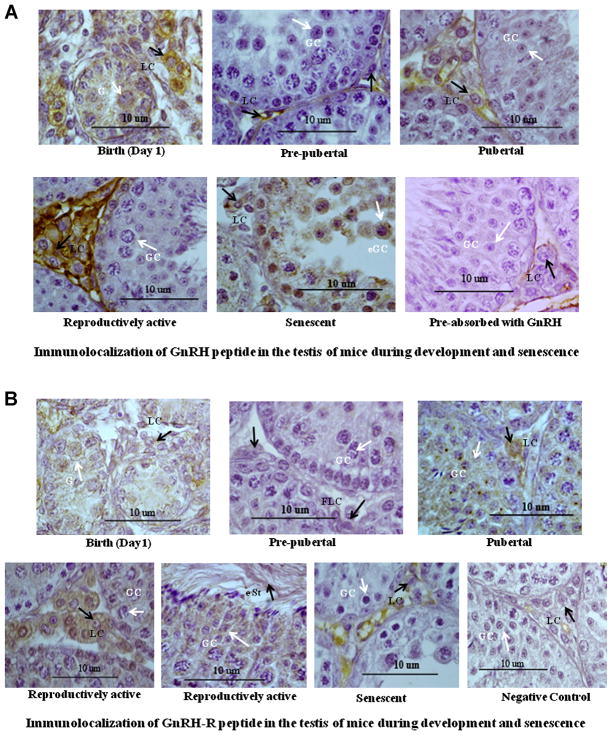
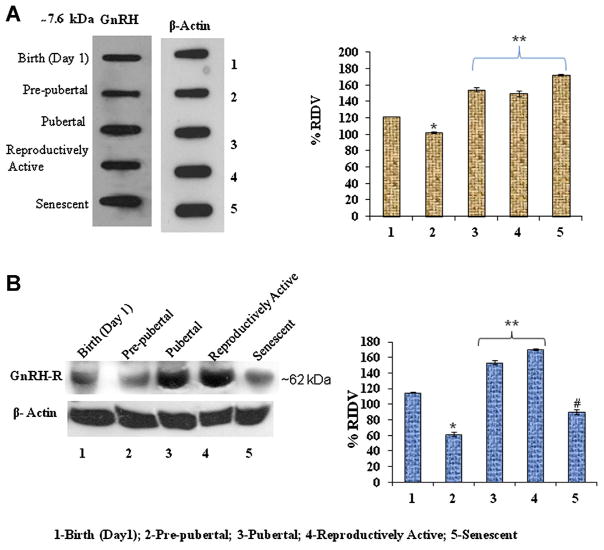
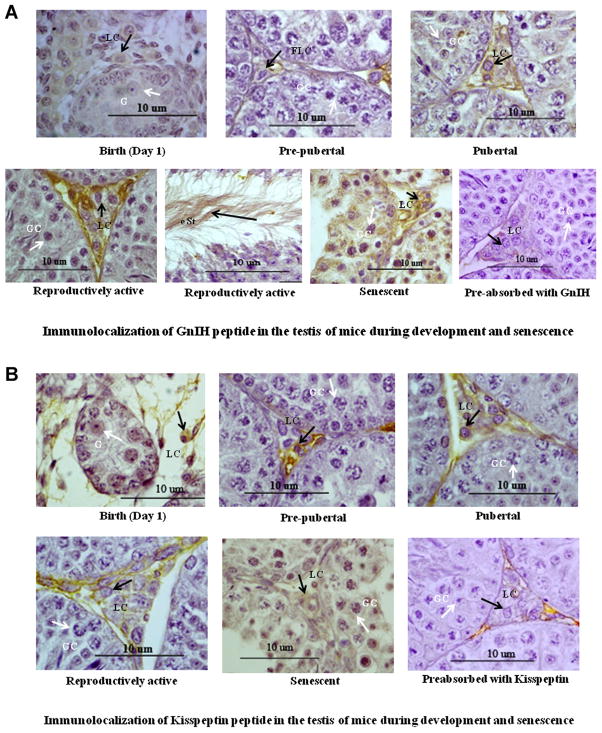
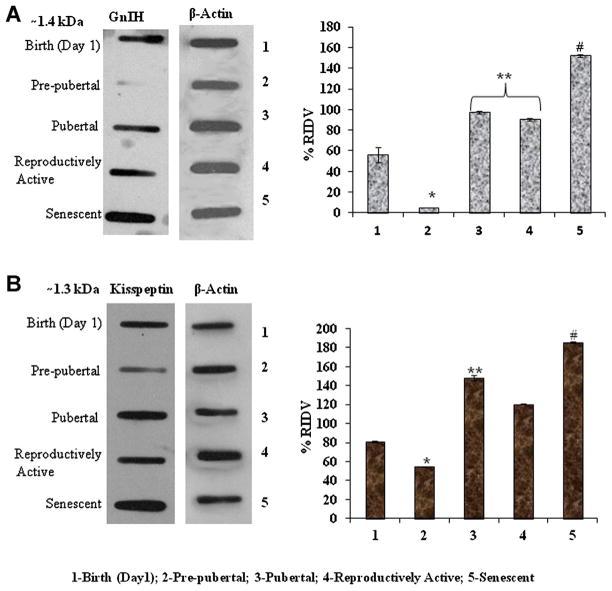
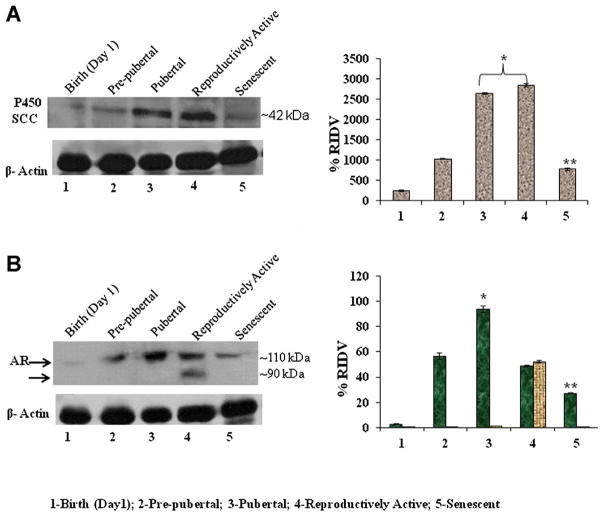
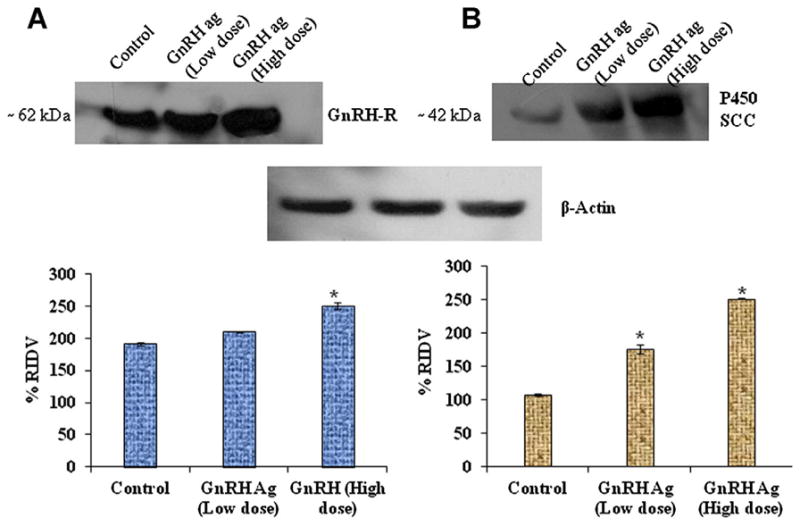
The changes in distribution and concentration of neuropeptides, gonadotropin-releasing hormone (GnRH), gonadotropin-inhibitory hormone (GnIH), kisspeptin, and gonadotropin-releasing hormone receptor (GnRH-R) were evaluated and compared with reproductive parameters, such as cytochrome P450 side-chain cleavage (P450 SCC) enzyme activity, androgen receptors (AR) in the testis and serum testosterone levels, from birth to senescence in mice. The results showed the localization of these molecules mainly in the interstitial and germ cells as well as showed significant variations in immunostatining from birth to senescence. It was found that increased staining of testicular GnRH-R coincided with increased steroidogenic activity during pubertal and adult stages, whereas decreased staining coincides with decreased steroidogenic activity during senescence. Similar changes in immunostaining were confirmed by Western/slot blot analysis. Thus, these results suggest a putative role of GnRH during testicular pubertal development and senescence. Treatment with a GnRH agonist ([DTrp(6), Pro(9)-NEt] GnRH) to mice from prepubertal to pubertal period showed a significant increase in steroidogenic activity of the mouse testis and provided further support to the role of GnRH in testicular pubertal maturation. The significant decline in GnRH-R during senescence may be due to a significant increase in GnIH synthesis during senescence causing the decrease in GnRH-R expression. It is considered that significant changes in the levels of GnRH-R may be responsible for changes in steroidogenesis that causes either pubertal activation or senescence in testis of mice. Furthermore, changes in the levels of GnRH-R may be modulated by interactions among GnRH, GnIH, and kisspeptin in the testis.
评估了小鼠从出生到衰老过程中神经肽、促性腺激素释放激素(GnRH)、促性腺激素抑制激素(GnIH)、 kisspeptin和促性腺激素释放激素受体(GnRH-R)的分布和浓度变化,并将其与生殖参数进行比较,如细胞色素P450侧链裂解酶(P450 SCC)活性、睾丸中的雄激素受体(AR)和血清睾酮水平。结果显示这些分子主要定位于间质细胞和生殖细胞,并且从出生到衰老免疫染色有显著变化。发现在青春期和成年期,睾丸GnRH-R染色增加与类固醇生成活性增加同时出现,而在衰老过程中染色减少与类固醇生成活性降低同时出现。Western/狭缝印迹分析证实了免疫染色的类似变化。因此,这些结果表明GnRH在睾丸青春期发育和衰老过程中可能发挥作用。对青春期前到青春期的小鼠用GnRH激动剂([DTrp(6),Pro(9)-NEt] GnRH)进行处理,显示小鼠睾丸的类固醇生成活性显著增加,并为GnRH在睾丸青春期成熟中的作用提供了进一步支持。衰老过程中GnRH-R的显著下降可能是由于衰老过程中GnIH合成显著增加导致GnRH-R表达减少。据认为,GnRH-R水平的显著变化可能是导致小鼠睾丸青春期激活或衰老的类固醇生成变化的原因。此外,GnRH-R水平的变化可能受到睾丸中GnRH、GnIH和kisspeptin之间相互作用的调节。