Functional Genomics Core Facility, Fondazione IRCCS Istituto Nazionale dei Tumori, Milan, Italy.
PLoS One. 2012;7(9):e45105. doi: 10.1371/journal.pone.0045105. Epub 2012 Sep 13.
Microarray technology applied to microRNA (miRNA) profiling is a promising tool in many research fields; nevertheless, independent studies characterizing the same pathology have often reported poorly overlapping results. miRNA analysis methods have only recently been systematically compared but only in few cases using clinical samples.
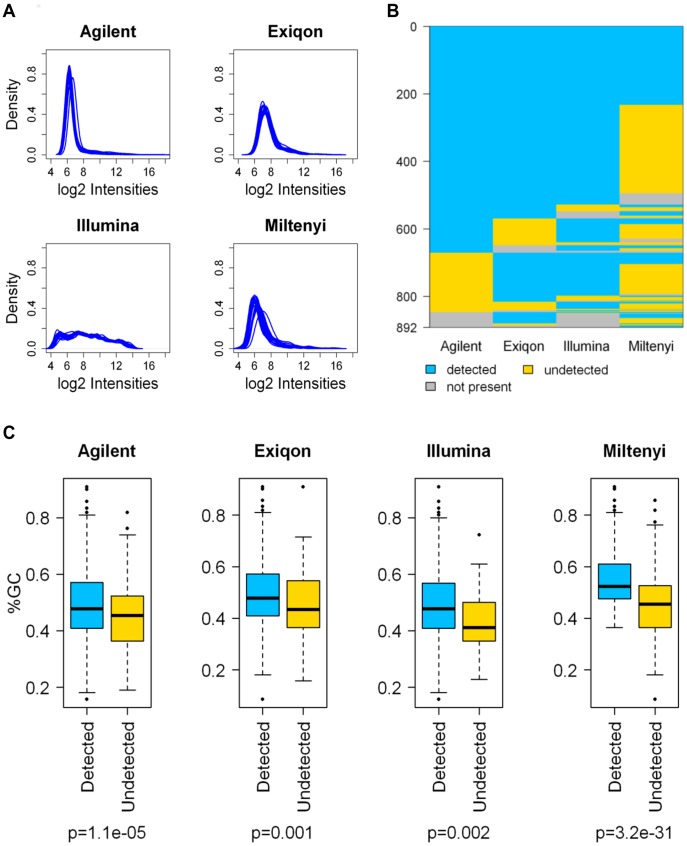
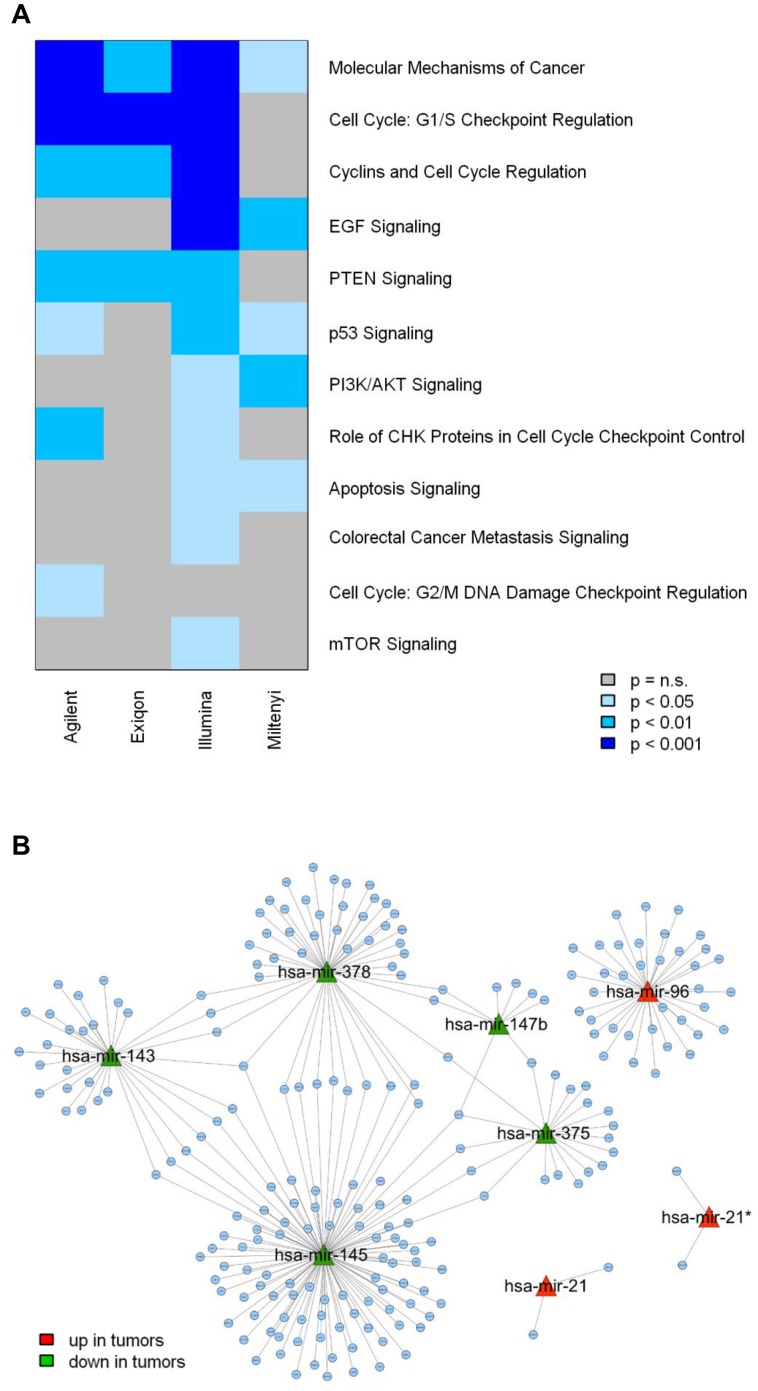
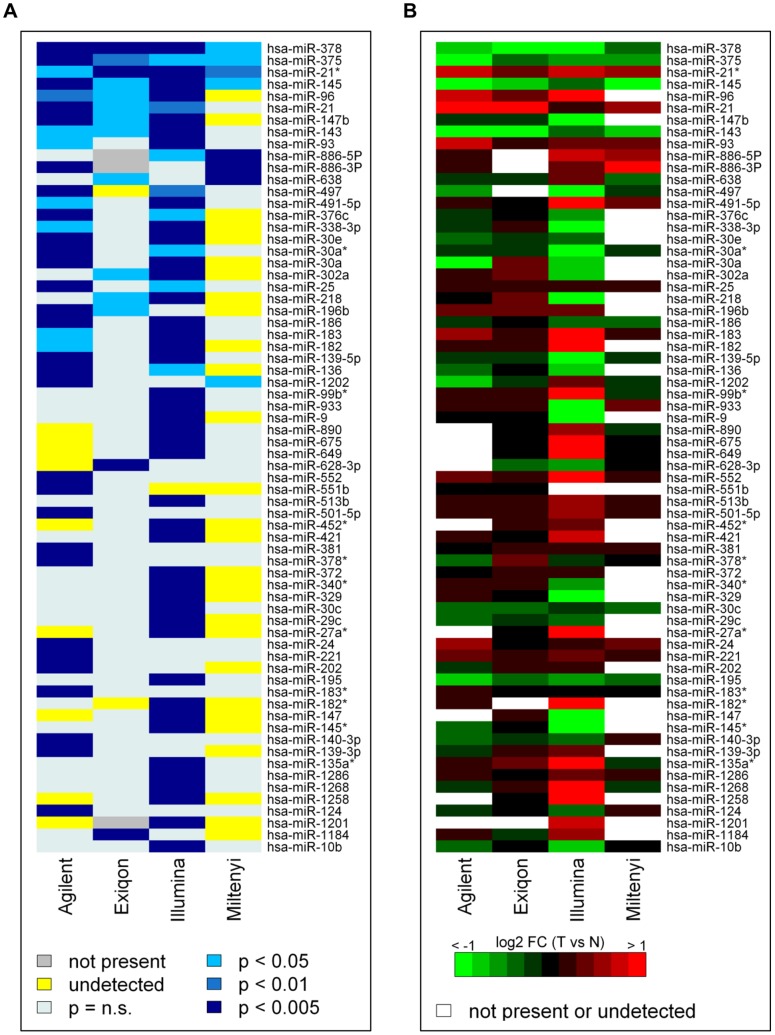
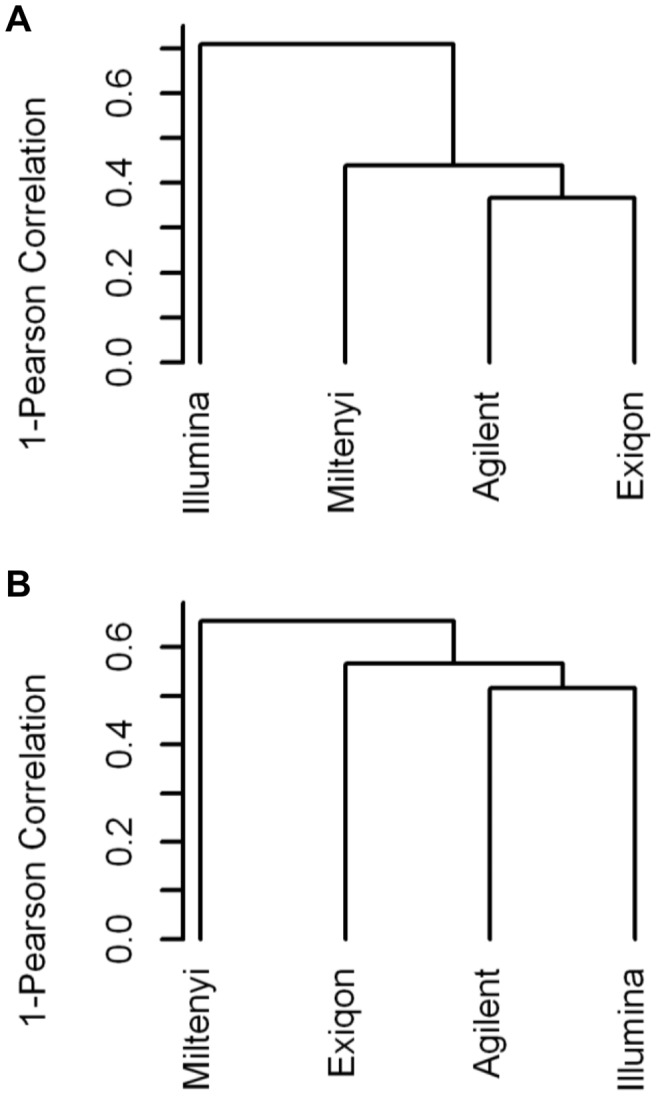
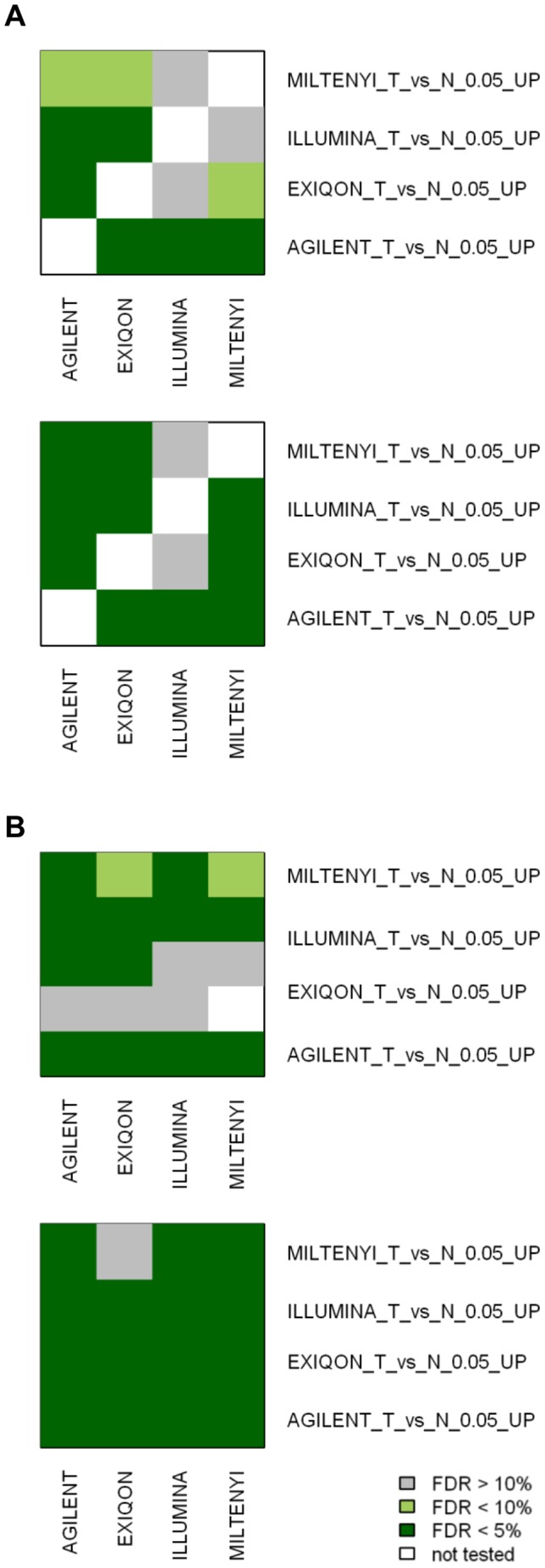
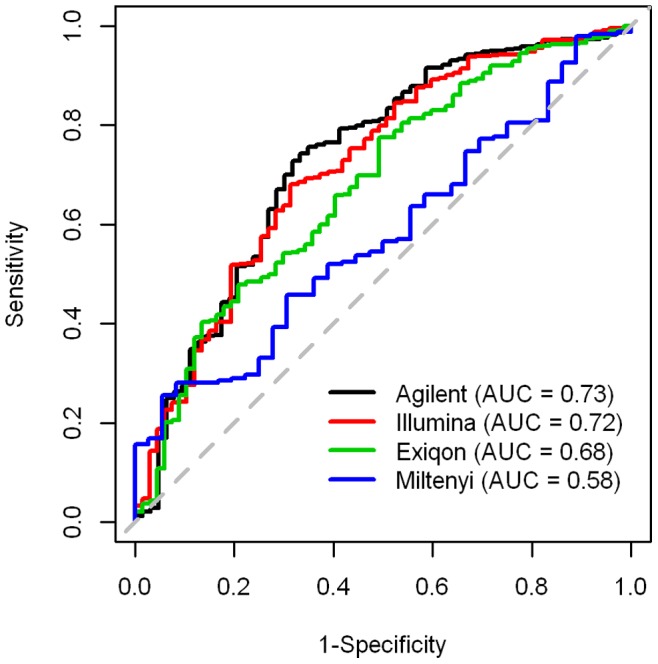
METHODOLOGY/PRINCIPAL FINDINGS: We investigated the inter-platform reproducibility of four miRNA microarray platforms (Agilent, Exiqon, Illumina, and Miltenyi), comparing nine paired tumor/normal colon tissues. The most concordant and selected discordant miRNAs were further studied by quantitative RT-PCR. Globally, a poor overlap among differentially expressed miRNAs identified by each platform was found. Nevertheless, for eight miRNAs high agreement in differential expression among the four platforms and comparability to qRT-PCR was observed. Furthermore, most of the miRNA sets identified by each platform are coherently enriched in data from the other platforms and the great majority of colon cancer associated miRNA sets derived from the literature were validated in our data, independently from the platform. Computational integration of miRNA and gene expression profiles suggested that anti-correlated predicted target genes of differentially expressed miRNAs are commonly enriched in cancer-related pathways and in genes involved in glycolysis and nutrient transport.
Technical and analytical challenges in measuring miRNAs still remain and further research is required in order to increase consistency between different microarray-based methodologies. However, a better inter-platform agreement was found by looking at miRNA sets instead of single miRNAs and through a miRNAs - gene expression integration approach.
微阵列技术应用于 microRNA (miRNA) 谱分析在许多研究领域是一种很有前途的工具;然而,对同一病理特征进行描述的独立研究往往报告了差异很大的结果。miRNA 分析方法最近才被系统地进行比较,但在少数情况下才使用临床样本。
方法/主要发现:我们研究了四种 miRNA 微阵列平台(Agilent、Exiqon、Illumina 和 Miltenyi)之间的平台间可重复性,比较了 9 对肿瘤/正常结肠组织。通过定量 RT-PCR 进一步研究了最一致和最不一致的 miRNA。总的来说,发现每个平台识别的差异表达 miRNA 之间的重叠很差。然而,对于 8 个 miRNA,在四个平台之间的差异表达中观察到了很高的一致性,并且与 qRT-PCR 具有可比性。此外,每个平台识别的大多数 miRNA 集在其他平台的数据中一致富集,并且从文献中获得的大多数与结肠癌相关的 miRNA 集在我们的数据中得到了验证,而与平台无关。miRNA 和基因表达谱的计算整合表明,差异表达 miRNA 的预测靶基因呈负相关,通常在癌症相关途径和参与糖酵解和营养物质运输的基因中富集。
测量 miRNA 仍然存在技术和分析方面的挑战,需要进一步研究以提高不同基于微阵列的方法之间的一致性。然而,通过观察 miRNA 集而不是单个 miRNA 并通过 miRNA-基因表达整合方法,可以找到更好的平台间一致性。