Ippoliti Giovanbattista, D'Armini Andrea Maria, Lucioni Marco, Marjieh Mazen, Viganò Mario
UO Medicina Interna, Policlinico di Monza, Monza, Italy ; Department of Surgical Sciences, Charles Dubost Transplant Center, Fondazione IRCCS San Matteo Hospital, University of Pavia, Pavia, Italy.
Biologics. 2012;6:355-62. doi: 10.2147/BTT.S27565. Epub 2012 Oct 4.
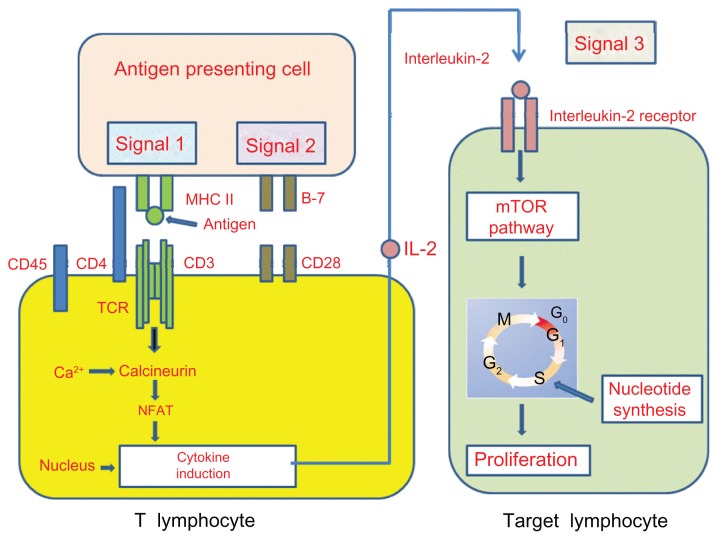
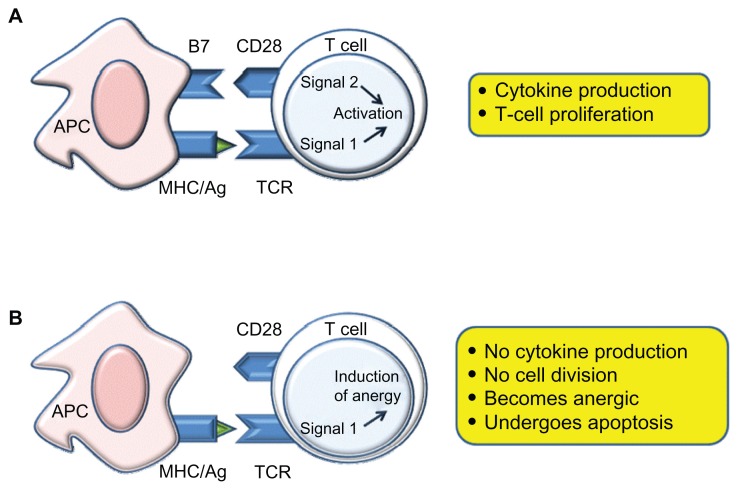
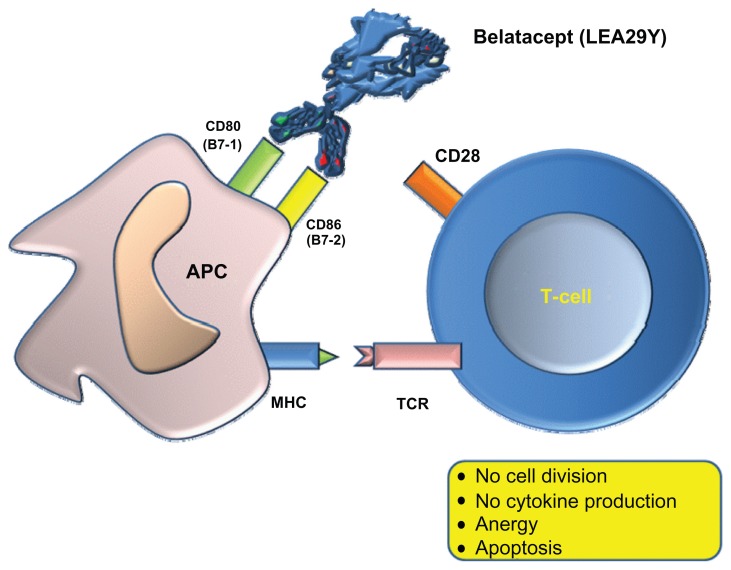
The development of new immunosuppressive drugs for kidney transplantation resulted both in better short-term outcomes and in decreased metabolic, cardiovascular, and nephrotoxicity risk. Belatacept belongs to a new class of immunosuppressive drugs that selectively inhibits T-cell activation by preventing CD28 activation and by binding its ligands B7-1 and B7-2. The result is an inactivation of costimulatory pathways. A comparative analysis of the BENEFIT and BENEFIT-EXT datasets showed belatacept regimens resulted in better cardiovascular and metabolic risk profiles than did cyclosporin A (CsA) regimens: belatacept likewise outperformed CsA in terms of lower blood pressure and serum lipids and less new onset diabetes after transplantation. About 20% of belatacept-treated patients developed adverse effects which included anemia, pyrexia, neutropenia, diarrhea, urinary tract infection, headache, and peripheral edema. At present, belatacept does not seem to predispose patients to a higher rate of infection than CsA maintenance immunosuppression. The risk of posttransplant lymphoproliferative diseases was higher in Epstein-Barr virus (EBV)-seronegative patients than in EBV-seropositive patients, but the risk may be reduced by use of a less intensive regimen and avoidance of EBV-negative patients and of patients whose pretransplant EBV serology is unknown. Belatacept provides a new option for immunosuppressive therapy in kidney transplantation, but needs further evaluation in terms of the late effects that may derive from prolonged blockage of the costimulatory system and the induction of tolerance status.
用于肾移植的新型免疫抑制药物的研发带来了更好的短期疗效,并降低了代谢、心血管和肾毒性风险。贝拉西普属于一类新型免疫抑制药物,它通过阻止CD28激活并结合其配体B7-1和B7-2来选择性抑制T细胞活化。结果是共刺激通路失活。对BENEFIT和BENEFIT-EXT数据集的比较分析表明,与环孢素A(CsA)方案相比,贝拉西普方案的心血管和代谢风险状况更佳:贝拉西普在降低血压和血脂以及减少移植后新发糖尿病方面同样优于CsA。约20%接受贝拉西普治疗的患者出现了不良反应,包括贫血、发热、中性粒细胞减少、腹泻、尿路感染、头痛和外周水肿。目前,贝拉西普似乎不会使患者比接受CsA维持免疫抑制时有更高的感染率。移植后淋巴细胞增生性疾病的风险在爱泼斯坦-巴尔病毒(EBV)血清阴性患者中高于EBV血清阳性患者,但通过使用强度较低的方案以及避免使用EBV阴性患者和移植前EBV血清学未知的患者,该风险可能会降低。贝拉西普为肾移植免疫抑制治疗提供了一种新选择,但就共刺激系统长期阻断可能产生的后期影响以及耐受状态的诱导而言,还需要进一步评估。