Group on the Molecular and Cell Biology of Lipids and Department of Medicine, University of Alberta, Edmonton, AB, T6G 2S2, Canada.
Dis Model Mech. 2012 Nov;5(6):746-55. doi: 10.1242/dmm.010124. Epub 2012 Oct 12.
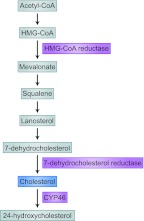
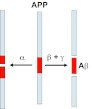
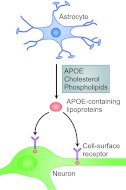
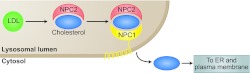
Dysregulation of cholesterol homeostasis in the brain is increasingly being linked to chronic neurodegenerative disorders, including Alzheimer's disease (AD), Huntington's disease (HD), Parkinson's disease (PD), Niemann-Pick type C (NPC) disease and Smith-Lemli Opitz syndrome (SLOS). However, the molecular mechanisms underlying the correlation between altered cholesterol metabolism and the neurological deficits are, for the most part, not clear. NPC disease and SLOS are caused by mutations in genes involved in the biosynthesis or intracellular trafficking of cholesterol, respectively. However, the types of neurological impairments, and the areas of the brain that are most affected, differ between these diseases. Some, but not all, studies indicate that high levels of plasma cholesterol correlate with increased risk of developing AD. Moreover, inheritance of the E4 isoform of apolipoprotein E (APOE), a cholesterol-carrying protein, markedly increases the risk of developing AD. Whether or not treatment of AD with statins is beneficial remains controversial, and any benefit of statin treatment might be due to anti-inflammatory properties of the drug. Cholesterol balance is also altered in HD and PD, although no causal link between dysregulated cholesterol homeostasis and neurodegeneration has been established. Some important considerations for treatment of neurodegenerative diseases are the impermeability of the blood-brain barrier to many therapeutic agents and difficulties in reversing brain damage that has already occurred. This article focuses on how cholesterol balance in the brain is altered in several neurodegenerative diseases, and discusses some commonalities and differences among the diseases.
脑内胆固醇稳态失调与慢性神经退行性疾病的关系日益密切,包括阿尔茨海默病(AD)、亨廷顿病(HD)、帕金森病(PD)、尼曼-匹克 C 型(NPC)病和 Smith-Lemli-Opitz 综合征(SLOS)。然而,改变的胆固醇代谢与神经功能缺损之间的相关性的分子机制在很大程度上仍不清楚。NPC 病和 SLOS 分别是由参与胆固醇生物合成或细胞内转运的基因突变引起的。然而,这些疾病的神经损伤类型和受影响的大脑区域不同。一些但不是所有的研究表明,血浆胆固醇水平升高与 AD 发病风险增加相关。此外,载脂蛋白 E(APOE)的 E4 同工型的遗传,即一种胆固醇载体蛋白,显著增加了 AD 的发病风险。用他汀类药物治疗 AD 是否有益仍然存在争议,而他汀类药物治疗的任何益处可能都归因于该药物的抗炎特性。HD 和 PD 中的胆固醇平衡也发生改变,尽管尚未确定胆固醇稳态失调与神经退行性变之间存在因果关系。治疗神经退行性疾病的一些重要考虑因素是许多治疗剂对血脑屏障的通透性以及逆转已经发生的脑损伤的困难。本文重点讨论了几种神经退行性疾病中脑内胆固醇平衡的改变,并讨论了这些疾病之间的一些共性和差异。