Department of Neurobiology Research, University of Southern Demark, Odense, Denmark.
PLoS One. 2012;7(10):e47744. doi: 10.1371/journal.pone.0047744. Epub 2012 Oct 15.
The calmodulin/calcium-activated K(+) channel KCa3.1 is expressed in red and white blood cells, epithelia and endothelia, and possibly central and peripheral neurons. However, our knowledge about its contribution to neurological functions and behavior is incomplete. Here, we investigated whether genetic deficiency or pharmacological activation of KCa3.1 change behavior and cerebral monoamine levels in mice.
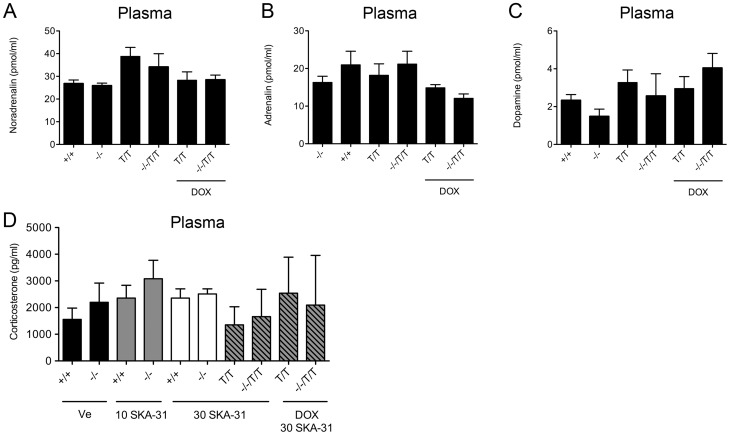
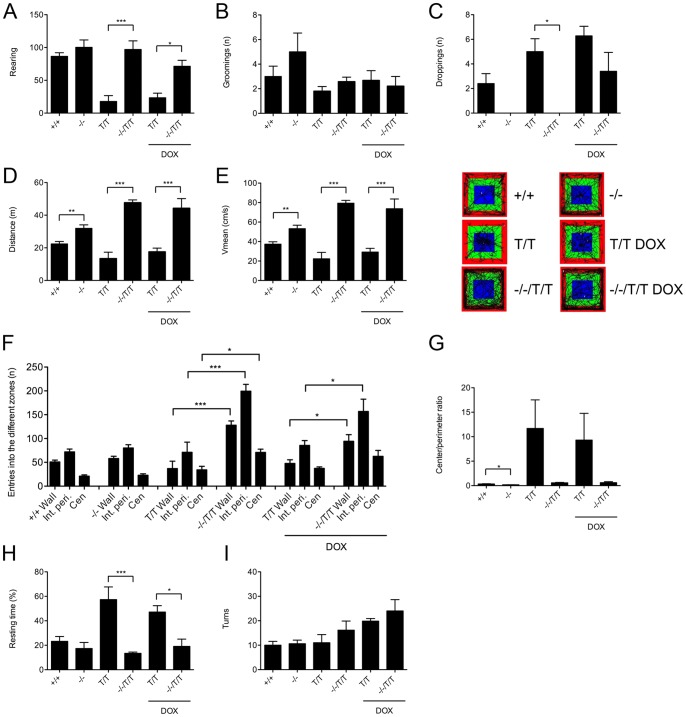
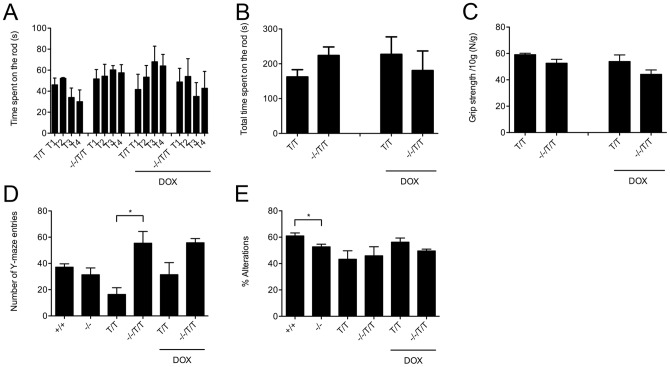
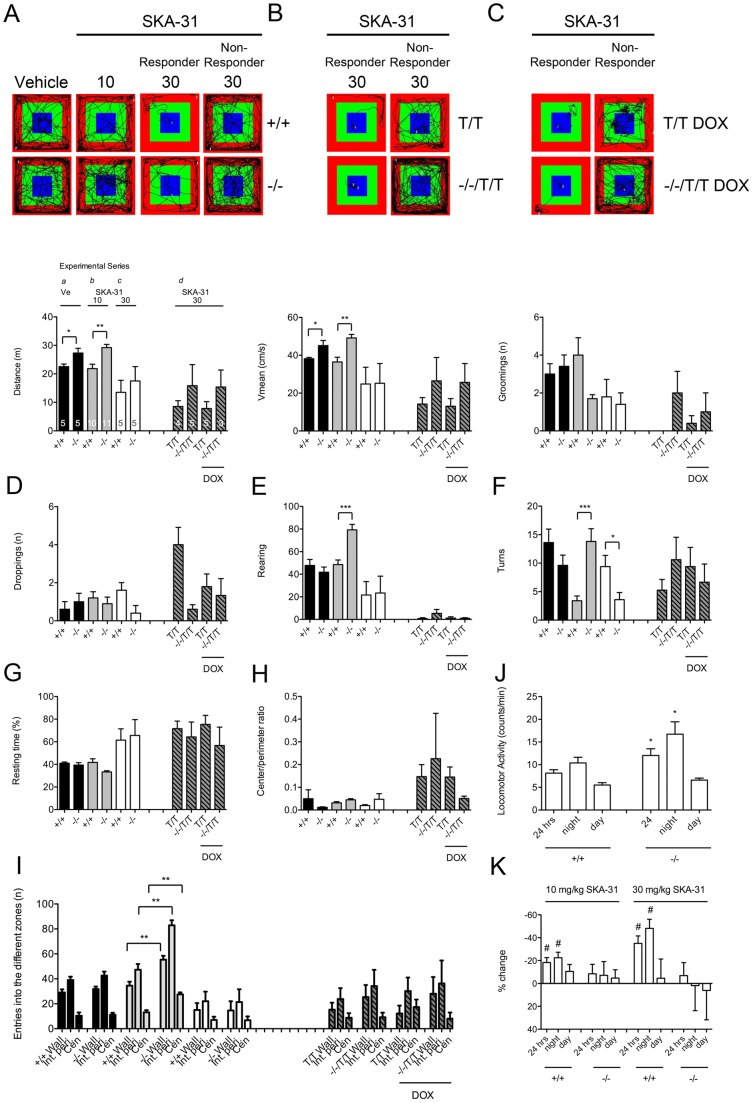
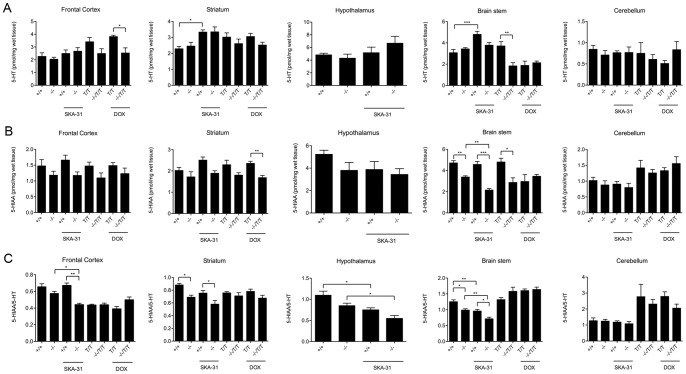
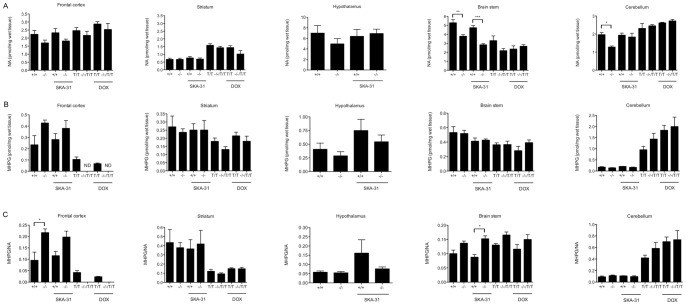
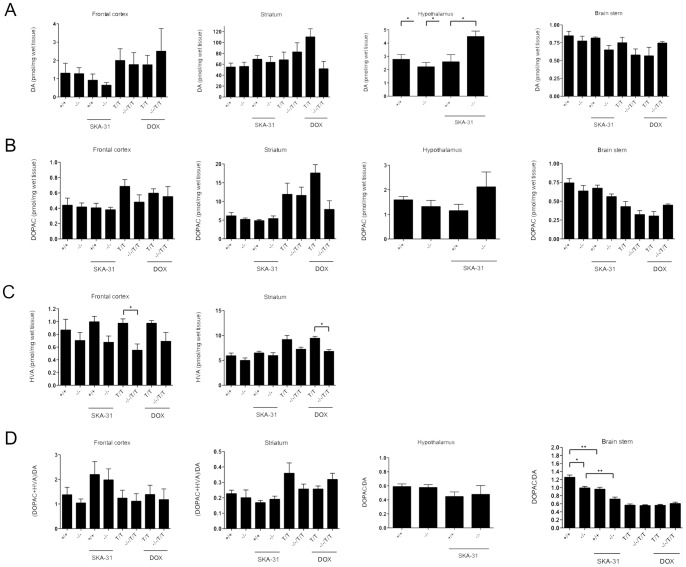
METHODOLOGY/PRINCIPAL FINDINGS: In the open field test, KCa3.1-deficiency increased horizontal activity, as KCa3.1(-/-) mice travelled longer distances (≈145% of KCa3.1(+/+)) and at higher speed (≈1.5-fold of KCa3.1(+/+)). Working memory in the Y-maze was reduced by KCa3.1-deficiency. Motor coordination on the rotarod and neuromuscular functions were unchanged. In KCa3.1(-/-) mice, HPLC analysis revealed that turn-over rates of serotonin were reduced in frontal cortex, striatum and brain stem, while noradrenalin turn-over rates were increased in the frontal cortex. Dopamine turn-over rates were unaltered. Plasma catecholamine and corticosterone levels were unaltered. Intraperitoneal injections of 10 mg/kg of the KCa3.1/KCa2-activator SKA-31 reduced rearing and turning behavior in KCa3.1(+/+) but not in KCa3.1(-/-) mice, while 30 mg/kg SKA-31 caused strong sedation in 50% of the animals of either genotypes. KCa3.1(-/-) mice were hyperactive (≈+60%) in their home cage and SKA-31-administration reduced nocturnal physical activity in KCa3.1(+/+) but not in KCa3.1(-/-) mice.
CONCLUSIONS/SIGNIFICANCE: KCa3.1-deficiency causes locomotor hyperactivity and altered monoamine levels in selected brain regions, suggesting a so far unknown functional link of KCa3.1 channels to behavior and monoaminergic neurotransmission in mice. The tranquilizing effects of low-dose SKA-31 raise the possibility to use KCa3.1/KCa2 channels as novel pharmacological targets for the treatment of neuropsychiatric hyperactivity disorders.
钙调蛋白/钙激活的钾 (K+) 通道 KCa3.1 在红细胞和白细胞、上皮细胞和内皮细胞以及中枢和外周神经元中表达。然而,我们对其在神经功能和行为中的作用的了解并不完整。在这里,我们研究了 KCa3.1 的遗传缺失或药理学激活是否会改变小鼠的行为和大脑单胺水平。
方法/主要发现:在旷场试验中,KCa3.1 缺失增加了水平活动,因为 KCa3.1(-/-) 小鼠的行进距离更长(约为 KCa3.1(+/+) 的 145%),速度更快(约为 KCa3.1(+/+) 的 1.5 倍)。Y 迷宫中的工作记忆因 KCa3.1 缺失而降低。在转棒和神经肌肉功能上,运动协调能力不变。在 KCa3.1(-/-) 小鼠中,HPLC 分析显示,额叶皮质、纹状体和脑干中的 5-羟色胺周转率降低,而额叶皮质中的去甲肾上腺素周转率增加。多巴胺周转率不变。血浆儿茶酚胺和皮质酮水平不变。腹腔注射 10mg/kg 的 KCa3.1/KCa2-激活剂 SKA-31 减少了 KCa3.1(+/+) 但不减少 KCa3.1(-/-) 小鼠的竖起和转身行为,而 30mg/kg SKA-31 使两种基因型的 50%动物产生强烈的镇静作用。KCa3.1(-/-) 小鼠在其笼中表现出过度活跃(约增加 60%),并且 SKA-31 给药减少了 KCa3.1(+/+) 但不减少 KCa3.1(-/-) 小鼠的夜间体力活动。
结论/意义:KCa3.1 缺失导致运动过度活跃和选定脑区中单胺水平改变,表明 KCa3.1 通道与小鼠行为和单胺能神经传递之间存在迄今为止未知的功能联系。低剂量 SKA-31 的镇静作用增加了将 KCa3.1/KCa2 通道用作治疗神经精神活性障碍的新型药理学靶点的可能性。